What is ISMS? Reasons your organization should implement one
With data breaches and cyber threats rising, how well is your organization prepared to protect its most sensitive information? Securing data isn’t about installing antivirus software or setting up a firewall—it requires a structured, ongoing approach. An Information Security Management System (ISMS) offers a solution to manage and protect information at every level.
An ISMS not only guards against hackers; it helps organizations build trust, meet legal obligations, and avoid costly security incidents. But what exactly is an ISMS, and why should it matter to your organization?
Let’s explore why implementing an ISMS could be one of the best decisions for your business’s future.
What is ISMS?
An ISMS is a framework of policies, procedures, and controls to protect an organization’s information. It is a set of rules and processes that guide how information should be managed and secured within a business. It covers everything from who can access certain information to how data should be stored and shared.
ISMS is often based on international standards, such as ISO/IEC 27001, which provides guidelines for establishing and maintaining an effective information security system. By following these standards, organizations can ensure that their information security practices are up-to-date and aligned with global best practices.
Why is ISMS important?
An ISMS helps protect your organization’s data from various threats, such as cyberattacks, data breaches, and accidental loss. It also helps your business stay compliant with laws and regulations.
Data protection laws are becoming stricter, and organizations that fail to protect sensitive information can face significant penalties. An ISMS can provide a way to meet these requirements and protect against risks.
Here are some key reasons why ISMS is important:
- Improved data security: ISMS helps identify, manage, and reduce data security risks. Setting clear rules ensures that information remains safe from unauthorized access.
- Compliance with legal requirements: Many industries have strict regulations regarding data protection, and failing to comply can result in fines. An ISMS helps organizations stay compliant by offering guidelines on handling sensitive information responsibly.
- Better business reputation: Customers and partners prefer working with businesses that prioritize data security. Having an ISMS in place builds trust and demonstrates that your organization values and protects sensitive information.
- Cost savings: Data breaches and cyberattacks can be costly. Implementing an ISMS reduces the chances of such incidents, saving money in the long run.
Reasons your organization should implement an ISMS
Now that we understand ISMS and why it’s important, let’s explore specific reasons your organization should implement one.
1. Protection against data breaches
Data breaches can cause severe damage, both financially and reputationally. When sensitive information falls into the wrong hands, the organization may face lawsuits, regulatory penalties, and loss of customer trust. With an ISMS, you can identify potential vulnerabilities and take steps to prevent breaches before they happen.
An ISMS provides a framework for regular risk assessments and updates, ensuring your security measures evolve with new threats. This approach to security is essential for protecting valuable information.
2. Meeting regulatory requirements
Data privacy laws, like GDPR in Europe or HIPAA in the healthcare industry, require companies to take specific steps to protect data. An ISMS helps organizations meet these legal obligations by setting out a clear plan for how data is handled, who can access it, and what happens if there’s a security incident.
Failing to meet these regulatory requirements can lead to heavy fines and legal trouble. An ISMS can help you stay compliant, reducing the risk of facing penalties.
3. Building customer trust
When customers share their data with a business, they expect it to be kept safe. If customers lose confidence in your ability to protect their information, they may look elsewhere. By implementing an ISMS, you’re showing customers that you take data security seriously.
Trust is a valuable asset in business. Customers are more likely to choose a company with established policies for keeping information safe and secure. An ISMS provides a strong foundation for this trust.
4. Preparing for cyber security threats
Cyberattacks are becoming more common, and businesses of all sizes are targets. An ISMS helps you prepare for these attacks by ensuring you have the right safeguards. It allows you to create a system that identifies threats, manages risks, and responds to incidents quickly and effectively.
With an ISMS, your organization can react to incidents with a clear plan, reducing the potential impact of any cyber security breach. This preparation can save time and resources, helping you recover faster.
5. Supporting business growth
As businesses grow, so do their information security needs. An ISMS provides a flexible framework that can adapt as your organization expands. It allows you to scale your security measures according to the level of data and information you handle.
Having an ISMS means you’re not constantly trying to “catch up” with new security challenges as you grow. Instead, you’re proactively planning and preparing for the future, creating a secure foundation that supports your organization’s long-term goals.
6. Saving costs on security incidents
Cyber incidents are costly. They often involve expenses related to recovering lost data, repairing damaged systems, and managing the fallout of a public data breach. You can save a significant amount of money by reducing the likelihood of these incidents with an ISMS.
An ISMS helps you implement preventive measures instead of paying for emergency fixes. Investing in an ISMS is often cheaper than dealing with the consequences of a data breach, making it a smart financial decision.
7. Continuous improvement of security practices
One of the key benefits of an ISMS is that it encourages ongoing improvement. Security threats and technologies constantly change, and an ISMS framework is designed to keep up with these changes. Regular audits, reviews, and updates ensure your organization’s security practices are always current.
This focus on continuous improvement means you’re keeping your information safe and improving your overall security posture over time.
8. Reducing human error
Human error is one of the most common causes of data breaches. An ISMS sets clear guidelines and offers training to reduce mistakes that can lead to security incidents. By educating employees on the importance of data security and how to handle sensitive information, an ISMS minimizes the risk of accidental breaches.
With a well-implemented ISMS, employees are more aware of security risks and know how to respond, reducing the chance of errors that could compromise sensitive data.
How to get started with an ISMS
If you’re considering implementing an ISMS, start with a clear plan. Here are some steps to guide you:
- Understand your data security needs: Assess the level of data protection your organization requires. Consider the types of information you handle and the regulations that apply.
- Set clear objectives: Define what you want to achieve with your ISMS, like reducing risk or meeting compliance standards.
- Follow a standard: ISO 27001 is a popular standard for ISMS. Following established standards can help you create an effective system that meets global best practices.
- Implement and train: After creating your ISMS, provide training to employees to ensure everyone understands the policies and procedures.
- Review regularly: Keep your ISMS up to date by reviewing and updating it regularly. This ensures that it remains effective as new risks emerge.
Simplify ISMS implementation and achieve compliance with CyberArrow
Implementing an ISMS helps protect data and build your organization’s resilience, trust, and confidence. By adopting an effective ISMS, you’re not only minimizing risks but also creating a foundation for long-term success.
Ready to take your information security to the next level? CyberArrow offers an intuitive, compliance-focused platform that simplifies ISMS implementation, automates compliance tracking, and provides real-time insights.
With features like automated evidence collection, comprehensive risk assessments, and dedicated support, CyberArrow is your partner in building a secure and compliant organization.
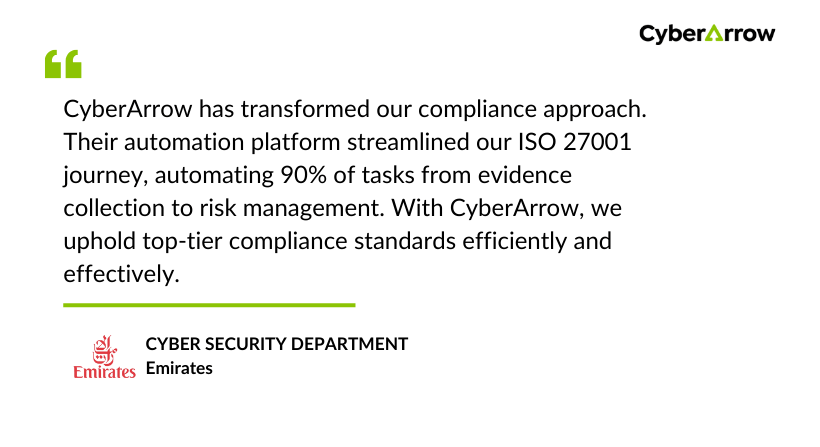
Read How Emirates enhanced Information Security by automating ISO 27001 with CyberArrow.
See what Emirates has to say about CyberArrow GRC: