


PCI DSS checklist: Implementation guide + free PCI DSS checklist template
When handling payment card data, meeting the PCI DSS standards and getting a PCI DSS certification is non-negotiable. But, going through detailed PCI DSS requirements can be daunting. Ensuring every box is checked and every process is secure requires more than awareness—it demands a clear and structured approach.
But how can you be sure you’ve covered every critical requirement without getting lost in the details?
A PCI DSS checklist can help in this regard!
Our implementation guide will provide a practical path to PCI compliance. We’ll also offer a free PCI checklist template to help you address each requirement clearly and easily.
Let’s cut through the complexity and get your business aligned with PCI DSS, step by step.
- Overview of PCI DSS requirements
- Step-by-step PCI DSS implementation guide
- How CyberArrow empowered a Fintech startup to automate PCI DSS Compliance in 3 weeks
Overview of PCI DSS requirements
The Payment Card Industry Data Security Standard (PCI DSS) outlines 12 essential requirements to protect cardholder data and maintain a secure environment. These requirements offer a comprehensive framework for securing payment card transactions:
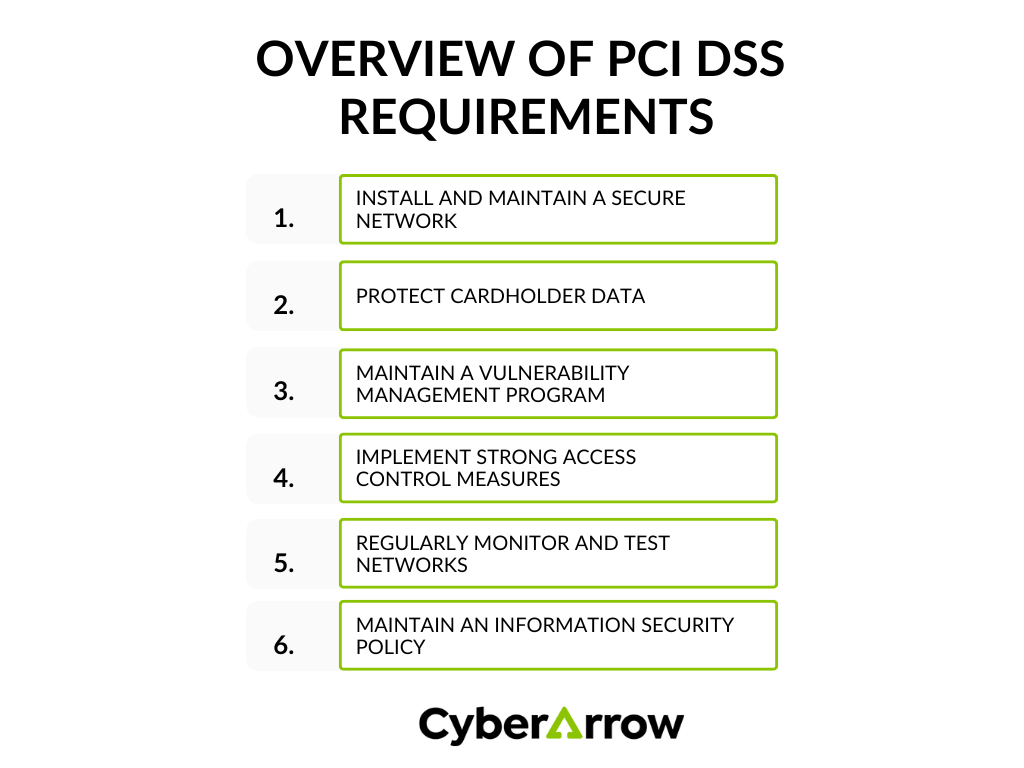
- Install and maintain a secure network: Implement firewalls and routers to protect cardholder data and ensure they are properly configured.
- Protect cardholder data: Encrypt the transmission of cardholder data across open and public networks and protect stored data using strong encryption methods.
- Maintain a vulnerability management program: Use and regularly update antivirus software, secure systems, and applications by applying the latest security patches.
- Implement strong access control measures: Restrict access to cardholder data to only those who need to know and ensure unique IDs for each person with computer access.
- Regularly monitor and test networks: Track and monitor all access to network resources and cardholder data. Regularly test security systems and processes.
- Maintain an information security policy: Develop, maintain, and enforce a policy that addresses information security for all personnel.
These requirements are further broken down into sub-requirements, but the essence remains the same: to secure the flow of payment card information from every angle, reducing the risk of data breaches.
Why PCI DSS compliance matters
Non-compliance with PCI DSS isn’t just a regulatory slip-up—it’s an open invitation to cyber threats. Organizations that fail to meet these standards expose themselves to severe risks, including:
- Data breaches can lead to the unauthorized access of sensitive cardholder information, causing significant financial loss and legal complications.
- Non-compliant businesses may face steep fines from credit card companies, which can be crippling, especially for small to medium-sized enterprises.
- A single security incident can severely damage your brand’s reputation, leading to loss of customer trust and, ultimately, business.
Quick link: Requirements and steps to prepare for a PCI audit
Step-by-step PCI DSS implementation guide
We have broken down PCI DSS implementation into manageable steps. Here’s a step-by-step guide to help you pass the process:
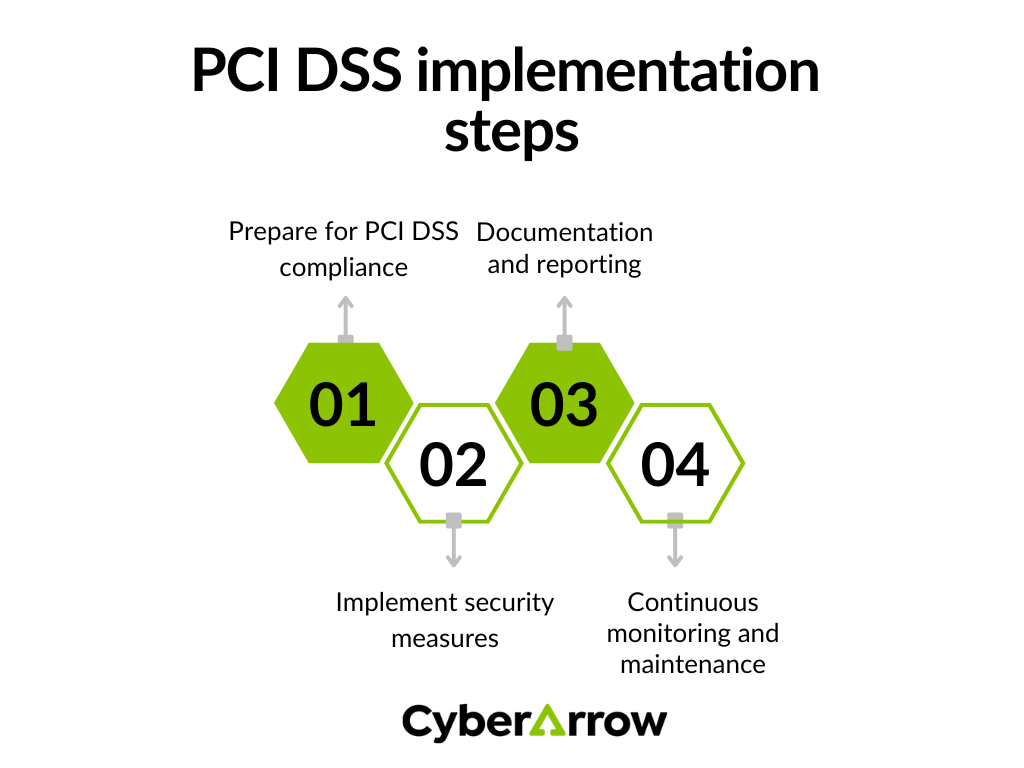
Step 1: Prepare for PCI DSS compliance
Follow these steps to prepare for PCI compliance
Identify the scope of your PCI DSS assessment
Determine which parts of your business fall under PCI DSS requirements. This includes identifying all systems, applications, and processes that store, process, or transmit cardholder data. Proper scoping is crucial, as it defines the boundaries of your compliance efforts and helps focus resources where they are most needed.
Establish a PCI DSS compliance team
Assemble a dedicated team responsible for driving PCI DSS compliance. This team should include IT, security, compliance, and management representatives. Their role will be coordinating efforts, assigning tasks, and ensuring that all aspects of PCI DSS are covered.
Conduct a gap analysis
Perform a gap analysis to evaluate your security posture against PCI DSS requirements. Determine any areas where your organization falls short and prioritize these gaps for remediation.
Step 2: Implement security measures
Implement the following security measures:
- Implement strong encryption methods for both stored and transmitted data. Ensure that cardholder data is retained only as long as necessary and securely deleted when it’s no longer needed.
- Restrict access to cardholder data based on the principle of least privilege. Ensure that only authorized personnel have access to sensitive information, and enforce unique IDs and secure authentication methods for each user.
- Implement continuous monitoring to detect and respond to security events in real time. Regularly test your security systems and processes, including vulnerability scans, penetration testing, and system audits, to ensure they function as intended.
Step 3: Documentation and reporting
Develop and maintain comprehensive security policies that align with PCI DSS requirements. This documentation should cover all aspects of your security program, including access control, data protection, and incident response procedures.
Prepare for audits and assessments
Regularly review and update your documentation to ensure it reflects your current practices. Be audit-ready by organizing your documentation and ensuring that all evidence of compliance is easily accessible. This will make the audit process smoother and more efficient.
Step 4: Continuous monitoring and maintenance
PCI DSS compliance is not a one-time security event; it requires continuous vigilance. Implement ongoing monitoring processes to track compliance, detect potential security issues, and respond swiftly to any incidents.
Review and update security measures regularly
The threat landscape is constantly evolving, and so should your security measures. Regularly review and update your security controls to ensure they remain effective against emerging threats. Conduct periodic risk assessments to identify new vulnerabilities and adjust your security strategy accordingly.
Quick link: What type of businesses need to comply with PCI DSS?
How CyberArrow empowered a Fintech startup to automate PCI DSS Compliance in 3 weeks
Achieving PCI DSS compliance was a critical milestone for this fast-growing Fintech startup. Faced with the challenge of automating complex and time-consuming compliance procedures, they turned to CyberArrow’s compliance automation tool, which enabled them to achieve full PCI compliance.
How CyberArrow helped?
- CyberArrow provided integration capabilities to assess and correct misconfigurations within the cardholder data environment, ensuring compliance.
- It ensured continuous protection of cardholder data through real-time monitoring and alerting features.
- CyberArrow streamlined the documentation process, automatically generating comprehensive reports that met all PCI DSS requirements.
Within three weeks, the startup transitioned from manual to fully automated compliance processes, significantly saving time and cost. CyberArrow’s automation also streamlined the audit process, ensuring the company was consistently audit-ready with accurate and up-to-date reports.
To help you get started, we’re offering a free PCI DSS checklist. This handy resource will guide you through the key requirements and ensure you’re on track for compliance.
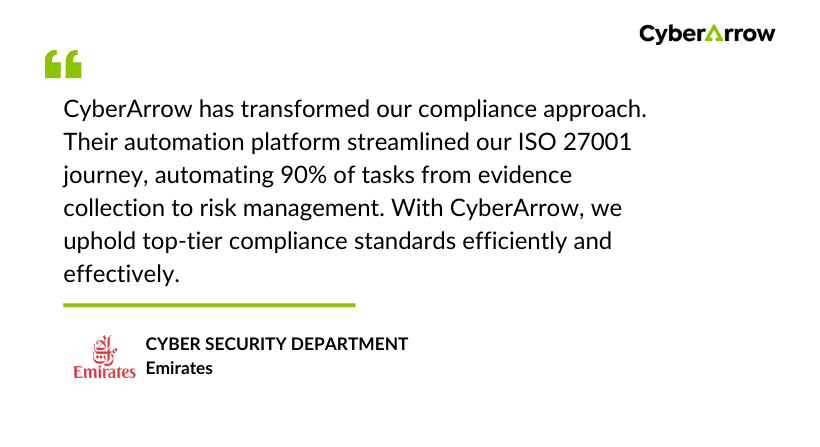
See what Emirates have to say about CyberArrow GRC:
Don’t let compliance challenges slow you down. Let CyberArrow help you overcome the complexities and protect your business!
