What is the cost of non-compliance with PCI DSS?
As discussed in our previous blogs, the Payment Card Industry Data Security Standard (PCI DSS) sets forth a comprehensive framework to safeguard cardholder data and ensure secure transactions. Non-compliance with PCI DSS can have severe consequences for businesses, ranging from financial penalties to irreparable damage to their reputation.
This article explores the potential costs associated with non-compliance, emphasizing the significance of adhering to PCI DSS guidelines.
Understanding PCI DSS
PCI DSS is a set of security standards developed by major credit card companies to secure cardholder data during online transactions. It applies to all entities that handle, process, or store credit card information. The standard encompasses 12 compliance requirements, including maintaining a secure network, implementing strong access control measures, regularly monitoring and testing networks, and maintaining a policy that addresses information security.
The cost of non-compliance with PCI DSS
The cost of non-compliance is not only financial losses but also loss of customer trust and payment processing privileges. Some of the consequences of non-compliance with PCI DSS include the following:
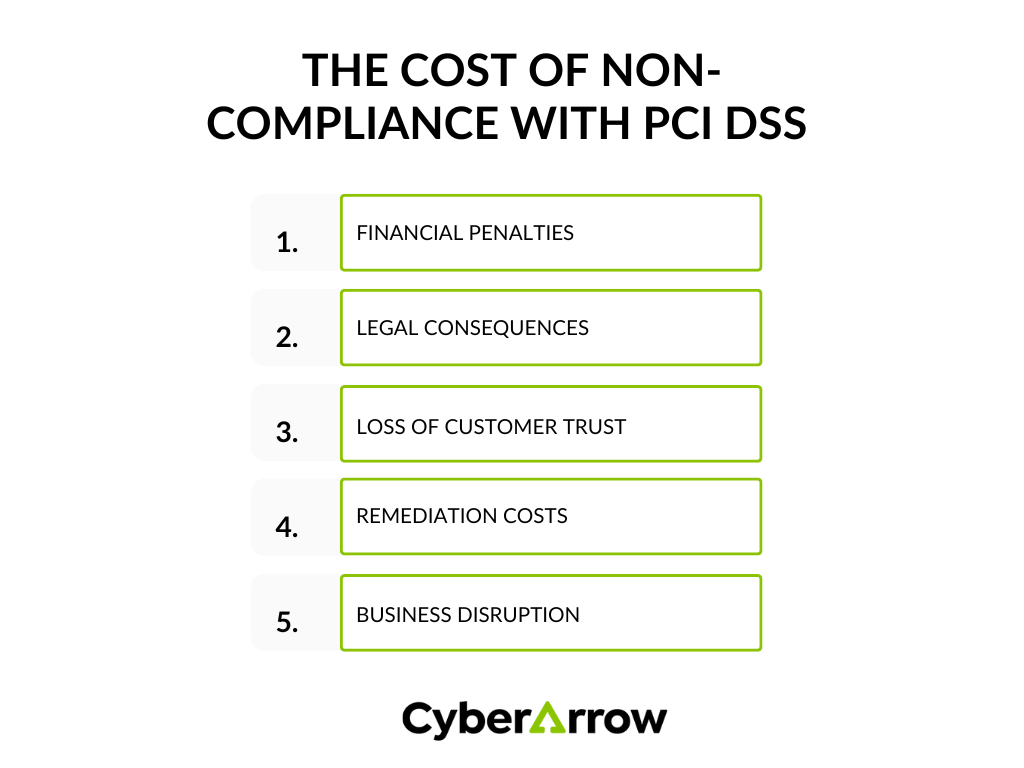
1. Financial penalties
Non-compliance with PCI DSS can result in significant financial penalties imposed by card brands and acquiring banks. These penalties vary depending on the nature and severity of the non-compliance. The fines can range from a few thousand dollars to millions, with additional monthly fines until compliance is achieved. For small businesses, such penalties can be financially crippling and even force them to shut down operations.
Non-compliance can result in financial losses and loss of payment processing privileges. The penalties for non-compliance with PCI standards can be summarized as follows:
- During the first three months of non-compliance, monthly fees can range from $5,000 to $10,000.
- The charges increase from $25,000 to $50,000 per month from months four to six.
- After the seventh month, the fees further escalate to $50,000 to $100,000 monthly.
Apart from non-compliance costs, there are fines for PCI breaches. In the event of a data breach, each affected customer may face penalties of $50 to $90 per person, with a maximum cumulative penalty of $500,000, regardless of their PCI compliance status.
2. Legal consequences
Non-compliance with PCI DSS may expose businesses to legal liabilities. In the event of a data breach, affected customers can file lawsuits seeking damages for negligence or breach of contract. The costs associated with legal defense, settlements, and potential reputational damage can be substantial, impacting the business’s bottom line and long-term viability.
Download your free PCI DSS checklist and assess your PCI DSS audit-readiness in minutes.
Download now
3. Loss of customer trust
Maintaining customer trust is crucial for any business. A data breach resulting from non-compliance with PCI DSS can lead to a loss of customer confidence and loyalty. Customers may hesitate to transact with a business that has experienced a security incident. The negative publicity and reputation damage can tarnish the brand image, making it challenging to regain customer trust and attract new customers. The long-term consequences of a damaged reputation can be detrimental to the business’s overall success.
4. Remediation costs
In addition to financial penalties and legal repercussions, non-compliance with PCI DSS incurs substantial costs associated with remediation. Businesses that fail to meet the security requirements must invest in upgrading their systems, implementing necessary security measures, and hiring experts to assess and validate compliance. These costs can be significant, straining the financial resources of the organization.
5. Business disruption
A data breach resulting from non-compliance can cause significant disruption to business operations. When a breach occurs, businesses must invest time, resources, and manpower to identify the cause, contain the breach, and notify affected parties. The resulting downtime and loss of productivity can directly impact revenue generation and customer satisfaction.
The cost of non-compliance with PCI DSS extends beyond mere financial penalties. Businesses must recognize the importance of adhering to PCI DSS guidelines to protect their finances and reputation. Compliance with PCI DSS mitigates the risk of data breaches, builds trust with customers, and demonstrates a commitment to safeguarding sensitive information.
Learn more about PCI DSS with our PCI DSS compliance hub.
Quick link: 5 common compliance standards
FAQs
What consequences may result from not complying with PCI DSS?
Non-compliance with the PCI DSS can have several consequences. These consequences can include financial penalties imposed by card brands and acquiring banks, which can be substantial. Non-compliance can also result in reputational damage, loss of customer trust, and potential limitations or restrictions imposed by payment processors or acquiring banks.
What is the highest fine for non-compliance with PCI DSS?
The highest fine for PCI DSS non-compliance can vary depending on the specific circumstances and the card brand or acquiring bank involved. Fines can reach into the millions of dollars for severe cases of non-compliance. According to the PCI Compliance Guide, payment providers have the authority to impose fines ranging from $5,000 to $100,000 per month (approximately £4,000 to £80,000 in GBP) on organizations found to be non-compliant with PCI DSS.
Who determines PCI fines?
PCI fines are typically determined by the card brands (Visa, Mastercard, etc.) and acquiring banks. These entities have established the PCI DSS framework and guidelines, and they enforce compliance among businesses that process credit card transactions. The fines are imposed based on the severity of the non-compliance, the number of cardholder records compromised, the duration of the non-compliance, and other factors. The card brands and acquiring banks have the authority to assess and impose fines on non-compliant businesses.
Automate compliance and eliminate penalties with CyberArrow
The cost of non-compliance with PCI DSS can be detrimental to businesses, both financially and reputationally. However, with a compliance automation tool like CyberArrow, organizations can mitigate these risks and avoid penalties.
By streamlining compliance management, providing real-time monitoring and alerting, reporting, and offering customizable workflows and controls, CyberArrow GRC empowers businesses to stay compliant and penalty-free. It not only safeguards against financial liabilities but also ensures peace of mind and enables businesses to focus on their core operations.
Read also about OWASP : OWASP Web Security Testing Guide
Embrace CyberArrow GRC today and experience the power of automated compliance management to protect your business from the costly consequences of non-compliance with PCI DSS.
See what our clients have to say about CyberArrow GRC: