

Who does the GDPR apply to? A complete guide
The General Data Protection Regulation (GDPR) is one of the most comprehensive data privacy laws in the world. It was introduced by the European Union (EU) to protect the personal data of individuals and applies to businesses, organizations, and even non-profits that handle such data.
But who exactly falls under the scope of GDPR? Does it only apply to businesses in the EU, or does it have a global impact?
In this guide, we will answer the question “Who does the GDPR apply to?”, explain key requirements, and show how businesses can simplify GDPR compliance with CyberArrow GRC.
Understanding the scope of GDPR
GDPR applies to any organization that processes the personal data of individuals within the European Economic Area (EEA). This includes:
- Businesses located in the EU
- Businesses outside the EU that handle EU personal data
- Organizations of all sizes, including small businesses and non-profits
This means that GDPR is not just for European companies. Even if a company operates from the United States, Canada, or Asia, it still needs to comply with GDPR if it collects or processes data from individuals in the EU.
Who must comply with GDPR?
GDPR applies to different types of businesses and organizations, depending on their role in handling personal data.
1. Companies inside the EU
If a company is registered in any EU country, it must comply with GDPR, regardless of whether its customers are in the EU or elsewhere.
For example, a French e-commerce store selling products worldwide must comply with GDPR, even when serving customers outside the EU.
2. Companies outside the EU but serving EU citizens
Any business outside the EU must comply with GDPR if it offers goods or services to people in the EU or monitors their behavior, such as tracking online activity.
For example, a U.S.-based SaaS company with European users must follow GDPR rules, even if it has no physical presence in the EU.
3. Data controllers and data processors
GDPR applies to two main types of entities:
- Data controllers: Organizations that decide why and how personal data is processed.
- Data processors: Companies that process data on behalf of a controller.
For example, an EU-based healthcare provider storing patient data in a cloud service run by an external IT company must ensure that both the provider and IT company comply with GDPR.
4. Small businesses and non-profit organizations
GDPR does not exempt small businesses, start-ups, or non-profits. If they process personal data, they must comply.
For example, a small local shop in Germany collecting customer email addresses for marketing must follow GDPR guidelines.
5. Government agencies and public institutions
Public institutions handling EU citizens’ personal data must also complywith GDPR.
For example, a city council in Italy managing a citizens’ database must ensure GDPR compliance.
Who is not covered by GDPR?
While GDPR has a broad scope, it does not apply to:
- Personal or household activities, such as saving contacts on a phone
- Law enforcement and national security, which follow different regulations
- Companies that do not process personal data from the EU
For example, a local bakery in India that does not sell to EU customers is not required to follow GDPR.
Key GDPR requirements for businesses
If your business falls under GDPR, you must meet these key requirements:
1. Obtain lawful consent
Organizations must have a legal basis to collect and process personal data. This can be through explicit user consent, contractual necessity, or legal obligations.
For example, websites must ask users for permission before tracking cookies.
2. Implement data security measures
GDPR requires businesses to protect personal data from breaches and leaks. This includes encryption, access controls, and regular security audits.
For example, an online bank must encrypt customer account details.
3. Allow users to control their data
Under GDPR, individuals have rights over their personal data, including:
- Right to access: Users can request a copy of their data.
- Right to be forgotten: Users can ask businesses to delete their data.
- Right to data portability: Users can transfer their data to another provider.
For example, an EU-based SaaS company must allow users to delete their accounts permanently.
4. Report data breaches
If a data breach occurs, companies must report it to authorities within 72 hours and notify affected users.
For example, if a retail store’s payment system is hacked, they must inform affected customers immediately.
5. Conduct Data Protection Impact Assessments (DPIAs)
Organizations that process sensitive data must assess risks and document mitigation measures.
For example, a hospital using artificial intelligence to process medical records must conduct a DPIA.
Failure to meet these requirements can lead to GDPR fines of up to 20 million euros or 4 percent of annual revenue, whichever is higher.
How to simplify GDPR compliance with CyberArrow GRC
GDPR compliance is complex and time-consuming when handled manually. CyberArrow GRC automates the entire process, making compliance easier for businesses of all sizes.
1. Automated compliance workflows
CyberArrow GRC provides pre-configured GDPR templates and workflows, reducing the manual effort needed to meet compliance requirements.
2. Centralized data management
The platform stores and tracks all compliance-related data in one place, making it easier for organizations to manage GDPR documentation.
3. Real-time compliance monitoring
CyberArrow GRC continuously monitors GDPR compliance status, sending alerts for potential risks and non-compliance.
4. Automated risk assessments and DPIAs
The platform automates Data Protection Impact Assessments (DPIAs), identifying risks and suggesting mitigation strategies.
5. Easy audit preparation
CyberArrow GRC generates audit-ready reports, making it simple for businesses to demonstrate compliance to regulators.
6. Continuous regulatory updates
GDPR regulations evolve over time. CyberArrow GRC ensures businesses stay up-to-date by automatically updating compliance policies.
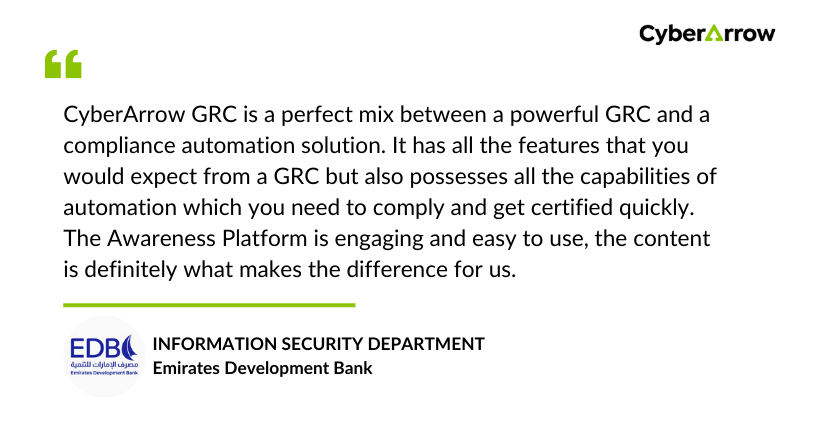
See what our clients have to say about CyberArrow GRC:
Conclusion
GDPR applies to any organization that collects, stores, or processes personal data from individuals in the European Economic Area, regardless of its location. Businesses, government agencies, non-profits, and data processors must comply with GDPR’s strict requirements.
However, manual compliance can be overwhelming. This is where CyberArrow GRC helps businesses:
- Automate GDPR workflows
- Manage compliance documents efficiently
- Conduct risk assessments effortlessly
- Monitor compliance in real time
- Prepare for audits with minimal effort
For businesses looking to simplify GDPR compliance, CyberArrow GRC is the ideal solution.
