What type of businesses need to comply with SOC 2?
In an era dominated by digital transactions and interconnected systems, the security of sensitive data has become paramount. With data breaches and cyberattacks on the rise, businesses face the challenge of safeguarding their customers’ information while maintaining the trust of stakeholders.
This is where SOC 2 compliance becomes necessary. Businesses today need to comply with SOC 2 to ensure they are keeping sensitive data safe.
But how to understand if your business needs to comply with SOC 2? Let’s explore how in this article.
What is SOC 2 compliance?
Imagine a world where businesses could seamlessly assure their customers that their data is in safe hands. SOC 2 compliance makes this possible. SOC 2, short for “Service Organization Control 2,” is a widely recognized framework for evaluating the controls to secure customer data and sensitive information.
It focuses on five essential criteria: security, availability, processing integrity, confidentiality, and privacy. Businesses that comply with SOC 2 standards demonstrate their commitment to maintaining the highest levels of security and data protection.
Also learn: SOC 2 controls: What you need to satisfy Trust Services Criteria (TSC)?
What type of businesses need to comply with SOC 2?
Here is a list of businesses that need to comply with SOC 2:
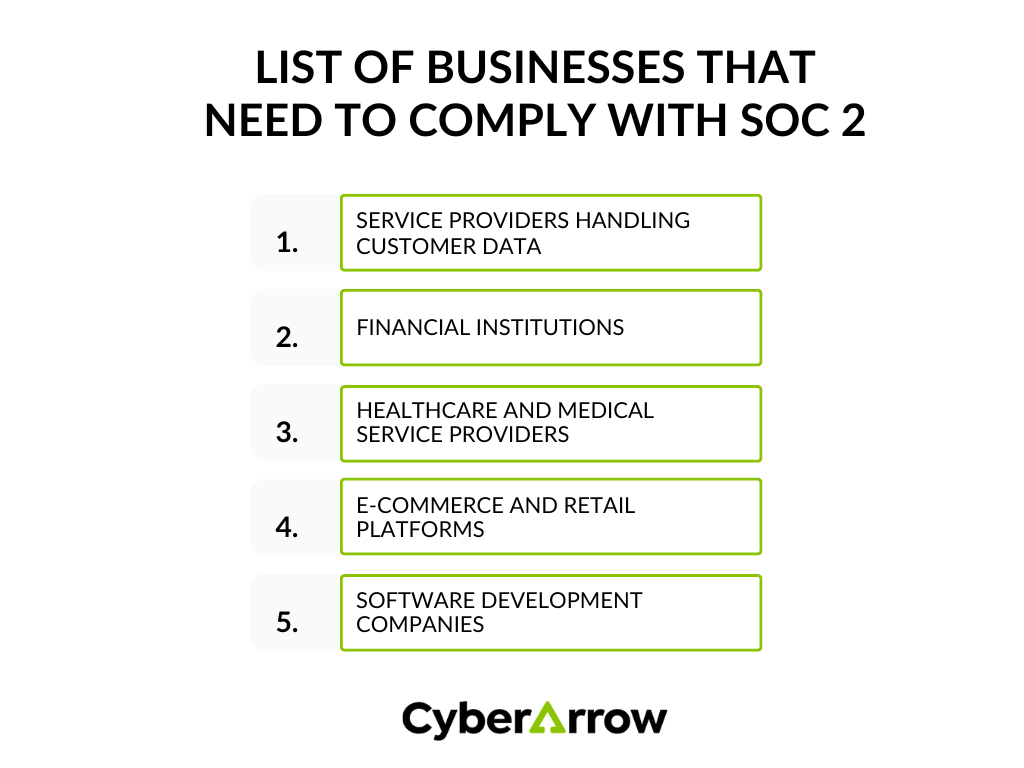
1. Service providers handling customer data
In the digital age, Software-as-a-Service (SaaS) providers, cloud services, and data centers have to handle vast amounts of customer data. From personal information to financial records, these service providers need to be entrusted with data that must remain secure. SOC 2 compliance is not only a regulatory requirement for such businesses but also a testament to their dedication to safeguarding customer trust.
2. Financial institutions
Financial institutions stand as pillars of economic stability, ensuring the smooth flow of transactions and the security of personal financial data. Banks, credit unions, investment firms, and payment processors fall within this category. SOC 2 compliance provides the necessary assurance that these institutions have robust controls in place to prevent breaches and ensure the integrity of financial operations.
3. Healthcare and medical service providers
In the healthcare sector, the privacy of patient data is paramount. Healthcare providers, health IT companies, and medical organizations must adhere to strict standards to protect patient health records and sensitive medical information. SOC 2 compliance aligns with regulations like HIPAA (Health Insurance Portability and Accountability Act) and demonstrates a commitment to maintaining the confidentiality and privacy of patient data.
4. E-commerce and retail platforms
The world of online shopping and e-commerce relies heavily on the exchange of personal and financial data. E-commerce businesses and online retail platforms must secure payment information and protect customers from potential fraud. SOC 2 compliance provides customers with the peace of mind that their financial information is in safe hands, fostering trust in online transactions.
5. Software development companies
Software development companies craft solutions to streamline operations and enhance customer experiences. These companies often handle intellectual property and sensitive data. SOC 2 compliance is vital for them to showcase their dedication to secure software development practices, ensuring their products don’t become vulnerable.
Benefits of SOC 2 compliance
Beyond the regulatory requirements, SOC 2 compliance brings a host of benefits to businesses:
- Enhanced customer trust and credibility: Customers are increasingly concerned about data security and privacy. SOC 2 compliance is a testament that a business takes these concerns seriously and has implemented measures to protect customer data.
- Competitive advantage: In a market where data breaches can spell disaster for a company’s reputation, SOC 2 compliance becomes a competitive advantage. It distinguishes compliant businesses from those that might be vulnerable to security breaches.
- Strengthened internal security practices: The process of achieving SOC 2 compliance often leads to an introspective analysis of an organization’s security practices. This leads to improved internal processes and a more robust security posture.
- Improved risk management and incident response: Businesses that comply with SOC 2 standards are better equipped to identify potential risks and develop mitigation strategies. Additionally, they are more prepared to respond effectively to any security incidents that may arise.
The SOC 2 compliance process
Let’s explore the steps involved in the SOC 2 compliance process.
Also learn: What to look for when selecting the right SOC 2 audit firm?
- Defining the scope: Before embarking on the journey toward SOC 2 compliance, a business must define the scope of its compliance efforts. This involves identifying the systems, processes, and data that fall within the compliance scope.
- Assessing controls: Once the scope is defined, the organization evaluates its existing controls against the Trust Services Criteria (TSC) outlined in SOC 2. This assessment identifies gaps and weaknesses that need to be addressed.
- Third-party audits: Achieving SOC 2 compliance involves engaging a third-party auditor to conduct an independent assessment. This step ensures objectivity and credibility in the compliance process, as auditors evaluate the organization’s controls against established standards.
- Remediation and reassessment: Identified gaps and weaknesses are addressed through a remediation process. After implementing the necessary security measures, the organization undergoes reassessment to ensure that the controls are now aligned with SOC 2 standards.
FAQs
What businesses need to comply with SOC 2?
SOC 2 standard is primarily relevant to businesses that provide services that handle sensitive data or perform critical functions for their clients. These include SaaS companies, organizations that deal with business intelligence and analytics, and businesses in technology, finance, healthcare, and more.
What benefits do businesses gain from achieving SOC 2 compliance?
Achieving SOC 2 compliance offers several benefits to businesses. It enhances your credibility and trustworthiness in the eyes of clients, partners, and stakeholders by demonstrating your commitment to data security and integrity. SOC 2 compliance can lead to new business opportunities, as many clients require their service providers to be SOC 2 compliant.
Are there specific SOC compliance requirements for different types of businesses?
Yes, there are different types of SOC reports tailored to various business needs. SOC 1 reports focus on controls related to financial reporting, making them relevant to businesses that provide outsourced financial services.
SOC 2 reports assess controls related to security, availability, processing integrity, confidentiality, and privacy. These are applicable to a wide range of businesses, especially those in technology, healthcare, and cloud services.
Additionally, SOC 3 reports provide a general overview of a company’s controls and are suitable for public distribution.
Simplify SOC 2 compliance with CyberArrow GRC
As technology continues to evolve, the need for robust data security measures becomes ever more pressing. SOC 2 compliance is not just a buzzword; it’s a critical framework that helps businesses protect sensitive information, build trust with customers, and demonstrate their commitment to data security. However, organizations may find it challenging to navigate the complex landscape of data security and ensure that their customers’ data remains safe and secure.
CyberArrow is a compliance automation platform that can simplify the SOC 2 compliance process for your business by automating manual tasks. CyberArrow accelerates evidence collection for SOC 2 controls with its automation technology, ensuring swift compliance across industries.
Whether you’re a financial institution, healthcare provider, e-commerce platform, or software developer, CyberArrow helps you to implement SOC 2 requirements efficiently. From certification automation to zero-touch audits and ongoing security monitoring, CyberArrow offers a comprehensive solution.
See what our clients have to say about CyberArrow GRC: