


What is the latency of a system?
In the world of computing and networking, one word you’ll often hear is latency. Whether you’re streaming a video, playing an online game, or working with cloud-based applications, latency plays a crucial role in your overall experience. But what exactly is system latency, and why is it so important?
This blog will break down the concept of system latency, explain its causes, explore how it affects performance, and discuss ways to reduce it. By the end of this post, you’ll have a clear understanding of what latency is and why it matters.
Understanding latency: The basics
At its core, latency refers to the time it takes for a system to respond to a request. In other words, it’s the delay between an action and the system’s reaction.
For example:
- When you click on a link, the latency is the time it takes for the page to load.
- In gaming, it’s the delay between pressing a button and seeing the action on the screen.
- In networks, it’s the time taken for a data packet to travel from the source to the destination.
Latency is typically measured in milliseconds (ms) and is a critical factor in determining the performance and responsiveness of a system.
Types of latency
There are various types of latency, depending on the context. Let’s explore some of the most common ones:
1. Network latency
This refers to the delay in data transmission over a network. It’s influenced by factors such as the distance between devices, the quality of the connection, and the number of network hops.
Example: When you’re video calling someone in another country, the delay in audio and video is due to network latency.
2. Disk latency
Disk latency is the time it takes for a storage device to retrieve or write data. It depends on the type of storage medium (HDD, SSD, etc.) and the speed of the hardware.
Example: Opening a large file on an HDD takes longer compared to an SSD because HDDs have higher latency.
3. Application latency
This refers to the time it takes for an application to process a request. It’s influenced by the software’s code efficiency, server performance, and underlying architecture.
Example: If a web app takes several seconds to load, the delay is caused by application latency.
4. Database latency
Database latency is the delay in retrieving or updating data within a database. It can be caused by slow queries, large datasets, or inefficient indexing.
Example: Searching for a product in an online store might take longer due to database latency.
Quick link: Business resilience vs. business continuity
Factors that contribute to latency
Latency doesn’t occur without reason. Several factors contribute to delays in a system, including:
1. Distance
The farther data has to travel, the longer it will take. This is particularly noticeable in global communication where data travels between continents.
2. Network congestion
High traffic on a network can slow down data transmission, increasing latency. Think of it like a traffic jam on a highway.
3. Hardware limitations
Older or slower hardware, such as outdated servers or hard drives, can add significant delays.
4. Processing power
A system with limited processing capabilities will take longer to handle tasks, resulting in higher latency.
5. Inefficient code
Poorly written software or applications with unoptimized algorithms can slow down response times.
Quick link: What is ServiceNow ITSM?
How latency impacts performance
Latency can have a significant impact on system performance and user experience. Let’s look at some examples:
1. Gaming
In online gaming, latency is often referred to as ping. A low ping (below 50ms) ensures smooth gameplay, while a high ping (above 100ms) can result in lag, making the game unplayable.
2. Video streaming
High latency causes buffering, interruptions, and reduced video quality. This can be frustrating for users watching their favorite shows or live events.
3. Web applications
For businesses, high latency in web apps can lead to a poor user experience, resulting in lost customers and revenue.
4. Real-time systems
In systems like online trading platforms or IoT devices, even a slight delay can lead to significant errors or missed opportunities.
Measuring latency
Latency can be measured using various tools and techniques. Some common methods include:
1. Ping command
The ping command is widely used to measure network latency. It sends a data packet to a server and calculates the round-trip time.
2. Traceroute
Traceroute identifies the number of hops (intermediate devices) data takes to reach its destination, helping pinpoint delays.
3. Application monitoring tools
Tools like New Relic, AppDynamics, and Datadog monitor latency in applications and servers, providing detailed insights.
How to reduce latency
Reducing latency is essential for improving system performance. Here are some strategies to achieve this:
1. Optimize networks
- Use a content delivery network (CDN) to deliver content faster.
- Upgrade network hardware to reduce congestion.
2. Upgrade hardware
Switching from HDDs to SSDs or using faster processors can significantly lower disk and processing latency.
3. Optimize code and databases
- Write efficient code with fewer bottlenecks.
- Use indexing and caching to speed up database queries.
4. Reduce distance
Deploy servers closer to users using edge computing or regional data centers.
5. Prioritize traffic
Use quality of service (QoS) settings to prioritize critical data, ensuring faster delivery.
Quick link: Creating a business continuity plan
CyberArrow’s role in managing latency
While latency can’t be eliminated entirely, tools like CyberArrow GRC can help businesses optimize processes and minimize delays. By automating compliance and streamlining workflows, CyberArrow ensures systems run efficiently without unnecessary bottlenecks.
For organizations looking to improve performance and stay compliant with industry standards, CyberArrow GRC is a game-changer.
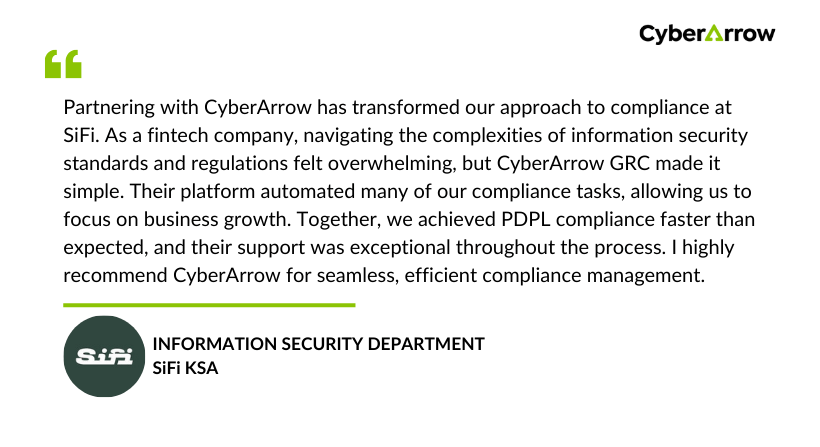
See what SiFi has to say about CyberArrow GRC:
Conclusion
Latency is a critical factor in the performance of any system. Whether it’s caused by distance, hardware, or inefficient code, it can significantly impact user experience and operational efficiency. Understanding the causes of latency and adopting strategies to reduce it is essential for businesses to stay competitive.
If you’re looking for a way to streamline your operations and reduce compliance-related delays, CyberArrow GRC is the solution you need.
