


What is the fraud triangle and how to use it to prevent organizational fraud
Fraud is one of the most common risks that can quietly damage a company’s finances, reputation, and trust. It doesn’t always start with bad intentions. Often, it begins with small decisions made under pressure or when oversight is weak. Understanding why people commit fraud is the first step to preventing it.
The fraud triangle helps explain this behavior by highlighting three main factors that lead to fraudulent actions: pressure, opportunity, and rationalization. Each of these factors reveals something about how fraud develops and how it can be stopped.
In this article, we’ll explain what the fraud triangle is, explore its three elements, and discuss how organizations can apply it to prevent fraud and strengthen internal controls.
What is the fraud triangle?
The fraud triangle is a behavioral model developed by criminologist Donald Cressey to explain the conditions that lead individuals to commit fraud. According to Cressey, fraud occurs when three factors come together: pressure, opportunity and rationalization.
Rather than viewing fraud as random or purely malicious, the model helps organizations understand it as a predictable outcome of these overlapping circumstances. This makes it easier to detect warning signs early and strengthen prevention measures.
Quick link: What is CEO fraud?
Elements of the fraud triangle
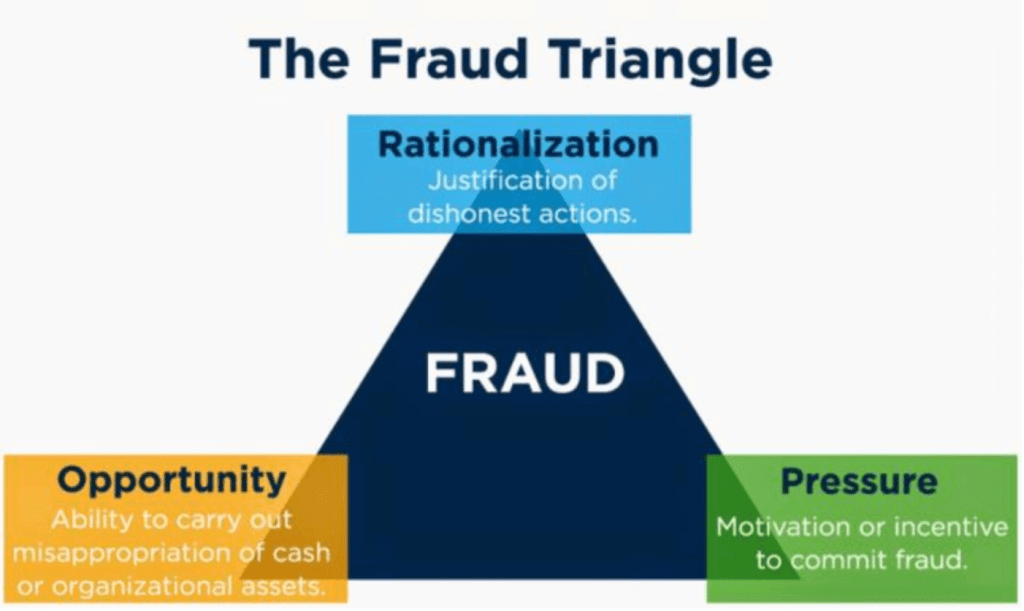
1. Pressure
This is the driving force behind most fraud cases. It could be personal financial trouble, pressure to meet targets, or even a desire to maintain a certain lifestyle. For example, an employee facing mounting debt might feel compelled to manipulate financial statements to earn a performance bonus.
2. Opportunity
Fraud is only possible when there’s an opening to commit it. Weak internal controls, poor segregation of duties, or a lack of audits create such opportunities. For instance, if one person is responsible for both processing and approving payments, it becomes easier to conceal fraudulent transactions.
3. Rationalization
Even when pressure and opportunity exist, most people still need to justify their actions before committing fraud. They might tell themselves they’re only borrowing money or that the company owes them for being underpaid. Rationalization allows individuals to commit unethical acts without feeling guilty.
Quick link: What is RCSA (Risk and Control Self-Assessment)?
How to use the fraud triangle to prevent organizational fraud
Understanding the fraud triangle is only valuable if it leads to action. Here’s how organizations can apply the model to strengthen fraud prevention:
1. Identify potential pressures
Evaluate the factors that could motivate employees to commit fraud. In a financial institution, these could include high sales targets, job insecurity, or compensation tied heavily to performance. Conduct employee surveys or one-on-one discussions to detect stressors that might increase pressure.
2. Minimize opportunities through internal controls
Implement robust checks and balances. For instance, in the same financial institution, segregate duties so that no employee can approve and record transactions simultaneously. Automate approval workflows, use audit logs, and limit system access based on job roles.
3. Encourage ethical decision-making
Train employees on ethical standards and compliance policies. Explain the real-world consequences of fraud, both personal and organizational. Reinforce that ethical behavior is valued more than meeting performance numbers.
4. Strengthen monitoring and audits
Introduce continuous monitoring systems that flag suspicious activities, such as repeated adjustments to financial records or transactions just below approval limits. Regular internal audits and external reviews also help detect weaknesses before they’re exploited.
5. Build a culture of transparency and reporting
Encourage employees to report unethical behavior without fear of retaliation. Anonymous reporting systems or whistleblower hotlines can be powerful tools. For example, the financial institution can set up a secure digital reporting channel for employees to share concerns directly with compliance officers.
By applying these steps consistently, organizations can break one or more sides of the fraud triangle, making fraud significantly harder to occur.
Best practices for reducing fraud risk in your organization
Here is a list of a few best practices you can use to minimize fraud risk in your organization.
- Conduct regular fraud risk assessments to identify vulnerable areas.
- Implement role-based access controls and approval limits.
- Offer frequent ethics and awareness training for all employees.
- Rotate job responsibilities periodically to prevent control familiarity.
- Use data analytics to detect anomalies or suspicious behavior early.
- Maintain a clear anti-fraud policy and communicate it company-wide.
Takeaway
The fraud triangle is one of the most valuable frameworks for understanding and preventing fraud within organizations. Businesses can take proactive steps to close gaps in their systems, strengthen internal controls, and build a culture of transparency.
Fraud prevention isn’t only about enforcing rules; it’s about creating an environment where unethical behavior becomes harder to justify and easier to detect. When paired with regular audits, ethical training, and automated compliance tools, the fraud triangle becomes a powerful guide for maintaining integrity and protecting organizational assets.
FAQs
What are the stages of the fraud triangle?
The stages of the fraud triangle represent the sequence leading to fraud: it begins with pressure that creates motivation, followed by opportunity that allows the act to occur, and ends with rationalization, where the individual mentally justifies their behavior.
Who developed the fraud triangle?
The fraud triangle was developed by criminologist Donald Cressey, who studied patterns of financial fraud and identified common elements that motivated people to act dishonestly within trusted positions.
How can organizations apply the fraud triangle in practice?
Businesses can apply the fraud triangle by assessing internal controls, monitoring high-pressure areas such as financial performance targets, and fostering a culture of ethics where employees feel supported and accountable.
What are the elements of Cressey’s fraud triangle?
Cressey’s fraud triangle includes three key elements that explain why individuals commit fraud: pressure, opportunity, and rationalization.
What is the 10-80-10 rule for fraud?
The 10-80-10 rule suggests that in any organization, 10% of people will never commit fraud, 10% are actively seeking ways to do so, and the remaining 80% could be influenced depending on circumstances like a lack of controls or an ethical culture.
Strengthen your compliance and risk management with CyberArrow
Understanding fraud risks is just one part of maintaining a resilient organization. Compliance risks are equally important. CyberArrow helps businesses identify, assess, and manage compliance risks across processes and systems, ensuring you stay compliant and audit-ready.
By centralizing your risk management efforts, you can gain visibility into vulnerabilities, automate evidence collection, and maintain regulatory alignment without manual effort.
Key features of CyberArrow include:
- Automated risk assessments: Evaluate risks across your organization efficiently.
- Compliance monitoring: Keep track of regulatory requirements and maintain audit-ready records.
- Security and process awareness: Educate teams on risk policies and compliance obligations.
- Integrated dashboards: Visualize risks, controls, and compliance status in real-time.
Ensure your organization is prepared, compliant, and resilient.
