What is Qatar NIA (National Information Assurance)?
With the increasing risk of cyberattacks, securing sensitive information is a crucial concern for organizations worldwide. Qatar, being at the forefront of digital transformation, has introduced the Qatar NIA (National Information Assurance) framework to defend against cyber threats and data vulnerabilities.
Over the last year, 18% of Qatari enterprises encountered a cybersecurity incident, and 5% faced more than five incidents. The financial toll of each incident averaged around $4.94 million. Acknowledging the role of cybersecurity in combating cybercrime, Qatar National Cyber Security Agency approved Qatar NIA.
What is Qatar NIA? How does it help organizations in Qatar implement security measures?
Let’s explore in this article.
What is Qatar NIA?
Qatar NIA is a comprehensive framework designed to provide information security best practices and guide organizations to protect the integrity, confidentiality, and availability of organizational information assets. Its primary objective is to establish effective information security controls that help organizations secure vital information assets, manage risks, and ensure regulatory compliance.
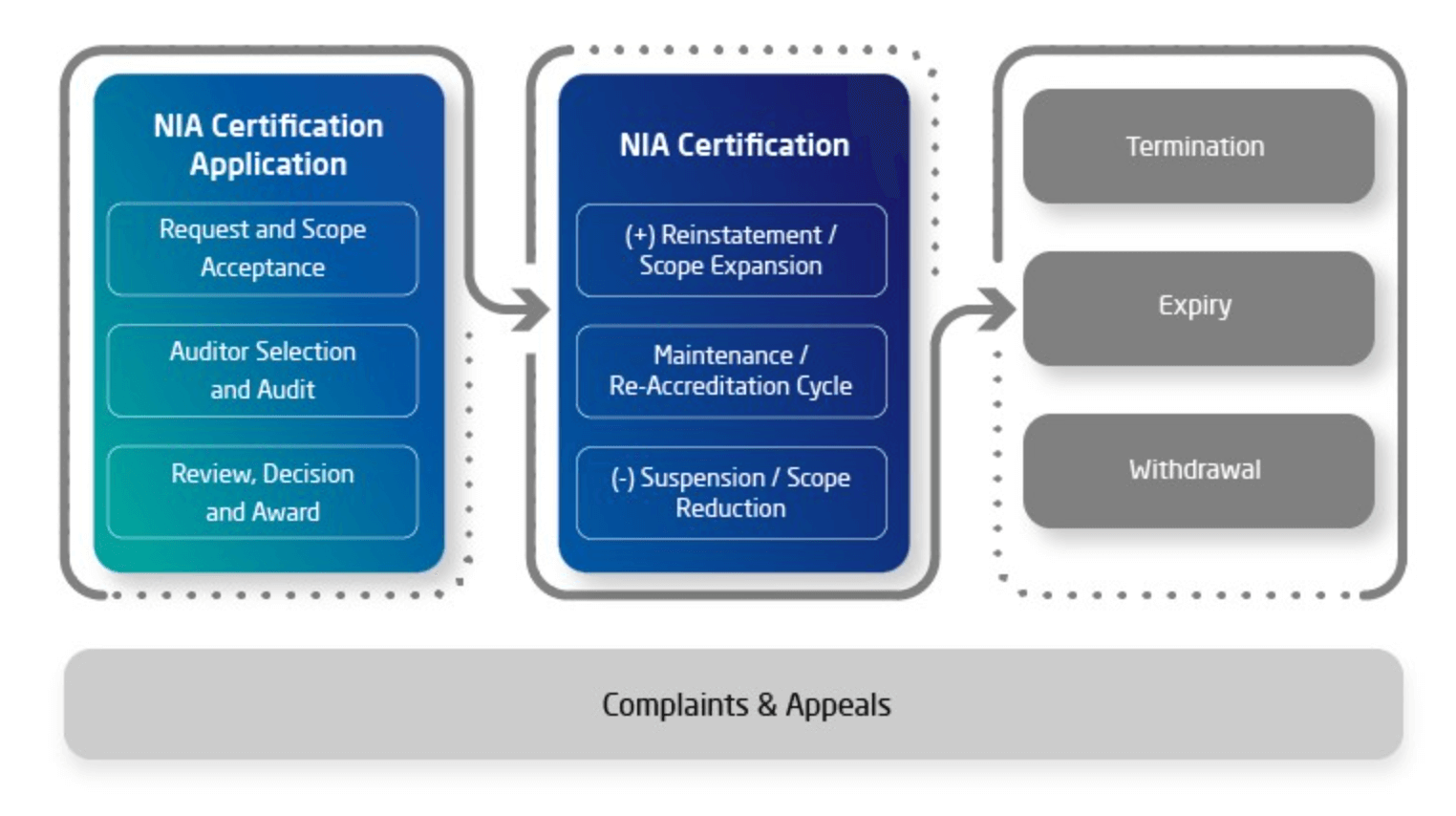
Organizations complying with the NIA policy are required to get NIA certification to demonstrate their compliance.
What is NIA certification?
Any organization complying with the NIA policy is required to get certified. This certification is a formal recognition that organizations, as well as individuals, have undergone a rigorous audit by an authorized independent entity, confirming their compliance with specific information security criteria.
National Information Assurance certification is based on the NIA policy control set. These controls, including baseline and recommended measures, are aligned with ISO 27001, incorporating best practices and standards like PCI DSS. Organized into 26 domains, with emphasis on procedural activities and technology, the implementation is strategically guided by a Business Impact Assessment (BIA).
Who needs to comply with Qatar NIA?
The scope of compliance with the Qatar National Information Assurance (NIA) policy extends across all business segments within the State of Qatar. This policy outlines a comprehensive information classification methodology designed to apply to various entities. The purpose of this classification is to assign suitable classification levels to data, assess associated risks, and implement corresponding protective measures.
The NIA Policy addresses specific threats, including
- Unauthorized disclosure
- Unauthorized modification,
- Non-availability
For an organization to attain NIA compliance, it is necessary to establish and implement an Information Security Management System (ISMS) aligned with the requirements laid out in the NIA Policy. This systematic approach ensures that the organization meets the standards and safeguards against the identified threats, contributing to the overall security posture of the State of Qatar’s information landscape.
Benefits of complying with Qatar NIA
Compliance with the Qatar National Information Assurance (NIA) Policy offers several compelling advantages for organizations within the State of Qatar:

- Enhanced information security posture: Implementing the guidelines outlined in the NIA Policy equips organizations with a robust set of controls and recommendations for safeguarding information and assets. This contributes to an overall enhancement of the organization’s information security posture.
- Adherence to international standards and best practices: The NIA Policy aligns with various international standards and best practices, including ISO 27001, NIST, and PCI DSS. This alignment ensures compliance with global benchmarks but also facilitates adherence to relevant regulations and requirements, providing organizations with a structured and recognized framework.
- Mitigation of data breach risks: By incorporating the controls and guidelines mentioned in the NIA Policy, organizations can proactively reduce the risk of data breaches and other security incidents. This approach is crucial in mitigating the potential financial and reputational impacts associated with such breaches.
- Boosted confidence in information security: Following the NIA Policy instills confidence in the security of an organization’s information and assets. This increased assurance extends not only within the organization but also resonates among external stakeholders.
- Cost-efficient security improvements: The NIA Policy is a valuable resource for organizations to identify cost-effective strategies for enhancing their information security posture. Through improved risk management and incident response planning, organizations can identify areas where efficient investments can yield significant security improvements while optimizing costs.
Automate NIA certification to streamline compliance
Achieving and maintaining compliance with the Qatar NIA Policy can be a complex and demanding process. However, organizations can significantly ease this journey by embracing automation to streamline NIA certification.
Automating the NIA certification process offers several advantages, including:
- Efficiency gains: Automation reduces the manual effort and time traditionally associated with compliance processes. This efficiency gain allows organizations to navigate the certification process more swiftly and with precision.
- Accuracy and consistency: Automation ensures higher accuracy and consistency in implementing the controls and guidelines outlined in the NIA Policy. This is crucial for meeting the stringent requirements and mitigating the risk of errors.
- Real-time monitoring: An automated system provides real-time monitoring capabilities, enabling organizations to promptly identify and address any deviations from the NIA Policy requirements.
- Audit trail and documentation: Automation facilitates the creation of comprehensive audit trails and documentation, simplifying the reporting and auditing processes required for NIA Certification. This supports compliance efforts and provides valuable insights for continuous improvement.
To further expedite your NIA Certification journey, consider leveraging the CyberArrow Compliance Automation Platform. It is designed to streamline and automate the certification process, ensuring a smooth and efficient path toward compliance with the NIA Policy.
Ready to automate Qatar NIA? Schedule a free demo with CyberArrow today to ensure a secure and compliant future.
FAQs
What is Qatar NIA standard?
Qatar NIA standard is designed to provide information security best practices and guide organizations in Qatar to protect the integrity, confidentiality, and availability of organizational information assets.
What is NIA certification?
Organizations complying with the NIA policy are required to get NIA certification to demonstrate their compliance. This certification is a formal recognition that organizations, as well as individuals, have undergone a rigorous audit by an authorized independent entity, confirming their compliance with specific information security criteria.
What is Qatar Cybersecurity Framework (QCF)?
Qatar CSF is a set of best practices and guidelines to help organizations follow and implement cybersecurity measures. It aims to secure critical national services in Qatar.
Read how Emirates enhanced Information Security by automating ISO 27001 with CyberArrow.
See what Emirates has to say about CyberArrow: