

What is GRC? Exploring the core concepts of GRC
Managing an organization involves juggling many critical tasks. You need to follow rules, handle potential risks, and ensure everything runs smoothly. This is where GRC, which stands for Governance, Risk, and Compliance, becomes essential. But what does GRC really mean, and why should you care?
Many people find it challenging to keep up with all the regulations and potential issues that could impact their organization. Not staying on top of these things can lead to costly mistakes and legal troubles. That’s why understanding GRC is so important, it helps you stay organized and prepared.
In this blog, we’ll explore the core concepts of GRC. You’ll learn what Governance, Risk, and Compliance mean, and discover how they work together to keep your organization running efficiently and safely.
We’ll also show you how adopting GRC practices can make managing your organization much easier.
What does GRC stand for?
GRC stands for Governance, Risk, and Compliance. These three elements are crucial for any organization, whether it’s a small business or a large company. Let’s look at each part in more detail:
1. Governance: This is about how your organization is managed and controlled. It includes the rules and policies that guide decision-making and ensure everyone is working towards the same goals. Governance helps to make sure that the organization is run effectively and ethically.
2. Risk: This involves identifying, assessing, and managing potential problems that could affect your organization. Risks can come from many sources, such as financial issues, legal troubles, or cybersecurity threats. Managing risks helps to prevent problems before they become serious issues.
3. Compliance: This means following laws, regulations, and internal policies. Compliance ensures that your organization is operating legally and meeting all required standards. It helps to avoid fines and legal issues by making sure that everything is done correctly.
Why is GRC important?
GRC is important because it helps organizations stay organized and efficient. Here’s why each part is crucial:
- Governance: Good governance provides a clear structure for how decisions are made and who is responsible for what. It helps to avoid confusion and ensures that everyone knows their role. This leads to better decision-making and more effective management.
- Risk management: Identifying and managing risks helps to prevent problems that could harm the organization. By addressing potential issues early, you can avoid costly mistakes and keep the organization running smoothly. Effective risk management also helps protect your organization’s reputation.
- Compliance: Following laws and regulations is essential to avoid legal trouble and fines. Compliance helps ensure that your organization is doing everything by the book, which builds trust with customers, partners, and regulators. It also helps maintain a positive reputation and avoid legal issues.
How does GRC work?
GRC works by bringing together different aspects of managing an organization into one unified system. Here’s how it typically works:
1. Setting up policies and procedures: The first step is to establish rules and guidelines for how things should be done. This includes creating policies for governance, risk management, and compliance. These policies provide a framework for how to handle various situations and ensure consistency across the organization.
2. Monitoring and reporting: Once policies are in place, it’s important to monitor how well they are being followed. This involves regularly checking to make sure that everyone is adhering to the rules and that risks are being managed effectively. Reports are often created to track progress and identify any areas that need attention.
3. Adjusting and improving: GRC is not a one-time task but an ongoing process. Organizations need to continually review and update their policies and procedures to address new challenges and changes in the environment. This helps to keep everything up to date and ensures that the organization remains compliant and well-managed.
Benefits of GRC
Implementing GRC can bring several benefits to an organization:
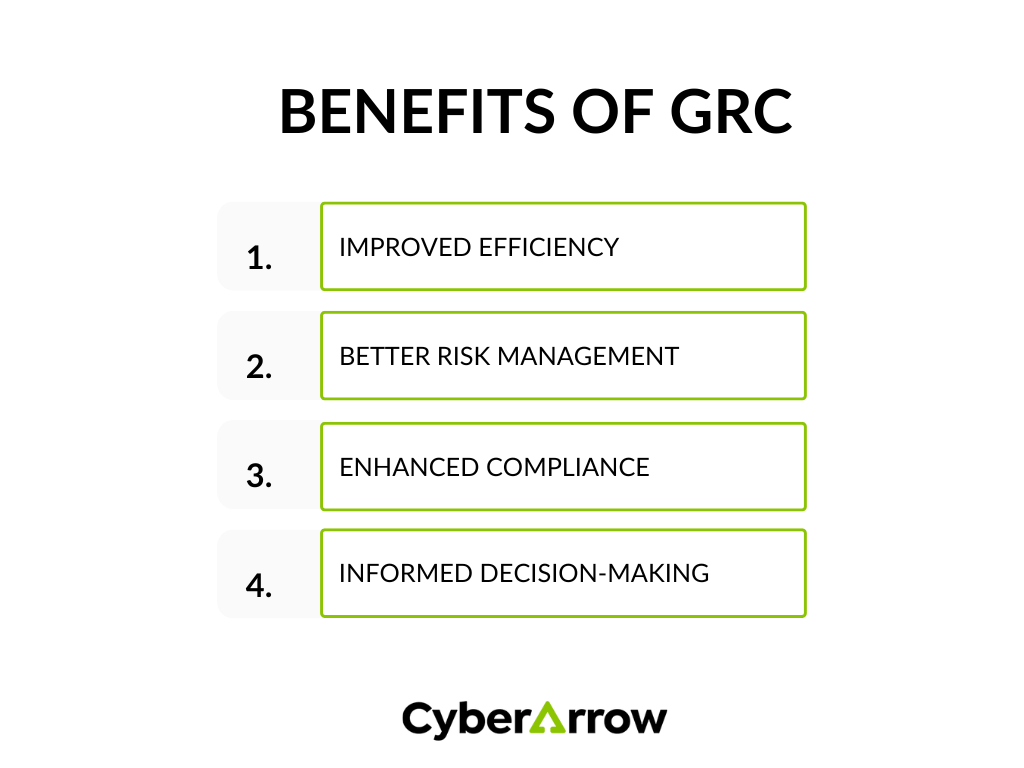
- Improved efficiency: With clear policies and procedures, everyone knows what is expected of them. This leads to better coordination and fewer mistakes, making the organization more efficient.
- Better risk management: By identifying and addressing risks early, organizations can avoid potential problems and reduce the impact of any issues that do arise.
- Enhanced compliance: Following rules and regulations helps to avoid legal trouble and maintain a good reputation. It also builds trust with customers and partners.
- Informed decision-making: With a clear understanding of governance, risks, and compliance, organizations can make more informed decisions that align with their goals and values.
Challenges in GRC
While GRC is essential, it can also come with some challenges:
- Complexity: Managing governance, risk, and compliance can be complex, especially for larger organizations with many policies and regulations to follow.
- Keeping up with changes: Laws, regulations, and risks are always changing. Organizations need to stay updated and adjust their policies and procedures accordingly.
- Integration issues: Combining different systems and processes for governance, risk management, and compliance can be difficult. It requires careful planning and coordination.
How CyberArrow GRC can help
To manage GRC effectively, using the right tools can make a big difference. CyberArrow GRC is a powerful solution that helps organizations automate and streamline their GRC processes. Here’s how CyberArrow GRC can benefit you:
- Automate policy management: Simplify the management of policies with automation. CyberArrow helps you create, update, and distribute policies without the need for manual spreadsheets.
- Streamline risk assessments: Save time by automating up to 90% of the risk assessment process. CyberArrow helps identify and manage risks more efficiently.
- Track compliance easily: Keep track of your compliance status with automated tracking and reporting. CyberArrow makes it easy to stay on top of regulations and standards.
- Continuous security monitoring: Integrate with your existing systems to continuously monitor your security posture. CyberArrow helps you stay ahead of potential threats by providing real-time insights.
- Automated evidence collection: Say goodbye to manual evidence gathering. CyberArrow automatically collects and manages evidence for security controls, making audits and compliance checks easier.
CyberArrow GRC supports a wide range of frameworks and methodologies, making it suitable for organizations of all sizes. By automating key aspects of your GRC program, you can focus more on running your business and protecting your assets.
