


What is cyber crime? How to protect your organization
The internet makes life easier. But it also brings new dangers. One of the biggest threats businesses face today is cyber crime.
From stealing passwords to shutting down entire computer systems, cyber crime can cause serious damage to your company. That’s why it’s so important to understand what cyber crime is and how you can prevent it before it impacts your organization.
In this blog, we’ll break down what cyber crime means, the types of cyber crime you need to know, and simple steps you can take to protect your organization. We’ll also show how tools like CyberArrow GRC and CyberArrow Awareness help businesses build strong, smart defenses.
- What is cyber crime?
- Why cyber crime is a serious threat
- Common types of cyber crime
- Who is behind cyber crime?
- How cyber crime impacts your organization
- How to protect your organization from cyber crime
- How CyberArrow GRC helps fight cyber crime
- How CyberArrow Awareness trains your team to spot threats
- Final thoughts
What is cyber crime?
Cyber crime is any illegal activity that happens on a computer, network, or digital system. It includes everything from stealing private data to tricking people with fake emails.
Cyber crime can:
- Target individuals or large companies.
- Be done by hackers, cyber gangs, or even insiders.
- Happen from anywhere in the world.
The goal of most cyber crimes is to steal money, data, or control.
Why cyber crime is a serious threat
Cyber crime is growing fast. Experts say it costs the world trillions of dollars every year. Businesses of all sizes are being hit. And the effects can be devastating:
- Data loss.
- System downtime.
- Financial damage.
- Loss of trust.
- Legal penalties.
The scary part? Many companies don’t even know they’ve been attacked until it’s too late.
That’s why learning about cyber crime and how to fight it is more important than ever.
Common types of cyber crime
There are many types of cyber crime, but here are the most common ones that target businesses:
1. Phishing attacks
Phishing occurs when hackers send fake emails or messages to trick people into giving up passwords or clicking dangerous links.
These emails often look like they come from trusted sources (like your bank or company).
Example: An employee clicks on a fake invoice email and ends up downloading malware.
2. Ransomware
Ransomware locks your data and demands payment to unlock it. Many businesses have paid thousands, sometimes millions, just to get their systems back.
Example: A company’s servers are frozen after someone opens a malicious attachment.
3. Data breaches
This happens when hackers break into your system and steal sensitive data like customer information, credit card numbers, or business secrets.
Example: Hackers access your customer database and leak it online.
4. Insider threats
Not all cyber crimes come from the outside. Sometimes employees (current or former) steal data or give access to attackers.
Example: A disgruntled worker copies confidential files before leaving the company.
5. DDoS attacks (Distributed Denial of Service)
These attacks flood your website or server with traffic, making it crash or go offline.
Example: An e-commerce site goes down during a major sale due to a sudden surge of fake traffic.
Who is behind cyber crime?
Cyber criminals can be:
- Solo hackers.
- Organized cyber gangs.
- State-sponsored attackers.
- Even insiders within your company.
They use different tools and tricks to steal, spy, or damage your systems. And they often target businesses that are not well protected.
How cyber crime impacts your organization
If cyber criminals break into your systems, your business could suffer from:
- Lost sales.
- Angry customers.
- Legal trouble due to data protection laws.
- High recovery costs.
- Damaged reputation.
Some companies never fully recover. That’s why it’s critical to take cyber crime seriously.
How to protect your organization from cyber crime
Here are the key steps every business should take to reduce the risk of cyber attacks:
1. Educate employees
Most cyber attacks start with human error. Train your team to:
- Spot phishing emails.
- Avoid suspicious downloads.
- Use strong, unique passwords.
- Report unusual activity.
Cyber security awareness is your first line of defense.
2. Use strong passwords and MFA
Require complex passwords and enable multi-factor authentication (MFA) to make it harder for attackers to break in.
3. Update software regularly
Outdated software has security holes. Keep all systems, apps, and antivirus tools updated to stay protected.
4. Back up data frequently
Regular backups help you recover quickly from ransomware or data loss.
Make sure your backups are stored securely and tested often.
5. Limit access
Give users access only to the tools and data they need. This helps reduce the damage if one account is compromised.
6. Have a cyber security policy
Create and enforce policies for:
- Password rules.
- Software use.
- Device security.
- Data access.
- Incident response.
Policies give clear rules that everyone in the company can follow.
7. Conduct risk assessments
Regularly check for risks across your systems, vendors, and processes.
Ask:
- Where are we most vulnerable?
- What are the chances of an attack?
- What would it cost us?
Then take steps to reduce the biggest risks.
8. Invest in the right tools
Cyber threats are always changing. Use platforms that help you automate, track, and improve your security posture.
How CyberArrow GRC helps fight cyber crime
CyberArrow GRC is a full Enterprise Governance, Risk, and Compliance platform. It helps you build a solid cyber security foundation by:
- Identifying and managing risks across your organization.
- Mapping controls to global standards like ISO 27001, NIST, and GDPR.
- Automating compliance and evidence collection.
- Tracking policy updates and internal audits.
- Keeping your organization audit-ready at all times.
With CyberArrow GRC, your company can stay compliant, reduce cyber risks, and respond faster to threats. It turns manual tasks into automated workflows by saving time while boosting security.
It also supports cross-mapping, so you don’t have to duplicate controls across frameworks. That means faster compliance with less effort.
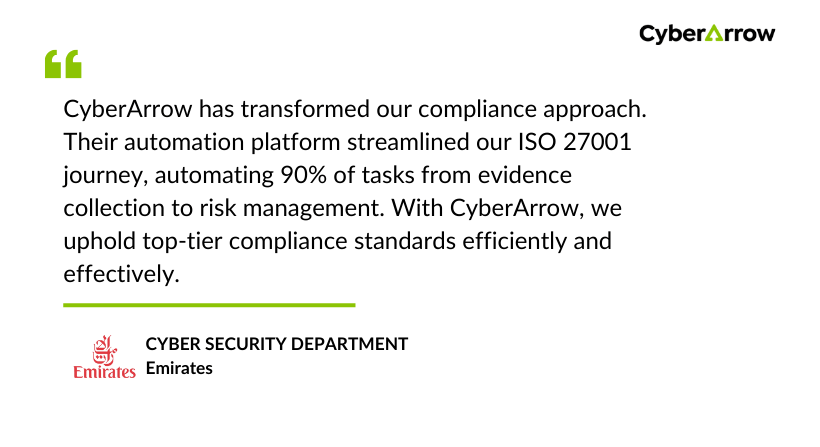
Read how Emirates enhanced information security by implementing ISO 27001 with CyberArrow GRC.
See what Emirates has to say about CyberArrow GRC:
How CyberArrow Awareness trains your team to spot threats
Even the best tech won’t work if your people aren’t trained.
CyberArrow Awareness is a smart training platform that helps your team:
- Understand real-world cyber threats.
- Practice spotting phishing emails and risky behavior.
- Stay alert through interactive learning.
- Reduce human error that leads to attacks.
The platform offers short, easy-to-understand lessons designed to improve awareness and build a strong security culture across your entire organization.
It’s not just training, it’s protection through education.
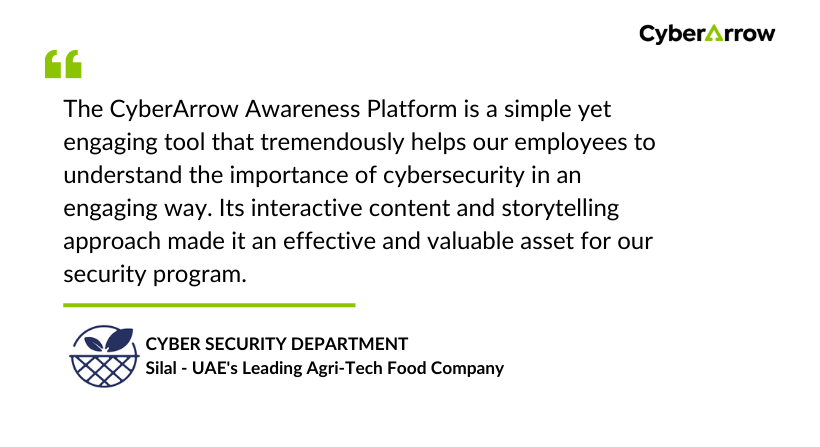
See what Silal has to say about CyberArrow Awareness Platform:
Final thoughts
Cyber crime is a growing danger, but your business doesn’t have to be a victim.
By combining strong tools, smart training, and clear processes, you can protect your organization from the growing wave of digital threats.
Start by educating your team, improving your policies, and using platforms that simplify and automate your cyber security efforts.
