


What is compliance management software?
Businesses today need to comply with multiple regulatory standards. However, managing compliance manually presents challenges such as human error and inefficiency. To manage regulatory compliance, organizations can benefit from compliance management software.
Compliance management software is designed to assist businesses in fulfilling their legal, industry-specific, and internal regulatory requirements. By streamlining tasks like policy management, risk mitigation, and audit facilitation, this software helps secure organizational integrity and reputation.
Let’s explore what compliance management is and why your organization needs compliance management software.
What is compliance management?

Compliance refers to the adherence to laws, regulations, standards, and guidelines relevant to a particular industry or jurisdiction. It includes several requirements to ensure ethical conduct, protect stakeholders, and mitigate risks. Compliance management involves systematically identifying, assessing, and addressing these requirements within an organization’s operations.
Key regulatory areas addressed by compliance management
Compliance management includes various regulatory domains depending on the nature of the business. Common regulatory areas include:
- Legal compliance: Ensuring adherence to laws and regulations applicable to the industry, such as labor laws, data protection regulations, and consumer protection laws.
- Industry standards: Compliance with industry-specific standards and best practices set by regulatory bodies or industry associations.
- Financial regulations: Compliance with financial regulations governing aspects like accounting practices, taxation, and anti-money laundering (AML) measures.
- Health and safety regulations: Ensuring workplace safety standards and compliance with health regulations to protect employees and customers.
- Environmental regulations: Adherence to environmental laws and regulations to minimize the organization’s impact on the environment.
Why do organizations need compliance management software?
Despite the importance of compliance, organizations encounter several challenges in effectively managing it. The ever-evolving regulatory landscape adds a layer of complexity that can be overwhelming, making it challenging for organizations to stay updated and interpret regulatory requirements accurately. Additionally, limited resources, including time, budget, and expertise, can hinder organizations’ ability to dedicate sufficient efforts to compliance management.
Compliance with data protection regulations, such as GDPR and CCPA, requires robust data management practices and privacy safeguards, which can be resource-intensive. Moreover, rapid changes in business models, technologies, and market conditions can pose challenges in adapting compliance processes accordingly.
Here, compliance management software proves to be a valuable tool for organizations to overcome these challenges, streamline compliance processes, and address associated risks.
Benefits of using compliance management software
Below are a few benefits of using compliance management software:
- Enhanced efficiency and accuracy: Compliance management software automates repetitive tasks, such as tracking regulatory changes, updating policies, and generating reports. By streamlining these processes, it reduces the time and effort required for compliance activities while minimizing the risk of human error.
- Improved risk management: Compliance management software provides organizations with tools to identify, assess, and mitigate compliance risks. Centralizing risk data and facilitating risk assessments enables organizations to make informed decisions and prioritize resources effectively to address the most critical risks.
- Increased transparency and accountability: Compliance management software offers visibility into compliance activities, ensuring transparency across the organization. Features like audit trails, documentation management, and real-time reporting enable accountability by tracking compliance efforts and demonstrating adherence to regulatory requirements.
- Cost savings: By automating compliance processes and reducing the likelihood of non-compliance incidents, compliance management software helps organizations save costs associated with fines, penalties, and legal fees. Additionally, it optimizes resource allocation by eliminating redundant tasks and minimizing the need for manual intervention, resulting in cost efficiencies over time.
- Scalability and adaptability: Compliance management software is designed to scale with the growing needs of organizations and adapt to evolving regulatory requirements. Whether expanding operations globally or entering new markets, organizations can rely on compliance management software to flexibly accommodate changes and maintain compliance across diverse regulatory environments.
Factors to consider when selecting compliance management software
When choosing compliance management software, organizations should carefully evaluate various factors to ensure alignment with their specific needs and objectives. Key considerations include:

- Compliance requirements: Assess the organization’s regulatory landscape to identify the specific compliance requirements and functionalities needed from the software.
- User-friendliness: Evaluate the interface’s ease of use and intuitiveness to ensure smooth adoption by users across departments and levels of expertise.
- Vendor reputation and support: Research the vendor’s reputation and track record, including its customer support services, responsiveness to inquiries, and ongoing maintenance and updates.
- Cost and ROI: To determine the return on investment (ROI), consider the total cost of ownership, including licensing fees, implementation costs, and potential savings and benefits.
- Integration capabilities: Assess the software’s ability to integrate with existing systems and workflows within the organization. This includes evaluating its compatibility with other software applications, databases, and IT infrastructure, as well as its API and integration capabilities to ensure smooth data exchange and interoperability.
Looking for the best compliance management software for your organization? Look no further than CyberArrow. With its comprehensive suite of features, seamless integration capabilities, and user-friendly interface, CyberArrow empowers businesses to navigate the complexities of regulatory compliance with ease and confidence.
Whether you’re a small startup or a multinational corporation, CyberArrow offers customizable solutions tailored to your unique compliance needs. Take the next step towards streamlining your compliance processes with CyberArrow today!
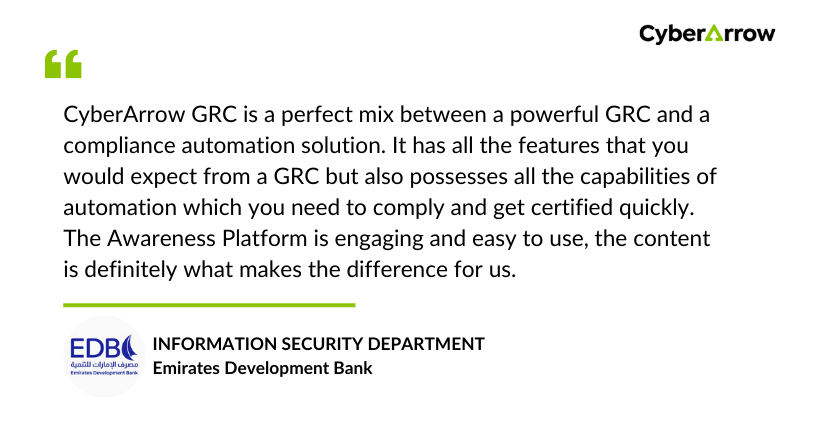
See what our clients have to say about CyberArrow GRC:
FAQs
What’s a compliance management system?
A compliance management system (CMS) is a software solution designed to help businesses adhere to regulatory requirements and industry standards. It facilitates the organization, tracking, and monitoring of compliance activities, including policy management, risk assessment, and audit preparation.
What is the need for compliance software?
Compliance software is essential for businesses to meet legal, industry-specific, and internal regulatory obligations efficiently and accurately. It helps organizations streamline compliance processes, reduce non-compliance risk, and minimize associated costs such as fines and penalties. Additionally, compliance software enhances an organization’s transparency, accountability, and overall risk management practices.
What is audit and compliance software?
Audit and compliance software is a specialized tool designed to assist organizations in conducting audits and managing compliance activities effectively. It helps automate audit processes, track compliance requirements, and generate reports demonstrating adherence to regulations and industry standards. This software typically includes features for risk assessment, document management, and regulatory updates to support comprehensive audit and compliance management efforts.
