

SOX audit: Requirements, steps & best practices
In today’s corporate world, trust and transparency are non-negotiable. Investors, regulators, and the public expect accurate financial reporting and responsible governance. This expectation gave rise to the Sarbanes-Oxley Act (SOX) in 2002.
A SOX audit ensures that companies follow the internal control and financial reporting standards required by law. It is more than a compliance checkbox; it safeguards investors, maintains market stability, and protects an organization’s reputation.
In this guide, we’ll break down what a SOX audit is, the requirements you must meet, the steps involved in the process, and the best practices to stay compliant efficiently.
What is a SOX audit?
A SOX audit is a comprehensive examination of a company’s internal controls and financial reporting processes to confirm compliance with the Sarbanes-Oxley Act of 2002.
It evaluates whether a company has adequate systems in place to ensure the accuracy and reliability of its financial statements. This includes everything from access management and data integrity to financial process controls and risk management practices.
The audit primarily focuses on two key areas:
- Internal Controls over Financial Reporting (ICFR): to ensure that all financial data is accurate and complete.
- Information Technology (IT) Controls: to confirm that systems managing financial data are secure, monitored, and functioning as intended.
Why SOX audits matter
SOX audits were introduced after major financial scandals like Enron and WorldCom, which exposed how weak internal controls could lead to massive fraud. The SOX Act restored investor confidence by enforcing accountability among public companies.
A successful SOX audit proves that your organization:
- Maintains accurate and complete financial records.
- Protects financial systems from unauthorized access or errors.
- Operates with transparency and corporate integrity.
- Is ready for public scrutiny and investor trust.
Non-compliance can lead to financial penalties, reputational harm, and even criminal charges for senior executives.
SOX audit requirements
SOX audits are primarily governed by Sections 302, 404, and 906 of the Act. Each section outlines specific responsibilities for management and auditors.
1. Section 302: Corporate responsibility for financial reports
This section mandates that the CEO and CFO personally certify the accuracy of financial reports. They must also confirm that:
- Internal controls are established and maintained.
- Financial data is fairly presented.
- Any significant control deficiencies or fraud are disclosed.
2. Section 404: Management assessment of internal controls
Perhaps the most critical part of SOX, Section 404 requires management to:
- Conduct annual evaluations of internal controls.
- Document, test, and assess their effectiveness.
- Engage external auditors to validate management’s assessment.
3. Section 906: Criminal penalties for false certification
If a CEO or CFO knowingly certifies false financial information, they may face severe criminal penalties, including fines and imprisonment.
4. Section 802: Record retention
All audit workpapers and related documentation must be retained for at least five years. Altering or destroying financial records can result in heavy penalties.
Key components of a SOX audit
A SOX audit evaluates multiple layers of an organization’s internal control framework. Below are the main control areas typically reviewed:
- Access controls: Ensuring only authorized users can access sensitive financial data.
- Change management controls: Monitoring and approving all changes to financial systems and processes.
- Segregation of duties: Preventing one person from having full control over a financial transaction.
- Data backup and recovery: Ensuring financial data can be restored after system failures or incidents.
- Financial reporting controls: Validating the accuracy of general ledger entries and reconciliations.
- IT general controls (ITGCs): Protecting the integrity and reliability of technology systems that handle financial data.
Quick link: SOX controls: A detailed guide to SOX compliance
Steps involved in a SOX audit
Step 1: Define the scope
The first step is identifying all systems, processes, and accounts that influence financial reporting. This includes evaluating both manual and automated controls and mapping them to relevant SOX requirements.
Step 2: Document internal controls
Create detailed documentation describing how your internal controls work. This may include:
- Policy documents.
- Control matrices.
- Process flowcharts.
- Risk assessment summaries.
Comprehensive documentation is vital for transparency and future audits.
Step 3: Evaluate and test controls
Internal auditors test the effectiveness of each control. The goal is to determine whether the control is properly designed and operating as intended. This involves:
- Reviewing policies and procedures.
- Testing transactions and workflows.
- Collecting and analyzing evidence.
Step 4: Identify and remediate gaps
If any weaknesses or failures are detected, management must develop a remediation plan.
Common corrective actions include:
- Updating procedures.
- Training staff.
- Strengthening IT security or system access.
Step 5: Engage external auditors
External auditors review management’s assessments and perform independent testing. Their findings are documented in the annual financial report submitted to the Securities and Exchange Commission (SEC).
Step 6: Continuous monitoring
SOX compliance is not a one-time exercise. Continuous monitoring helps organizations identify risks early, track performance, and maintain readiness for annual audits.
Common challenges in SOX audits
Many organizations face difficulties in maintaining compliance due to the complexity of financial systems and manual processes. Common challenges include:
- Inconsistent documentation.
- Lack of visibility into control ownership.
- Manual evidence collection.
- Limited coordination between finance and IT teams.
- Time-consuming remediation processes.
Automation and centralization through modern GRC platforms can help overcome these hurdles efficiently.
Best practices for SOX audits
1. Start early
Begin SOX preparations well before the audit cycle. Early planning allows sufficient time for testing, remediation, and documentation review.
2. Use a risk-based approach
Focus on controls that address high-risk areas affecting financial reporting. This makes the audit more efficient and effective.
3. Collaborate across departments
Ensure finance, IT, compliance, and audit teams work together. Cross-functional coordination helps maintain consistent data integrity and audit readiness.
4. Maintain clear documentation
Detailed documentation supports transparency and simplifies auditor reviews. Keep policies, process flows, and control matrices updated.
5. Automate repetitive tasks
Automation tools can eliminate manual effort in evidence collection, testing, and reporting, reducing human error and saving time.
6. Conduct regular internal testing
Continuous internal testing helps detect issues early and ensures that your controls are always audit-ready.
7. Train employees
Provide regular SOX training sessions to educate teams about control ownership, compliance obligations, and reporting standards.
Benefits of a strong SOX audit program
A robust SOX audit framework offers long-term advantages beyond compliance:
- Enhances investor trust and credibility.
- Improves data accuracy and operational efficiency.
- Strengthens internal control culture.
- Reduces the likelihood of financial fraud.
- Simplifies readiness for IPOs or acquisitions.
How CyberArrow GRC simplifies SOX compliance
Meeting SOX audit requirements manually can be overwhelming. Spreadsheets, email trails, and fragmented data make the process slow and error-prone.
CyberArrow GRC transforms this experience with automation and intelligence.
With CyberArrow GRC, you can:
- Automate evidence collection across systems and departments.
- Centralize documentation and maintain real-time visibility of control status.
- Map controls across multiple frameworks, reducing redundancy.
- Track remediation and testing progress with built-in dashboards.
- Generate audit-ready reports in minutes.
CyberArrow GRC helps organizations experience zero-touch audits, fully automated, accurate, and effortless. It ensures your SOX program remains compliant, efficient, and ready for any regulatory review.
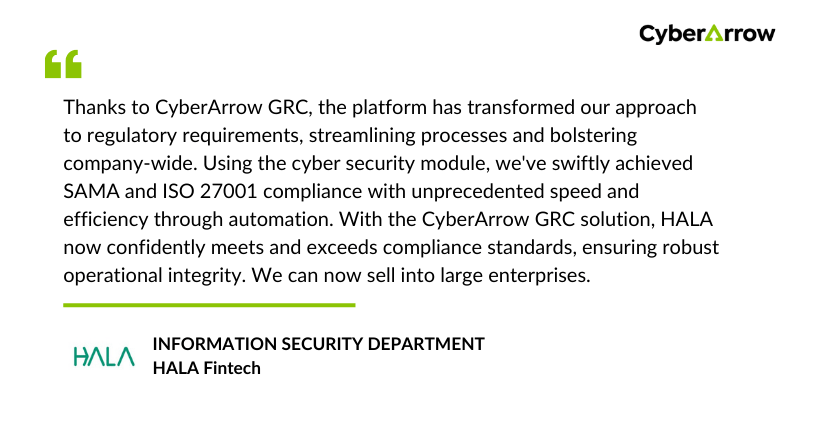
See what our clients have to say about CyberArrow GRC:
Conclusion
A SOX audit is an essential part of maintaining corporate accountability and financial transparency. While the process can be demanding, adopting the right technology can transform it from a compliance burden into a strategic advantage.
By automating key tasks, strengthening collaboration, and improving visibility, companies can achieve consistent, reliable compliance results.
If you are ready to modernize your SOX compliance process, CyberArrow GRC is your trusted partner for automation, control management, and audit readiness.
FAQs
What is the purpose of a SOX audit?
A SOX audit ensures that a company’s financial reporting and internal controls are accurate, reliable, and compliant with the Sarbanes-Oxley Act of 2002. Its main purpose is to protect investors from fraudulent accounting practices and to maintain transparency and accountability within publicly traded companies.
Who is required to undergo a SOX audit?
All publicly traded companies in the United States and any company preparing for an Initial Public Offering (IPO) must undergo a SOX audit. Additionally, subsidiaries or vendors that handle financial data for these companies may also fall within the scope of the audit.
What are the main steps in a SOX audit process?
A typical SOX audit involves several key steps:
- Defining the scope of controls and systems affecting financial reporting.
- Documenting and testing internal controls.
- Identifying and fixing any weaknesses or control gaps.
- Engaging independent external auditors for validation.
- Continuously monitoring control performance throughout the year.
Following these steps ensures the company meets all SOX compliance requirements.
How often should a company perform a SOX audit?
A SOX audit must be conducted annually, as part of the company’s year-end financial reporting process. However, many organizations adopt continuous monitoring and quarterly internal reviews to maintain control effectiveness and prepare early for external audits
How can automation make SOX audits easier?
Automation simplifies SOX audits by reducing manual effort, human error, and document chaos. A platform like CyberArrow GRC automates evidence collection, centralizes documentation, and tracks compliance progress in real-time. This helps companies achieve zero-touch audits, where SOX compliance becomes seamless, efficient, and audit-ready throughout the year.
