


Security Vs. compliance: What’s the difference and why it matters?
While security and compliance are both essential aspects of cyber security, some experts use these terms interchangeably, leading to confusion. Organizations must realize that compliance is not the same as security. Being compliant does not necessarily equate to being secure. However, security plays a critical role in achieving compliance.
The modern era has been a concerning time for businesses of various industries as cyber security has taken a prominent role in ensuring their success. With the increasing reliance on digital technologies and the significant shift towards remote work, cybercriminals are becoming more active and posing a greater risk to companies. As a result, comprehensive security programs that meet compliance requirements are necessary to safeguard against these threats.
But what is the difference between security and compliance? Let’s explore in this article along with the importance of addressing both aspects of cyber security.
What is security?
Security entails utilizing hardware and software systems and controls to protect against breaches, leaks, or cyber attacks that can compromise sensitive information. Security measures such as firewalls, password management, and multi-factor authentication can prevent hackers and keep unauthorized individuals from accessing confidential data and resources.
What is compliance?
The compliance process involves adhering to the standards set by a third party, be it a regulatory authority, industry regulations, or contractual agreements with clients/customers. Compliance is critical for conducting business in a particular market, aligning with laws, and satisfying stakeholders’ expectations.
The most common compliance standards are:
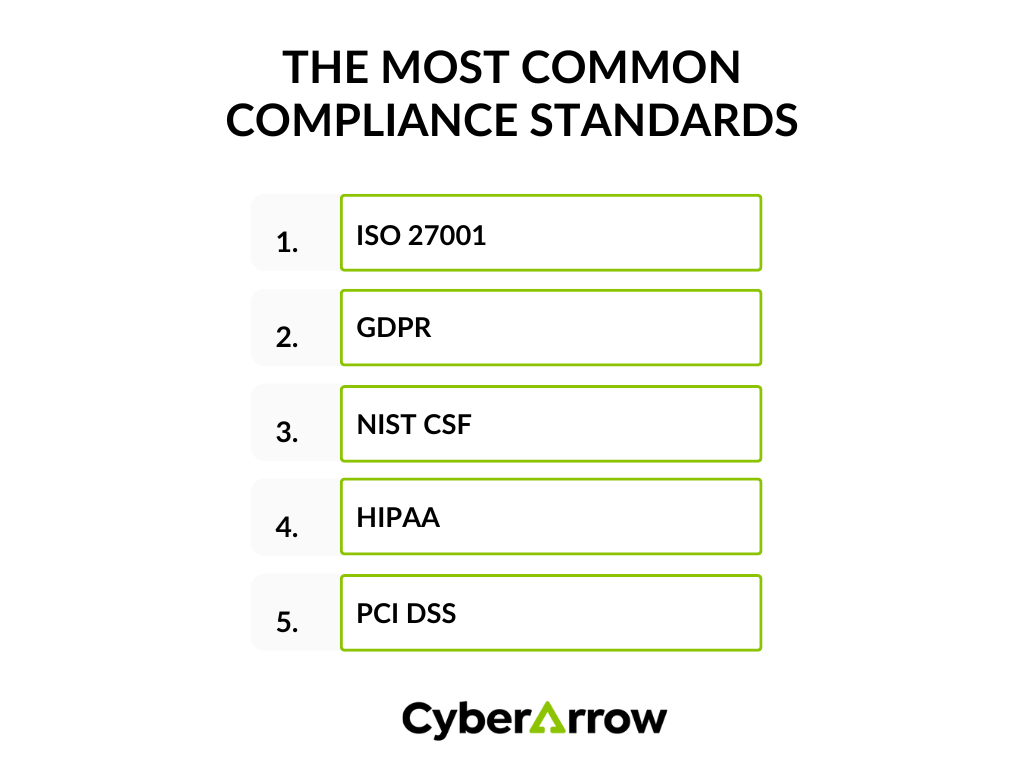
- General Data Protection Regulation (GDPR) regulates the processing of personal data of individuals within the EU/EEA, irrespective of where the data is processed globally.
- Health Insurance Portability and Accountability Act (HIPAA) mandates how entities operating in the health insurance sector must handle and safeguard their patients’ personal information.
- Payment Card Industry Data Security Standard (PCI DSS) establishes uniform standards for protecting customers’ financial information against credit or debit card fraud.
What is the difference between security and compliance?
While there may be some overlap between compliance and security, the underlying objectives are different. Compliance focuses on meeting the specific requirements set forth by a third party, such as adhering to government policies, industry regulations, or security frameworks, whereas security emphasizes protecting an organization’s assets and preventing unauthorized access.
Achieving compliance is not the same as ensuring security. However, security remains critical for compliance and is necessary to prevent security breaches and data loss that can result in legal, financial, and reputational damage.
Let’s explore the difference between security and compliance for a clear understanding.
| Security | Compliance |
| It entails implementing technical and physical controls to protect organizational assets against security breaches, leaks, or cyber-attacks. | It entails meeting third party’s regulatory requirements. |
| The implementation of security measures is primarily driven by a company’s need to protect its own assets rather than solely to comply with the requirements of third parties. | Compliance is an essential component of facilitating business operations and satisfying external requirements. |
| It aims to protect the organization’s IT assets. | It aims to protect business activities. |
Security and compliance: Where do they align?
While security and compliance differ in several ways, they are interrelated. Various industry-specific standards and laws, such as HIPAA and SOX, have been enacted to help companies protect sensitive data and prevent fraudulent activities. These standards provide guidance on creating secure IT systems and promote adherence to industry best practices.
While some security measures may be implemented automatically within an organization, compliance strategies provide a structured approach to achieving alignment with legal requirements and industry standards.
Security and compliance: Both business critical
A knowledgeable security professional understands that security and compliance are closely linked and work together to strengthen an organization’s overall security posture. While compliance sets the minimum requirements for an organization’s security posture, rigorous security practices go beyond the baseline to provide comprehensive protection against potential threats.
By combining security and compliance, an organization can create a holistic approach to data protection. Compliance standards provide a comprehensive framework for data security, and diligent security practices build upon that foundation to ensure comprehensive protection from potential threats. When an organization focuses equally on both concepts, it meets the requirements for its industry and demonstrates a commitment to cyber security that goes beyond what is legally mandated.
FAQs
What is the difference between cyber security and compliance?
Security entails implementing robust technical controls for safeguarding a company’s assets and ensuring its resilience against security threats. Conversely, compliance involves applying security practices to meet a third party’s specific regulatory or contractual requirements, such as industry regulations, government policies, or contractual obligations with clients/customers.
Is compliance equivalent to security?
Compliance is not equivalent to security, and being compliant does not guarantee that a company’s assets are fully secure. Compliance is merely the minimum standard required to adhere to specific regulatory or contractual requirements, whereas security encompasses the implementation of effective controls to prevent unauthorized access to company assets.
What is the difference between compliance vs. risk management in security?
Compliance is critical to protecting organizations from unique risks associated with established industry regulations. However, compliance alone may not be sufficient to address all potential risks an organization faces. Risk management is another essential component of protecting an organization from risks that could result in non-compliance, financial or reputation loss, and legal consequences.
Streamline your security compliance efforts with CyberArrow GRC
Understanding the difference between security and compliance is crucial, but what really matters is finding a way to manage both efficiently. Relying on manual processes can be overwhelming and lead to gaps in your security and compliance efforts.
CyberArrow GRC offers automated solutions that ensure your security controls are always up to date while keeping your organization compliant with industry standards.
Why choose CyberArrow GRC for security and compliance automation?
- Automated compliance: CyberArrow automates up to 90% of the cybersecurity compliance process, saving you valuable time and reducing manual tasks.
- Real-time monitoring: Keep track of your compliance status at all times with real-time dashboards.
- Cross-standard integration: Align your cybersecurity compliance with multiple frameworks, such as ISO 27001, SOC 2, and NIST, using CyberArrow’s cross-standard mapping.
- Audit-ready documentation: Automatically collect and store the necessary documentation for audits, simplifying your preparation.
A tech company used CyberArrow GRC to automate their SOC 2 compliance process. By doing so, they reduced manual documentation efforts by 75%, improved their audit readiness, and maintained real-time tracking of their security controls, ensuring they were always compliant.
