

NCNICC vs NCA ECC vs SAMA CSF: A detailed comparison
Saudi Arabia has a strong and growing cyber security regulatory landscape. Organizations operating in the Kingdom must follow different cyber security frameworks depending on their sector, classification, and regulatory oversight. Three of the most important frameworks are NCNICC, NCA ECC, and SAMA CSF.
Many organizations struggle to understand the difference between these frameworks. This confusion often leads to over-compliance, missed requirements, or manual work that slows down security programs.
This guide provides a clear and practical comparison of NCNICC, NCA ECC, and SAMA CSF. It explains who each framework applies to, its purpose, scope, and how organizations can manage them efficiently.
- Overview of cyber security frameworks in Saudi Arabia
- What is NCNICC
- What is NCA ECC
- What is SAMA CSF
- Who each framework applies to
- Purpose of each framework
- Level of complexity and depth
- Control coverage comparison
- Certification and enforcement
- Which framework takes priority
- Challenges organizations face
- How GRC platforms help manage multiple frameworks
- How CyberArrow GRC supports NCNICC, NCA ECC, and SAMA CSF
- Choosing the right approach
- Conclusion
- FAQs
Overview of cyber security frameworks in Saudi Arabia
Saudi Arabia regulates cyber security through the National Cybersecurity Authority and sector regulators such as SAMA. Each framework is designed for a specific group of organizations.
Understanding which framework applies is the first step to compliance.
What is NCNICC
NCNICC stands for Non-Critical National Infrastructure Private Sector Entities Cybersecurity Controls. It is issued by the National Cybersecurity Authority.
NCNICC applies to private sector entities that are not classified as Critical National Infrastructure. It provides a baseline set of cyber security controls that private organizations are expected to implement.
NCNICC is designed as a focused and lighter framework compared to NCA ECC. It ensures that private sector organizations maintain a minimum cyber security posture without the full complexity of CNI-level controls.
What is NCA ECC
NCA ECC, also known as the Essential Cybersecurity Controls, is the primary national cyber security framework issued by the National Cybersecurity Authority.
NCA ECC applies to:
- Government entities.
- Critical National Infrastructure organizations.
- Entities handling highly sensitive or critical systems.
NCA ECC is comprehensive and detailed. It includes governance, technical, operational, and compliance controls that require mature cyber security programs.
What is SAMA CSF
SAMA CSF is the Cyber Security Framework issued by the Saudi Central Bank.
SAMA CSF applies to:
- Banks.
- Insurance companies.
- FinTech firms regulated by SAMA.
- Payment service providers.
SAMA CSF focuses heavily on financial sector risks, data protection, operational resilience, and third-party risk.
Who each framework applies to
NCNICC applicability
NCNICC applies to:
- Private companies operating in Saudi Arabia.
- Organizations not classified as CNI.
- Businesses across multiple industries.
Examples include:
- SaaS companies.
- Technology providers.
- Retail and e-commerce companies.
- Logistics and manufacturing firms.
NCA ECC applicability
NCA ECC applies to:
- Government organizations.
- Critical National Infrastructure entities.
- Entities designated by NCA.
These organizations support national services and critical operations.
SAMA CSF applicability
SAMA CSF applies to:
- SAMA regulated financial institutions.
- Organizations handling financial services and payments.
If an organization is regulated by SAMA, SAMA CSF takes priority.
Purpose of each framework
Purpose of NCNICC
NCNICC aims to:
- Establish a baseline cyber security level.
- Reduce cyber risks in the private sector.
- Improve national cyber security resilience.
- Provide clear expectations for non-CNI entities.
Purpose of NCA ECC
NCA ECC aims to:
- Protect national critical systems.
- Ensure strong cyber security governance.
- Prevent large-scale cyber incidents.
- Enforce strict compliance across critical sectors.
Purpose of SAMA CSF
SAMA CSF aims to:
- Protect financial systems and customer data.
- Reduce fraud and cybercrime.
- Strengthen financial sector resilience.
- Ensure operational continuity.
Level of complexity and depth
NCNICC complexity
NCNICC is:
- Focused.
- Easier to implement.
- Designed for private sector maturity levels.
It avoids unnecessary complexity while still enforcing essential controls.
NCA ECC complexity
NCA ECC is:
- Detailed.
- Comprehensive.
- Resource-intensive.
It requires mature governance, technical expertise, and ongoing audits.
SAMA CSF complexity
SAMA CSF is:
- Sector-specific.
- Risk-focused.
- Strong on third-party and operational risk.
Financial institutions must dedicate significant resources to compliance.
Control coverage comparison
All three frameworks cover similar cyber security themes but at different levels.
Common control areas
- Cyber security governance.
- Risk management.
- Asset management.
- Identity and access control.
- Security operations.
- Incident response.
- Business continuity.
- Third-party security.
The difference lies in depth, reporting, and enforcement.
Certification and enforcement
NCNICC
- Not a certification standard.
- Compliance demonstrated through implementation and evidence.
- May be reviewed by regulators or customers.
NCA ECC
- Not a certification standard.
- Subject to regulatory audits and assessments.
- Strong enforcement for CNI entities.
SAMA CSF
- Not a certification standard.
- Strong regulatory oversight.
- Frequent reviews and reporting.
Which framework takes priority
Organizations may fall under more than one framework.
General guidance:
- If regulated by SAMA, follow SAMA CSF.
- If classified as CNI, follow NCA ECC.
- If private and non-CNI, NCNICC applies.
Some organizations may need to align with more than one framework.
Challenges organizations face
Organizations often struggle with:
- Understanding applicability.
- Managing overlapping controls.
- Manual compliance tracking.
- Evidence scattered across systems.
- Lack of visibility into compliance status.
These challenges increase risk and operational effort.
How GRC platforms help manage multiple frameworks
Managing NCNICC, NCA ECC, and SAMA CSF manually is difficult.
A GRC platform helps by:
- Centralizing controls and policies.
- Mapping controls across frameworks.
- Managing risks and evidence.
- Providing real-time compliance visibility.
- Reducing duplicate work.
Automation is key to scalability.
How CyberArrow GRC supports NCNICC, NCA ECC, and SAMA CSF
CyberArrow GRC is built to support Saudi cyber security frameworks on one platform.
CyberArrow GRC helps organizations:
- Manage NCNICC, NCA ECC, and SAMA CSF together.
- Map overlapping controls.
- Automate evidence collection.
- Track risks and remediation.
- Stay ready for regulatory reviews.
CyberArrow reduces manual effort while improving compliance confidence.
Choosing the right approach
Organizations should:
- Identify which framework applies.
- Avoid over-implementing unnecessary controls.
- Focus on structured compliance.
- Use automation to reduce effort.
A clear strategy prevents wasted time and resources.
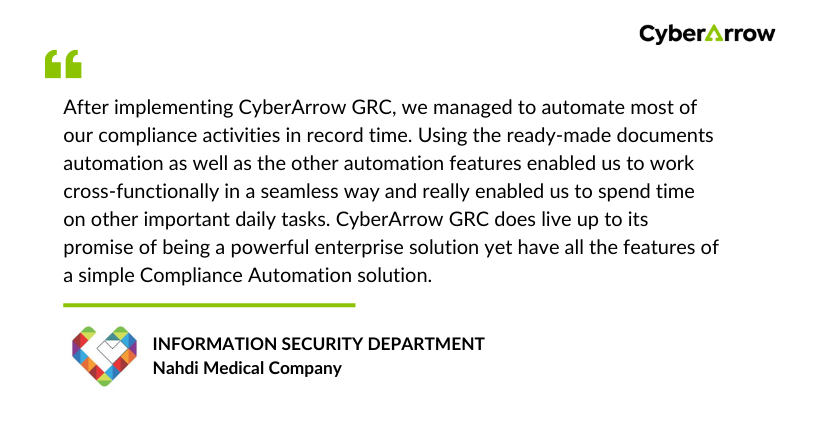
See what Nahdi Medical Company has to say about CyberArrow GRC:
Conclusion
NCNICC, NCA ECC, and SAMA CSF each serve a specific role in Saudi Arabia’s cyber security regulation. Understanding the differences helps organizations apply the right controls without confusion or over-compliance.
NCNICC provides a focused baseline for private sector entities. NCA ECC protects critical national systems. SAMA CSF secures the financial sector.
Managing these frameworks manually increases risk and slows down compliance efforts. CyberArrow GRC provides a centralized and automated way to manage Saudi cyber security requirements efficiently.
For organizations operating in Saudi Arabia, CyberArrow GRC is the right platform to simplify compliance, reduce risk, and stay prepared with confidence.
FAQs
How do organizations know whether NCNICC or NCA ECC applies to them?
Organizations classified as Critical National Infrastructure must follow NCA ECC. Private sector organizations that are not classified as CNI should assess applicability and follow NCNICC. Classification is based on the organization’s role and services.
If a company is regulated by SAMA, does NCNICC still apply?
Organizations regulated by SAMA are primarily required to follow the SAMA CSF. NCNICC may still be used as a reference for baseline cyber security controls, but SAMA CSF takes priority for compliance.
Can an organization be subject to more than one framework?
Yes. Some organizations may need to align with more than one framework depending on regulatory oversight, customer requirements, or business operations. Control mapping helps reduce duplicate work.
Are NCNICC, NCA ECC, or SAMA CSF certification standards?
No. None of these frameworks are certification standard. Organizations are expected to implement controls and maintain evidence to demonstrate compliance during reviews or audits.
How can organizations manage multiple Saudi cyber security frameworks efficiently?
Organizations can manage multiple frameworks more efficiently by using a centralized GRC platform. CyberArrow GRC helps map controls, automate evidence tracking, manage risks, and provide real-time visibility across NCNICC, NCA ECC, and SAMA CSF.
