

ISO 27001 for risk managers: Responsibilities, controls, audit checklist
ISO 27001 is the global standard for information security management. It ensures that organizations protect the confidentiality, integrity, and availability of information. Risk management is a core part of ISO 27001, and the success of the standard depends heavily on how risk managers identify, assess, and treat information security risks.
For risk managers, ISO 27001 is not just an audit framework. It is a structured and repeatable process for understanding threats, prioritizing risk, and selecting the right controls. This guide explains the role of risk managers in ISO 27001, key responsibilities, relevant controls, and how to prepare for audits with confidence.
- Why risk managers matter in ISO 27001
- Key responsibilities for risk managers under ISO 27001
- Relevant ISO 27001 controls for risk managers
- Audit checklist for risk managers
- Common challenges risk managers face
- Why tools matter for risk managers
- How CyberArrow GRC helps risk managers with ISO 27001
- Conclusion
- FAQs
Why risk managers matter in ISO 27001
Risk management is at the center of ISO 27001. Every security control in the standard is linked to risk. The entire Information Security Management System is built on the idea of managing risk in a consistent and measurable way.
Without risk managers:
- Controls may not match real-world threats.
- Evidence may not satisfy auditors.
- Risk treatment may be incomplete.
- Certification may be delayed.
Risk managers ensure that ISO 27001 becomes a living risk program, not a one-time compliance exercise.
Key responsibilities for risk managers under ISO 27001
Risk managers have several responsibilities during ISO 27001 implementation and ongoing operation.
The main responsibilities include:
1. Defining the risk methodology
Organizations must define how they will measure risk. The risk methodology explains:
- Risk criteria.
- Likelihood scales.
- Impact scales.
- Risk acceptance levels.
- Treatment priorities.
Consistency is important for audit success.
2. Conducting risk assessments
Risk assessments identify information security risks affecting:
- Systems.
- Processes.
- People.
- Data.
- Suppliers.
Risk assessments must align with the organization’s context and ISO 27001 scope.
3. Selecting risk treatment options
Once risks are identified, risk managers decide how to treat them. ISO 27001 supports four treatment options:
- Reduce.
- Avoid.
- Transfer.
- Accept.
Strong justification is needed for high-risk acceptance.
4. Mapping risks to controls
ISO 27001 controls are not selected randomly. Risk managers must map the right controls to the right risks.
Controls may come from:
- ISO 27001 Annex A.
- ISO 27002.
- Regulatory frameworks.
- Industry standards.
Auditors review these mappings closely.
5. Maintaining the risk register
A risk register collects all identified risks in one place. It must include:
- Risk description.
- Likelihood and impact.
- Risk owner.
- Treatment actions.
- Residual risk.
Registers must be kept up to date.
6. Reviewing residual risk
Residual risk is the risk that remains after treatment. If residual risk is still high, additional controls may be needed.
This is a critical audit topic.
7. Supporting control design and improvement
Risk managers work with IT, security, and compliance teams to ensure controls operate effectively. Controls should reduce the risk as intended.
Continuous improvement is a requirement under ISO 27001.
8. Reporting to leadership and auditors
Risk managers prepare reports for:
- Top management.
- Internal audit.
- External audit.
Clear reporting supports certification and governance.
Relevant ISO 27001 controls for risk managers
While ISO 27001 contains many controls, certain controls relate directly to risk managers.
Below are key control families risk managers work with.
Risk management controls
These controls support the risk process:
- Risk identification.
- Risk assessment.
- Risk treatment planning.
- Risk monitoring.
These controls must show traceability from start to finish.
Access control
Access control reduces many high-impact security risks such as unauthorized access, privilege misuse, and insider threats.
Asset management
Risk managers need to track assets because risks apply to assets. Without asset inventories, risk assessments cannot be accurate.
Operational security
Operational controls help detect and prevent threats:
- Logging.
- Monitoring.
- Patch management.
- Malware protection.
- Change management.
Supplier and third-party risk
Cloud services and suppliers add risks beyond the organization’s perimeter. ISO 27001 requires supplier risk management practices.
Incident management
Incident processes help reduce risk impact. Risk managers must ensure that incident lessons feed back into the risk program.
Business continuity
Availability risks are assessed during business continuity planning. This ensures that critical operations continue under disruption.
Audit checklist for risk managers
Risk managers play a key role in ISO 27001 audits. The checklist below helps prepare for audit reviews.
Auditors often check whether:
1. Risk methodology is documented
The methodology must be clear and consistent. Auditors review whether the methodology is applied in practice.
2. Risk assessments are completed
Risk assessments must be updated and aligned with the current business environment.
3. Controls are linked to risks
Auditors verify traceability between:
- Risk assessment.
- Risk treatment.
- Statement of Applicability.
- Controls.
This is a common audit challenge.
4. The risk register is accurate
The register must reflect:
- Current risks.
- Residual risks.
- Owners.
- Treatment actions.
Outdated registers are a common audit finding.
5. Risk treatment decisions are justified
Auditors want to know why a treatment choice was made and why certain risks were accepted.
6. Evidence of risk monitoring exists
Auditors look for:
- Reports.
- Metrics.
- Review records.
- Meeting minutes.
Monitoring supports continuous improvement.
7. Leadership reviews occurred
Risk results must be presented during management review meetings. Leadership engagement is mandatory under ISO 27001.
8. Residual risk is under control
Residual risk levels must align with risk acceptance. High residual risk must have a clear justification.
Common challenges risk managers face
Risk managers often face similar challenges during ISO 27001 implementation and audit preparation.
Frequent issues include:
Inconsistent scoring
Different teams may score risks differently. This reduces accuracy.
Poor risk to control mapping
Weak mapping results in audit findings and delays.
Manual risk registers
Spreadsheets introduce errors and become outdated quickly.
Lack of visibility
Leaders and auditors struggle to see real-time status.
Weak incident feedback loop
Incidents must improve risk treatment, not stay isolated.
Supplier risk complexity
External services add dependency risks that are often overlooked.
Why tools matter for risk managers
Manual risk management is slow and hard to maintain. Risk managers benefit when risk data, evidence, and controls are centralized.
Tools help by:
- Linking risks to controls.
- Automating assessments.
- Tracking residual risk.
- Managing evidence.
- Supporting audits.
- Improving reporting.
- Reducing manual effort.
ISO 27001 expects repeatable and consistent processes. Tools support that requirement.
How CyberArrow GRC helps risk managers with ISO 27001
CyberArrow GRC helps information security risk managers manage ISO 27001 efficiently. It centralizes the entire risk management process in one platform and connects risk assessments to controls, evidence, and audits.
With CyberArrow GRC, risk managers can:
- Run structured ISO 27001 risk assessments.
- Manage risk registers with real-time updates.
- Link risks to Annex A controls.
- Track treatment plans.
- Manage residual risk.
- Improve reporting for leadership and auditors.
- Prepare for certification audits.
CyberArrow GRC helps organizations build a sustainable risk management program that aligns with ISO 27001 and reduces manual effort.
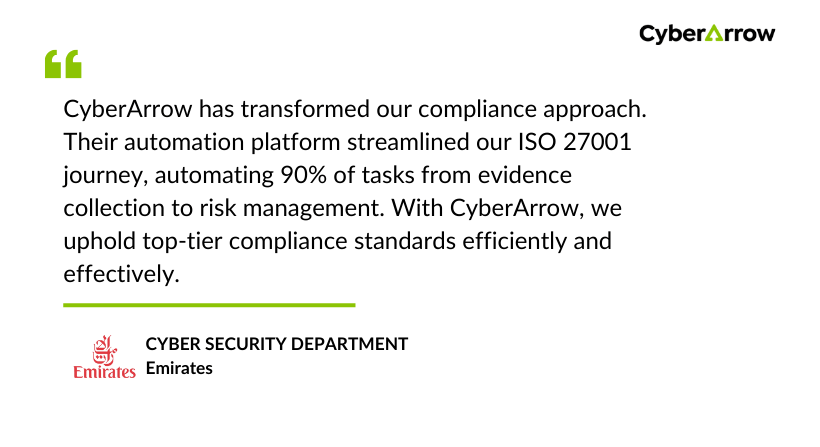
See what our clients have to say about CyberArrow GRC:
Conclusion
Risk managers play a central role in ISO 27001. They help identify risks, apply controls, and prepare for certification. Without effective risk management, ISO 27001 cannot succeed.
By understanding responsibilities, working with relevant controls, and preparing for audits, risk managers help organizations strengthen security and improve compliance.
Managing ISO 27001 manually is possible, but it is slow and prone to error. CyberArrow GRC provides automation, structure, and visibility to support risk managers throughout their ISO 27001 journey.
For organizations working toward ISO 27001 certification, CyberArrow GRC is the right solution to support both risk management and long-term compliance maturity.
FAQs
What is the role of a risk manager in ISO 27001?
A risk manager helps identify, assess, and treat information security risks. They maintain the risk register, select controls based on risk, work with other teams, and support audits. Their work ensures that ISO 27001 controls match real threats.
Do risk managers need a formal risk methodology for ISO 27001?
Yes. ISO 27001 requires a documented risk methodology. This includes how risks are scored, how likelihood and impact are measured, and how residual risk is accepted. Auditors check if the methodology is consistent.
What tools help risk managers with ISO 27001?
Tools that centralize risk assessments, controls, evidence, and reports help the most. GRC platforms such as CyberArrow make it easier to map risks to controls, track residual risk, and prepare for audits.
How often should ISO 27001 risk assessments be updated?
Risk assessments should be updated at least once per year or whenever major changes occur. Changes include new systems, new suppliers, incidents, or new regulatory obligations.
Why is risk-to-control mapping important in ISO 27001?
Mapping ensures that controls are chosen for a clear reason. Auditors review mappings to verify that controls are not random and that risks are treated properly. Weak mappings can delay certification.
