


Understanding data leaks: What they are and why they matter
A data leak happens when private information gets exposed by accident, either through digital means or physical methods. This can include data getting out from a company’s internal systems or from external devices like hard drives or laptops.
When cybercriminals find a data leak, they might use it to plan a more serious attack on your information. This can be especially dangerous if the leaked data includes personal details like names, contact info, or financial data, which are highly valuable to hackers. Even less critical data leaks can give hackers useful information about a company’s operations or secrets.
In this blog, you’ll learn what data leaks are, how they happen, and why they are a big deal. We’ll also cover simple steps you can take to protect your information and prevent these leaks from happening.
Top four data breach types
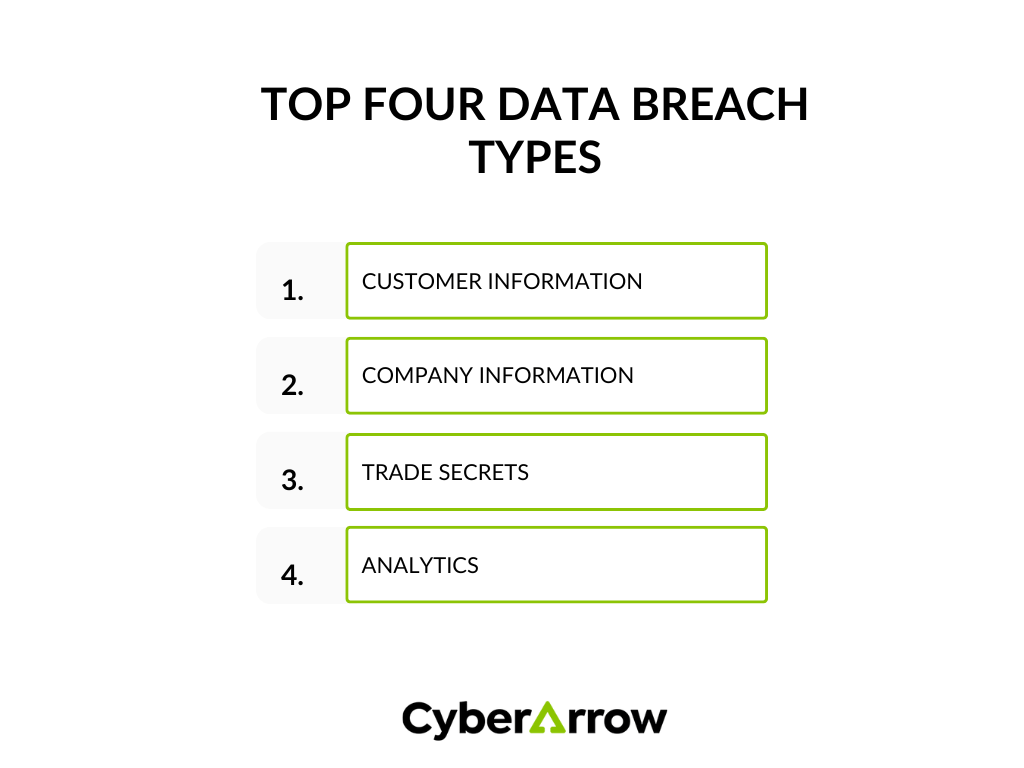
1. Customer information
Customer data exposures including Personal Identifiable Information (PII) were among the most serious data breaches. Each business has its own set of customer information. Any of the following might be considered sensitive information about a customer:
- Customer names
- Addresses
- Phone numbers
- Email addresses
- Usernames
- Passwords
- Payment histories
- Product browsing habits
- Card numbers
2. Company information
Internal company information has been leaked, exposing critical internal behaviour. Unscrupulous corporations following their competitors’ marketing efforts are often the target of such data dumps.
The following are examples of company data leaks:
- Internal communications
- Performance metrics
- Marketing strategies
3. Trade secrets
This is the most hazardous type of data breach for a company. Theft of intellectual property obliterates a company’s potential and brings it to a halt.
The following are examples of trade secret data leakage:
- Upcoming product plans
- Software coding
- Proprietary technology information
4. Analytics
Vast data sets feed analytics dashboards, and hackers are lured to any large pool of data. As a result, analytics software is an attack vector that must be monitored.
Analytics data leaks could include the following:
- Customer behaviour data
- Psycho-graphic data
- Modelled data
Are data leaks and data breaches different?
A data breach is the result of a deliberate cyber assault, whereas a data leak is the result of a company’s unintentional exposure of critical information. Data leaks are discovered by cyber-criminals, who then utilise them to initiate data breach attacks.
Poor security policies are frequently the cause of data breaches. A company’s reputation might be harmed if one of its vendors has a data breach. Because these flaws exist over such a large attack landscape, they’re difficult to spot and fix before it’s too late.
Businesses will remain exposed to data breaches through their third-party network until they have a comprehensive data protection solution.
Steer safe from data leaks
We shall list below but a few data security procedures that might help in preventing data leaks and data breaches.
1. Assess the threat posed by third parties
Unfortunately, your vendors may not be as concerned about cyber-security as you are. It’s critical to keep an eye on all suppliers’ security postures to verify they’re not at risk of a data leak.
Vendor risk assessments are a frequent way to keep third-party vendors compliant with regulatory requirements including HIPAA, PCI-DSS, and GDPR. Risk questionnaires might be created by combining pertinent questions from current frameworks, or supplied through a third-party attack surface monitoring service, if possible.
Risk questionnaires might be created by combining pertinent questions from current frameworks, or supplied through a third-party attack surface monitoring service, if possible.
Keeping up with the risk management demands of a large third-party cloud service network may be tough. Third-party risk management is best left to a team of Cyber-research experts to avoid ignored vendor hazards that leave firms exposed to data breaches.
2. Monitor all network access
The more business network traffic that is monitored, the more likely it is that suspicious activity will be detected. Reconnaissance campaigns are typically conducted prior to data breach attempts, as hackers must discover the exact defenses they need to bypass during an attack.
Organizations may use data leak prevention technologies to discover and address security weaknesses, reducing the risk of reconnaissance campaigns.
To enforce privileged access to extremely sensitive data, security policies may need to be updated.
3. Identify all sensitive data
Businesses must first identify any sensitive data that needs to be protected before implementing Data Loss Prevention (DLP) measures. This information hast to be properly categorized in accordance with rigorous security regulations. Categories might include Protective Health Information, as well as other types of sensitive information.
A corporation may customize the most effective data leak prevention defenses for each data category once all sensitive data has been located and accurately categorized.
4. Secure all endpoints
Any remote access point that connects with a corporate network, either through end-users or autonomously, is referred to as an endpoint. Internet of Things (IoT) devices, PCs, and mobile devices are all included.
Endpoints have increasingly distributed (sometimes even worldwide) since most firms have adopted some type of remote working model, making them more difficult to safeguard.
Firewalls and VPNs provide a foundation for endpoint security, but they’re insufficient. To get over these security barriers, employees are frequently duped into bringing malware into an environment.
Organizations must teach their employees to spot cyber-criminal’s ruses, notably email phishing and social engineering attempts.
5. Encrypt all data
If the data is encrypted, cyber-criminals may have a harder time exploiting data leaks. Symmetric-Key Encryption and Public-Key Encryption are the two basic types of data encryption.
While sophomoric hackers may be stumped by encrypted material, caustic cyber attackers might decipher it without a decryption key. As a result, data encryption should not be used alone to avoid data leaks, but rather in conjunction with the other measures on this list.
6. Evaluate all permissions
Your personal information might now be accessible by people who don’t need it. As a first step, all permissions should be reviewed to ensure that only authorized parties have access.
After this has been confirmed, all vital data should be classified into distinct levels of sensitivity to manage access to separate data pools. Highly sensitive data should only be accessible to trusted employees who need it.
This privileged access assignment procedure may also reveal any malevolent insiders who are assisting in the exfiltration of sensitive data.
Conclusion
In conclusion, data leaks are a serious threat that can compromise sensitive information and lead to costly breaches. Understanding how they occur and the risks they pose is the first step in safeguarding your data. By taking proactive measures and implementing effective training, you can greatly reduce the chances of these leaks happening in your organization.
One of the best ways to build a strong defense against data leaks is through comprehensive employee training. That’s where the CyberArrow Awareness Platform can help. Here’s how it can help your organization:
- Interactive cybersecurity courses: Engage your team with highly interactive and easy-to-understand courses on cybersecurity.
- Progress tracking: Monitor individual and departmental progress with clear dashboards and detailed reports.
- Customizable training: Choose from a wide range of existing courses or create your own to fit your organization’s needs.
- Phishing simulations: Test your team’s readiness with real-world phishing attack simulations. Customize campaigns and track their effectiveness.
- Automated reminders: Ensure training completion with automated reminders for course deadlines.
- Detailed reporting: Export detailed reports in CSV or PDF format for in-depth analysis of training outcomes.
- Continuous learning: Keep your team updated with trending topics and exciting new courses added regularly.
By using the CyberArrow Awareness Platform, you can ensure that your employees are well-trained and prepared to act as a human firewall against data leaks and breaches.
