


Cyber security compliance audit: What it is and how to prepare for it
Cyber security threats are constantly evolving, and businesses must ensure their security measures align with regulatory standards. A cyber security compliance audit helps organizations assess their adherence to security frameworks, identify weaknesses, and demonstrate accountability.
However, many companies approach compliance audits as a box-ticking exercise, which can lead to gaps in security.
In this guide, we’ll break down what a cyber security compliance audit is, why it’s important, and how to prepare for it effectively.
What is a cyber security compliance audit?
A cyber security compliance audit is a structured review that evaluates an organization’s security policies, procedures, and controls against industry standards or regulatory requirements. The goal is to protect sensitive data and ensure the company follows legal and contractual obligations.
Common regulations and compliance frameworks that require cyber security audits include:
- ISO 27001 – International standard for information security management.
- SOC 2 – Focuses on data security and privacy controls for service providers.
- PCI DSS – Security standard for businesses handling payment card data.
- HIPAA – Compliance framework for healthcare organizations.
- GDPR – Data protection regulations for businesses handling EU customer data.
Depending on the industry, businesses may undergo multiple compliance audits, each with its own set of controls and requirements.
Why cyber security compliance audits matter
Cyber security audits do more than keep businesses compliant; they help strengthen security and reduce risks. Here’s why they matter:
- Prevents security breaches: Cybercriminals are always looking for weaknesses to exploit. A compliance audit helps identify vulnerabilities, such as weak access controls, outdated software, or improper data handling, before attackers can target them. Strengthening these areas reduces the risk of data breaches and cyberattacks.
- Builds customer trust: In an era where data privacy is a top concern, customers and clients expect businesses to handle their information securely. A successful cyber security compliance audit demonstrates a company’s commitment to data protection, reassuring customers that their sensitive information is safe.
- Ensures regulatory compliance: Governments and industry bodies impose strict cyber security regulations, and non-compliance can lead to severe consequences, including hefty fines, legal action, and even restrictions on business operations. A compliance audit ensures your organization meets legal and contractual obligations, avoiding financial and reputational damage.
- Improves security posture: Beyond meeting compliance standards, audits provide valuable insights into an organization’s overall security health. By identifying gaps and weaknesses, businesses can refine their security policies, strengthen controls, and improve incident response strategies, making them more resilient to emerging threats.
- Facilitates third-party relationships: Many clients, partners, and vendors require proof of compliance before engaging in business relationships. A cyber security compliance audit is a credibility booster, demonstrating that your organization follows best security practices. This can lead to stronger partnerships, smoother vendor negotiations, and better market positioning.
Failing a compliance audit can result in financial penalties, reputational damage, and even loss of business. That’s why preparation is crucial.
How to prepare for a cyber security compliance audit
Preparation is key to passing a cyber security audit without unnecessary disruptions. Here’s a step-by-step approach to getting ready:
1. Understand the compliance requirements
Each compliance framework has specific requirements, and it’s important to know which ones apply to your organization. Study the relevant standards and regulations, and ensure you understand what auditors will assess.
Example: A healthcare provider handling patient records must comply with HIPAA, which requires strict access controls, encrypted communications, and documented policies for handling protected health information (PHI). If the provider also processes credit card payments, it must meet PCI DSS requirements for securing payment data.
2. Conduct an internal audit
Before an official audit takes place, perform an internal cyber security compliance review. This helps identify gaps and address them in advance. Consider using a compliance automation tool to streamline this process and ensure nothing is overlooked.
Example: A fintech company preparing for a SOC 2 audit conducts an internal review and finds that some third-party vendors lack security certifications. To fix this, they update vendor risk assessment policies and implement stricter third-party security controls before the official audit.
3. Document security policies and controls
Auditors will want to see well-documented security policies, procedures, and controls. Ensure that documentation covers:
- Access controls and authentication measures
Implement multi-factor authentication (MFA) for employees accessing sensitive systems.
- Data encryption and protection strategies
Encrypt customer data both in transit and at rest using AES-256 encryption.
- Incident response and disaster recovery plans
Define clear steps for responding to data breaches, including who to notify and how to contain the impact.
- Employee security awareness training
Conduct regular phishing simulation exercises to test employees’ ability to detect fraudulent emails.
- Third-party risk management practices
Vendors handling company data must complete a security questionnaire and provide compliance certifications.
4. Address vulnerabilities and risks
An internal audit may reveal security gaps, such as outdated software, weak passwords, or poor access controls. Fix these issues before the compliance audit to avoid failing key security checks.
Example: A retail company undergoing a PCI DSS audit discovers that its payment terminals still use outdated software. Before the audit, they upgraded their systems, applied security patches, and ensured compliance with PCI DSS encryption requirements.
5. Train employees on compliance requirements
Human error is one of the biggest cyber security risks. Employees should be trained on compliance policies, phishing threats, data handling procedures, and security best practices. Regular training reduces the chances of accidental security breaches.
Example: A law firm handling sensitive client information provides quarterly cyber security training to staff, including real-world case studies on phishing attacks. After implementing the training, the firm sees a significant drop in employees clicking on suspicious links.
6. Maintain an audit trail
Keeping records of security incidents, policy changes, risk assessments, and past audit results is essential. An audit trail helps demonstrate compliance and provides a historical record of your security efforts.
Example: A cloud service provider documents all system access logs, software updates, and security incidents. During their ISO 27001 audit, they provide auditors with a detailed history of security measures taken over the past year, making the audit process smoother.
7. Work with cyber security compliance experts
If your organization lacks in-house expertise, consider using cyber security compliance consulting or compliance automation software like CyberArrow GRC. These solutions can simplify the audit process, ensure accuracy, and help meet compliance deadlines.
Example: Areeba, a regional payment service provider, struggled with the complexity of ISO 27001 and ISO 22301 compliance. Managing it manually was resource-intensive, so they implemented CyberArrow GRC to automate evidence collection, streamline audits, and ensure real-time compliance monitoring.
The Results
- Automated compliance workflows, reducing manual effort
- Seamless adherence to ISO 27001 and ISO 22301
- Significant cost savings due to reduced resource allocation
- Faster and more accurate audits with real-time reporting
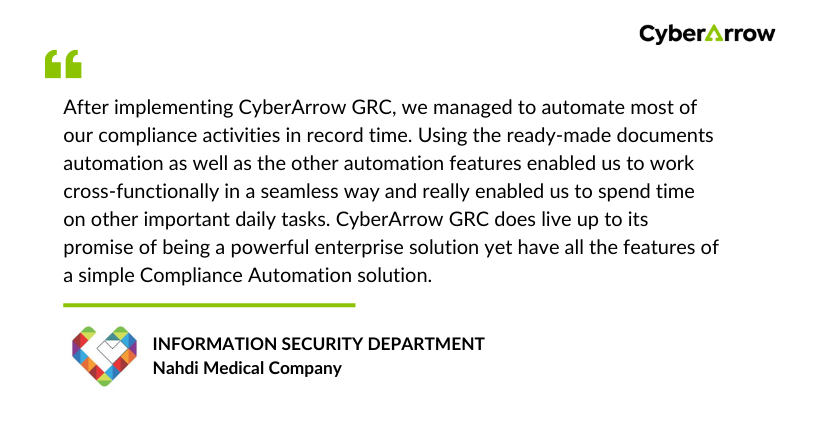
Here’s what our clients have to say about CyberArrow:
Simplify your cyber security compliance audits with CyberArrow
Staying compliant shouldn’t be a burden. CyberArrow GRC automates the entire compliance process, from evidence collection to real-time monitoring, helping your organization pass audits with ease.
With CyberArrow, you get:
- Automated compliance workflows: Reduce manual effort and human errors
- Real-time audit readiness: Always be prepared for compliance assessments
- Centralized security management: Track risks, policies, and controls in one place
- Expert support: Get guidance from compliance professionals
