

Top 5 GRC software for CISOs
Chief Information Security Officers face growing pressure every year. Cyber threats are increasing, regulations are expanding, and leadership expects clear answers about risk exposure. At the same time, CISOs must manage policies, controls, audits, incidents, third-party risks, and compliance frameworks.
This is why choosing the right GRC software is critical. GRC software gives CISOs structure, visibility, and control across security and compliance programs. Without it, teams rely on spreadsheets, emails, and manual tracking, which leads to gaps and delays.
This detailed guide explains what CISOs need from GRC software and reviews the top five GRC software platforms available today.
- What CISOs need from GRC software
- Why GRC software is critical for CISOs
- Criteria used to evaluate GRC software for CISOs
- Top 5 GRC software for CISOs
- Comparison summary for CISOs
- Common challenges CISOs face without GRC software
- How GRC software helps CISOs communicate with leadership
- Why CISOs are moving toward automation
- Why CyberArrow GRC is the best choice for CISOs
- Conclusion
- FAQs
What CISOs need from GRC software
CISOs manage both technical security and business risk. GRC software must support both.
Key requirements for CISOs include:
- Central visibility into risks and controls.
- Support for multiple frameworks such as ISO 27001, NIST, SOC 2, PCI DSS, HIPAA, and others.
- Automated workflows instead of manual follow-ups.
- Real-time dashboards for leadership.
- Clear audit evidence management.
- Support for third-party risk management.
- Strong reporting features.
A strong GRC platform allows CISOs to focus on strategy instead of chasing documents.
Why GRC software is critical for CISOs
CISOs are accountable for protecting the organization. This responsibility includes more than tools and firewalls.
GRC software helps CISOs:
- Understand security posture across departments.
- Map security controls to business risks.
- Track compliance status in real time.
- Prepare for audits without panic.
- Communicate risks clearly to executives.
- Reduce manual work for security teams.
Without GRC software, risk information becomes fragmented and difficult to manage.
Criteria used to evaluate GRC software for CISOs
To identify the top platforms, the following criteria were used:
- Coverage of governance, risk, and compliance.
- Automation capabilities.
- Scalability for growing organizations.
- Ease of use for security and non-technical teams.
- Reporting and dashboard quality.
- Framework and regulation support.
- Suitability for CISO-level leadership.
Based on these criteria, the following GRC software solutions stand out.
Top 5 GRC software for CISOs
1. CyberArrow GRC
CyberArrow GRC is a modern and comprehensive GRC platform designed for security leaders who want automation, clarity, and scale.
Why CISOs choose CyberArrow GRC
CyberArrow focuses on reducing manual work while improving visibility.
Key features include:
- Central risk register with scoring and ownership.
- Built-in control libraries for global frameworks.
- Automated evidence collection workflows.
- Policy and procedure management.
- Third-party risk management support.
- Cross-framework mapping to reduce duplicate work.
- Real-time dashboards for leadership.
- Audit-ready documentation at all times.
CyberArrow helps CISOs manage security programs with fewer resources and less stress.
Best for
- CISOs at growing and mid-sized organizations.
- Teams managing multiple compliance frameworks.
- Organizations moving from spreadsheets to automation.
2. ServiceNow GRC
ServiceNow GRC is part of the ServiceNow enterprise platform.
Strengths
- Strong integration with IT workflows.
- Scalable for large enterprises.
- Supports risk, compliance, and vendor management.
- Enterprise-level dashboards.
Limitations
- Complex setup and configuration.
- Higher cost.
- Requires specialist resources to manage.
Best for
- Large enterprises with existing ServiceNow usage.
- CISOs with large teams and budgets.
3. RSA Archer
RSA Archer is one of the oldest GRC platforms in the market.
Strengths
- Mature risk management features.
- Supports many risk use cases.
- Flexible configuration.
Limitations
- User interface feels outdated.
- Heavy setup effort.
- Less automation out of the box.
Best for
- Organizations with complex risk modeling needs.
- CISOs focused heavily on risk analysis.
4. MetricStream
MetricStream provides a broad GRC solution suite.
Strengths
- Wide coverage of compliance areas.
- Strong reporting and analytics.
- Global regulatory coverage.
Limitations
- Complex deployment.
- Requires long implementation cycles.
- Can feel heavy for smaller teams.
Best for
- Large regulated industries.
- CISOs managing global compliance programs.
5. LogicGate Risk Cloud
LogicGate Risk Cloud is a newer GRC platform known for flexibility.
Strengths
- Modern interface.
- Configurable workflows.
- Good risk visualization.
Limitations
- Requires configuration work.
- Limited built-in automation compared to some platforms.
Best for
- CISOs wanting flexibility.
- Teams with internal GRC expertise.
Comparison summary for CISOs
When comparing GRC software for CISOs, the main differences appear in automation, ease of use, cost, and scalability.
- CyberArrow GRC focuses on automation and simplicity.
- ServiceNow and MetricStream focus on enterprise scale.
- RSA Archer focuses on deep risk modeling.
- LogicGate focuses on flexible workflows.
The right choice depends on team size, compliance scope, and available resources.
Common challenges CISOs face without GRC software
Many CISOs struggle with the same problems when GRC is manual.
These include:
- Risk data spread across tools.
- Lack of real-time visibility.
- Audit preparation stress.
- Missed evidence updates.
- Poor communication with leadership.
- Difficulty managing third-party risk.
GRC software provides structure to solve these problems.
How GRC software helps CISOs communicate with leadership
CISOs must explain risk in business terms.
GRC software helps by:
- Translating technical issues into risk scores.
- Showing trends over time.
- Providing dashboards for executives.
- Supporting board-level reporting.
Clear reporting strengthens trust between security and leadership teams.
Why CISOs are moving toward automation
Manual programs do not scale.
Automation helps CISOs:
- Reduce repetitive tasks.
- Ensure consistent execution.
- Maintain year-round audit readiness.
- Reduce dependency on individual employees.
Automation leads to stronger and more reliable security programs.
Why CyberArrow GRC is the best choice for CISOs
CyberArrow GRC is built for security leaders who want results quickly.
It provides:
- Fast onboarding.
- Clear workflows.
- Automation across evidence, controls, and risks.
- Support for global frameworks.
- Visibility for leadership.
- Reduced audit pressure.
CyberArrow helps CISOs shift from reactive compliance to proactive risk management.
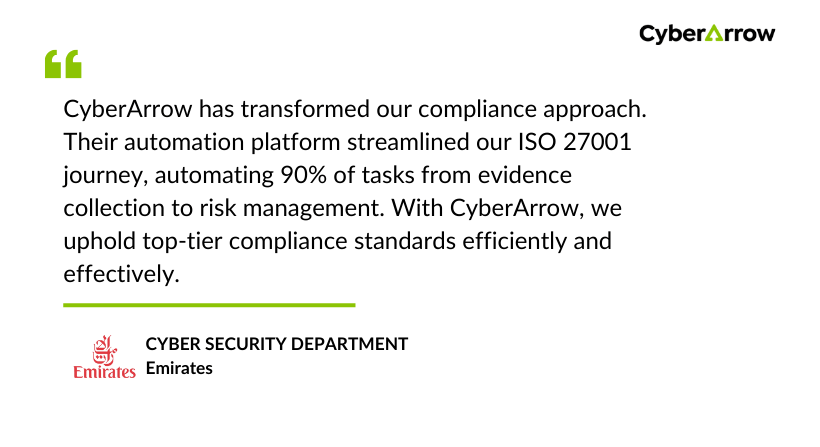
See what our clients have to say about CyberArrow GRC:
Conclusion
Choosing the right GRC software is one of the most important decisions a CISO makes. The right platform improves visibility, reduces manual work, and supports better security decisions.
While platforms like ServiceNow, RSA Archer, MetricStream, and LogicGate offer value, CyberArrow GRC stands out for its balance of automation, usability, and comprehensive coverage.
For CISOs who want clarity, speed, and control without complexity, CyberArrow GRC is the strongest option.
If your organization wants to build a scalable and modern GRC program, CyberArrow GRC is the platform designed to support today’s security leaders.
FAQs
What is GRC software, and why do CISOs need it?
GRC software helps CISOs manage governance, risk, and compliance in one place. It centralizes risks, controls, policies, evidence, and audits. This helps CISOs gain visibility, reduce manual work, and make better security decisions.
What features should CISOs look for in GRC software?
CISOs should look for risk management, control mapping, policy management, audit readiness, evidence automation, third-party risk tracking, real-time dashboards, and support for multiple compliance frameworks.
Can GRC software replace security tools like SIEM or EDR?
No. GRC software does not replace security detection or response tools. It manages governance and compliance processes around them. GRC connects security activities to business risk and regulatory requirements.
How does GRC software help CISOs communicate with executives and boards?
GRC software provides dashboards and reports that turn technical security data into clear risk insights. This helps CISOs explain exposure, trends, and priorities to executives and board members.
Why is CyberArrow GRC a strong choice for CISOs?
CyberArrow GRC offers automation, ease of use, and broad framework coverage. It reduces audit stress, improves visibility, and helps CISOs manage security and compliance programs efficiently at scale.
