


NIST standards: A complete guide to understanding and achieving compliance
Standards are the foundation of trust in technology, cybersecurity, and data protection. For organizations that want to compete globally and protect sensitive information, aligning with internationally recognized frameworks is critical. Among the most respected names in this space is the National Institute of Standards and Technology (NIST). Its guidelines, frameworks, and best practices have become benchmarks for security and compliance across industries.
In this blog, we will explore what NIST standards are, why they matter, the different types of NIST frameworks, and how your organization can comply effectively.
We will also discuss how platforms like CyberArrow GRC can simplify and automate NIST compliance to save you time, cost, and effort.
What are NIST standards?
NIST standards are a collection of frameworks, guidelines, and technical specifications created by the National Institute of Standards and Technology, a U.S. federal agency. They aim to improve information security, strengthen risk management, and ensure the safe use of technology.
Originally founded in 1901, NIST’s mission was to advance measurement science, standards, and technology to support innovation. Over time, as cybersecurity became a top priority worldwide, NIST began developing standards that help both government agencies and private organizations address risks effectively.
Today, NIST standards are globally recognized. They are not limited to the U.S.; many companies worldwide use them to meet regulatory requirements, prove their commitment to security, and build customer trust.
Why are NIST standards important?
Cyber threats are evolving rapidly. According to IBM’s Cost of a Data Breach Report 2023, the average global data breach cost reached $4.45 million, a 15% increase over three years. Many of these breaches occur because of weak security practices, inconsistent risk management, or lack of compliance.
NIST standards help organizations:
- Build strong cybersecurity foundations.
- Reduce the likelihood and impact of cyberattacks.
- Align with global regulations like GDPR, HIPAA, and ISO standards.
- Strengthen customer trust by demonstrating proactive security.
- Streamline audits and due diligence processes.
By following NIST standards, businesses create consistency in their security posture and establish resilience against risks that could otherwise cause major financial and reputational damage.
Types of NIST standards
NIST has developed many frameworks and publications. Let’s explore the most relevant ones for modern businesses:
1. NIST Cybersecurity Framework (NIST CSF)
The NIST CSF is one of the most widely used standards. It provides a structured approach to identifying, protecting, detecting, responding to, and recovering from cyber threats. The CSF is built around five core functions that make it easy for organizations to prioritize their cybersecurity investments.
2. NIST Special Publication 800 Series
The SP 800 series includes detailed guidance on specific cybersecurity topics. Popular ones include:
- NIST 800-53: Security and Privacy Controls for Information Systems.
- NIST 800-171: Protecting Controlled Unclassified Information (CUI).
- NIST 800-30: Risk Management Guide.
These are often mandatory for government contractors and highly recommended for private organizations.
3. NIST AI Risk Management Framework (AI RMF)
With artificial intelligence becoming mainstream, NIST introduced the AI RMF to help organizations manage risks related to AI development and usage. It ensures AI systems remain trustworthy, transparent, and secure.
4. NIST Digital Identity Guidelines (SP 800-63B)
These guidelines focus on secure authentication practices, including password policies, multi-factor authentication, and identity proofing.
5. NIST FIPS (Federal Information Processing Standards)
FIPS are U.S. government standards created by NIST for sensitive data protection. One example is FIPS 140-3, which focuses on cryptographic modules.
Quick link: How to implement the COSO framework
Who needs to follow NIST standards?
NIST standards are essential for:
- Government contractors: Compliance with NIST 800-171 or NIST 800-53 is often mandatory.
- Financial institutions: To meet security regulations and reduce fraud.
- Healthcare organizations: To align with HIPAA requirements and protect patient data.
- Cloud service providers: To gain certifications like FedRAMP, which rely on NIST standards.
- Enterprises worldwide: Even outside the U.S., companies adopt NIST standards to improve security and compete internationally.
Steps to implement NIST standards
Getting compliant with NIST standards can seem overwhelming, especially if your organization is new to cybersecurity frameworks. Here’s a step-by-step approach:
1. Understand the scope
Identify which NIST standards apply to your business. For instance, if you handle government contracts, NIST 800-171 is a must. If you want a broad security framework, NIST CSF may be the best start.
2. Conduct a gap analysis
Compare your current security practices against NIST requirements. Identify missing policies, weak controls, and gaps in documentation.
3. Develop policies and procedures
NIST emphasizes formal documentation. Draft security policies, incident response procedures, and risk management frameworks.
4. Implement controls
Apply technical and administrative controls such as access management, encryption, and employee training.
5. Continuous monitoring
NIST frameworks require ongoing monitoring and regular assessments, not one-time compliance.
Quick link: What is NIST certification?
Challenges with NIST compliance
Many organizations struggle with:
- Complex documentation: Policies, procedures, and controls need detailed records.
- Time-intensive audits: Traditional methods rely on manual evidence collection and spreadsheets.
- Cost of compliance: Hiring consultants or dedicating internal resources can be expensive.
- Keeping pace with changes: NIST updates its publications regularly, requiring businesses to stay aligned.
Quick link: Best ISO 22301 software
How CyberArrow GRC simplifies NIST compliance
While NIST standards are crucial, managing compliance manually can consume months of work and drain resources. This is where CyberArrow GRC becomes a game changer.
CyberArrow GRC automates key compliance processes, making NIST adoption faster and easier:
- Automated compliance tracking: Monitor NIST controls in real time.
- Zero-touch audits: Eliminate manual evidence collection with automated reporting.
- Policy management: Access auditor-ready templates aligned with NIST standards.
- Risk management automation: Conduct real-time risk assessments mapped to NIST requirements.
- Continuous monitoring: Stay compliant even as NIST standards evolve.
With CyberArrow, organizations can achieve and maintain NIST compliance without the stress of spreadsheets, manual reviews, and costly consultants.
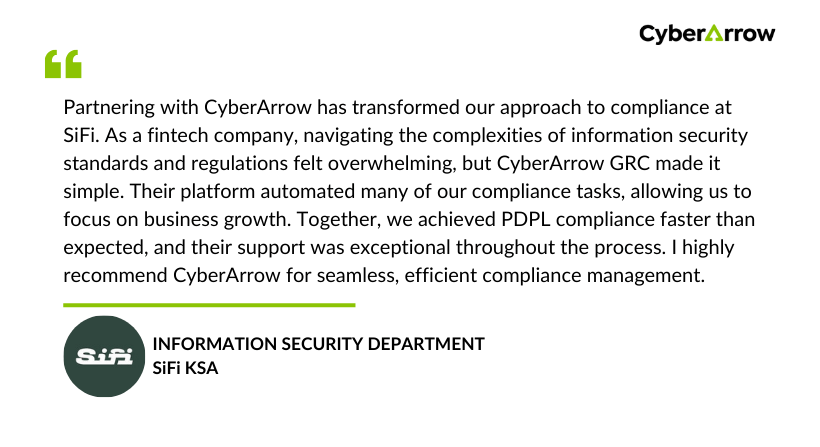
See what our clients have to say about CyberArrow GRC:
Conclusion
NIST standards are more than just guidelines. They are a globally respected framework for cybersecurity, risk management, and compliance. Whether it is NIST CSF, 800-171, 800-53, or AI RMF, these standards empower organizations to protect sensitive data, reduce risks, and prove their trustworthiness to clients and regulators.
However, compliance can be complex and resource-heavy if managed manually. CyberArrow GRC transforms this challenge into an opportunity, putting NIST compliance on autopilot with automation, zero-touch audits, and real-time monitoring.
If your organization is ready to align with NIST standards and save hundreds of hours in the process, CyberArrow GRC is the partner you need.
FAQS
What are NIST standards in cybersecurity?
NIST standards are guidelines developed by the National Institute of Standards and Technology to improve information security and risk management. They include frameworks such as the NIST Cybersecurity Framework (CSF), NIST SP 800-53, and NIST SP 800-171, which help organizations strengthen data protection, manage risks, and comply with regulations.
Who needs to comply with NIST standards?
NIST standards are mandatory for U.S. federal agencies and government contractors, but many private organizations worldwide also follow them. Industries such as finance, healthcare, cloud services, and technology companies use NIST standards to improve cybersecurity, meet regulatory requirements, and build customer trust.
How can businesses achieve NIST compliance easily?
Businesses can achieve NIST compliance by conducting a gap analysis, implementing required controls, and monitoring continuously. However, manual compliance can be time-consuming. Using automation platforms like CyberArrow GRC simplifies the process with zero-touch audits, automated evidence collection, and real-time compliance tracking.
