Top HIPAA compliant telehealth platforms
Telehealth has transformed healthcare by making medical consultations more accessible, convenient, and cost-effective. Patients can now consult doctors from the comfort of their homes, reducing wait times and eliminating travel barriers. However, with the rise of virtual healthcare comes a crucial concern: data security and privacy.
Medical records contain sensitive patient information, including diagnoses, prescriptions, and personal details. A data breach in telehealth platforms can lead to identity theft, insurance fraud, or unauthorized access to health records. This is why HIPAA compliant telehealth platforms are essential.
But what does it mean for a telehealth platform to be HIPAA compliant? How does it ensure patient privacy? And what are the top HIPAA compliant telehealth platforms?
Let’s dive deeper.
What is HIPAA, and why does it matter in telehealth?
HIPAA (Health Insurance Portability and Accountability Act) is a U.S. law that sets standards for protecting sensitive patient information. Under HIPAA, healthcare providers, insurers, and any business handling medical data must follow strict security measures to safeguard patient privacy.
For telehealth platforms, HIPAA compliance ensures that video consultations, patient records, and any electronic health data remain secure. A non-compliant telehealth platform can expose patient data to cyber threats, resulting in hefty penalties for healthcare providers.
Best HIPAA compliant telehealth platforms
Several telehealth platforms are built with HIPAA compliance in mind. Here are some of the top options:
1. Doxy.me
Doxy.me is a simple, browser-based telehealth platform designed for healthcare providers who need a quick and secure way to connect with patients. With no downloads required, it’s easy for both practitioners and patients to use, making it an ideal choice for clinics and solo practitioners.
Key features
- No downloads required—works via the web browser.
- Encrypted video calls.
- Free and paid plans available.
- Business associate agreement (BAA) provided.
2. Zoom for Healthcare
Zoom’s healthcare-specific version provides HIPAA-compliant video conferencing with end-to-end encryption. It supports large group sessions, making it an excellent option for hospitals, therapy groups, and medical practices that need a scalable telehealth solution.
Key features
- HIPAA-compliant version with end-to-end encryption.
- Secure video and audio communication.
- Supports group sessions and virtual waiting rooms.
- Requires a BAA for compliance.
3. VSee
VSee is a telehealth platform designed specifically for healthcare professionals, offering features like secure messaging, remote patient monitoring, and even e-prescriptions. It’s a robust solution for clinics and hospitals that need an all-in-one telehealth system.
Key features
- Designed for healthcare professionals.
- Secure video calls and messaging.
- E-prescription and remote patient monitoring features.
- HIPAA-compliant cloud storage.
4. SimplePractice
SimplePractice is a comprehensive practice management solution ideal for therapists, counselors, and solo practitioners. It offers HIPAA-compliant telehealth services, including scheduling, billing, and documentation tools.
Key features
- Ideal for therapists and solo practitioners.
- Secure client communication, scheduling, and billing.
- Encrypted video consultations.
- Automatic session recording (optional).
5. TheraNest
TheraNest is built for mental health professionals who need a HIPAA-compliant telehealth and electronic health record (EHR) system. It includes features like secure billing, insurance claim processing, and role-based access controls for managing staff access.
Key features
- Built for mental health professionals.
- HIPAA-compliant telehealth and EHR system.
- Secure billing and insurance claim processing.
- Role-based access control for staff.
What makes a platform HIPAA compliant?
For a telehealth platform to be HIPAA compliant, it must follow strict security and privacy measures to protect electronic protected health information (ePHI). Below are the key elements that define a HIPAA-compliant telehealth platform:
- End-to-end encryption: All patient data, including video calls, messages, and files, must be encrypted during transmission and storage. This prevents unauthorized access and ensures confidentiality.
- Access controls: Platforms must implement strong authentication methods, such as multi-factor authentication (MFA) and role-based access permissions, to ensure that only authorized personnel can view or manage sensitive patient information.
- Business associate agreement (BAA): Telehealth platforms that handle patient data must sign a BAA with healthcare providers. This legally binding contract ensures the platform follows HIPAA security and privacy rules.
- Audit logs and monitoring: Platforms must maintain logs of all user activity, tracking who accesses, modifies, or shares patient information. These logs help identify potential security risks and ensure compliance with HIPAA regulations.
- Data storage security: Patient records must be stored securely using encrypted databases or HIPAA-compliant cloud storage solutions. Platforms should also have backup and disaster recovery mechanisms in place to prevent data loss.
- Automatic log-off: To prevent unauthorized access, telehealth platforms should automatically log out users after a period of inactivity. This feature helps protect patient data if a device is left unattended.
Common HIPAA compliance mistakes in telehealth
Even with a HIPAA-compliant platform, mistakes can still occur. Here are some common errors to avoid:
- Using non-compliant video platforms: Popular video conferencing tools like Skype, FaceTime, and standard Zoom are not HIPAA compliant because they lack encryption and proper access controls. Always choose a certified telehealth platform.
- Storing patient data on personal devices: Downloading or storing patient records on personal computers or mobile devices increases the risk of data breaches. Use secure cloud-based storage instead.
- Lack of proper training: Even with the best security tools, human error can cause breaches. Ensure your staff is trained in HIPAA regulations, secure data handling, and phishing prevention.
Ensure HIPAA compliance for your telehealth platform with CyberArrow
HIPAA compliance isn’t just a checkbox; it’s essential for securing patient data, avoiding legal risks, and building trust with healthcare providers. But, keeping up with evolving regulations, security requirements, and audits can be overwhelming.
That’s where CyberArrow comes in. It is a compliance automation platform that simplifies HIPAA compliance for telehealth providers by:
- Automating compliance processes with no more manual tracking of requirements.
- Providing real-time monitoring to detect and prevent compliance risks.
- Simplifying audits and reporting, making it easy to prove compliance.
- Offering expert support to guide you through HIPAA regulations.
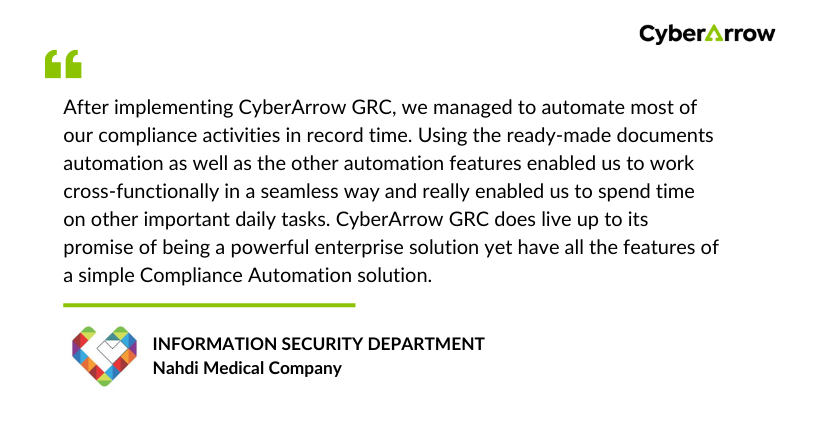
See what healthcare companies like Nahdi Medical say about CyberArrow: