


A complete guide to International Professional Practices Framework (IPPF)
Every organization needs a strong internal audit system to ensure good governance and risk management. The International Professional Practices Framework (IPPF) provides a structured approach for auditors to evaluate and improve business processes. Developed by the Institute of Internal Auditors (IIA), this framework sets global standards for internal auditing.
IPPF is widely recognized across industries, helping organizations maintain transparency, accountability, and compliance with regulations. By following this framework, businesses can strengthen their internal audit function, improve risk assessment, and align with best practices. However, many companies struggle with manual audit processes, making compliance complex and time-consuming.
In this guide, we will explore what IPPF is, its key components, and the steps to implement it. We will also discuss how CyberArrow GRC can help organizations automate IPPF compliance and streamline governance, risk, and compliance (GRC) processes.
What is the International Professional Practices Framework (IPPF)?
The International Professional Practices Framework (IPPF) is a set of guidelines and standards that define best practices for internal auditing. It provides a structured approach for auditors to assess, monitor, and improve an organization’s governance, risk, and control processes.
The framework ensures that internal auditors work in a professional and ethical manner while delivering value to their organizations. It is widely used across different industries, including finance, healthcare, technology, and government sectors.
Why is IPPF important?
The IPPF is crucial because it:
- Standardizes internal auditing: It ensures that auditors follow globally recognized best practices.
- Enhances risk management: It helps organizations identify and mitigate risks effectively.
- Improves compliance: It aligns with various compliance frameworks like ISO 31000, ISO 27001, and SOC 2.
- Increases transparency: It ensures accountability in financial reporting and governance.
Key components of IPPF
The IPPF consists of two main parts: Mandatory guidance and recommended guidance.
1. Mandatory guidance
Organizations must follow the mandatory elements of IPPF to ensure compliance. These include:
a. Core Principles
The framework is built on ten core principles that define how internal auditors should work. These principles include integrity, objectivity, confidentiality, and competency.
b. Definition of Internal Auditing
Internal auditing is defined as an independent, objective activity that improves an organization’s operations.
c. Code of Ethics
Auditors must follow a professional code of ethics, which includes honesty, diligence, and confidentiality when conducting audits.
d. International Standards for the Professional Practice of Internal Auditing
These are detailed guidelines on how internal auditing should be performed. They cover aspects such as planning, execution, and reporting of audits.
2. Recommended guidance
These are best practices that organizations can follow to improve their internal audit processes. The recommended guidance includes:
- Implementation guidance: Provides practical advice on how to apply the standards.
- Supplemental guidance: Offers tools and techniques to support audit functions.
How to implement IPPF in your organization
To comply with IPPF, organizations need a structured approach. Here are the steps to implement IPPF effectively:
Step 1: Understand your organization’s audit needs
Start by assessing your company’s audit requirements. Identify the risks, compliance needs, and areas where internal audits can add value.
Step 2: Develop an internal audit charter
The Internal Audit Charter outlines the role, responsibilities, and authority of the internal audit team. It should align with IPPF standards.
Step 3: Establish audit policies and procedures
Create audit policies that follow the IPPF guidelines. Define audit methodologies, risk assessment processes, and reporting structures.
Step 4: Train your internal auditors
Ensure that your internal audit team is well-trained in IPPF principles, ethical standards, and auditing best practices.
Step 5: Conduct regular audits and assessments
Perform risk-based internal audits to evaluate governance, risk, and control mechanisms. Ensure that audit reports provide clear insights for business improvements.
Step 6: Monitor and improve audit practices
Continuously monitor and enhance your audit process using technology and automation tools. This helps maintain compliance with IPPF.
Quick link: What is KING IV compliance?
Challenges in achieving IPPF compliance
Many organizations face challenges in implementing IPPF due to:
- Lack of automation: Manual audit processes can be time-consuming and error-prone.
- Complex compliance requirements: Organizations must comply with multiple frameworks, including ISO 31000, ISO 27001, and SOC 2.
- Limited resources: Small and medium businesses may not have dedicated internal audit teams.
To overcome these challenges, companies need a GRC (Governance, Risk, and Compliance) solution that automates compliance management.
How CyberArrow GRC helps in IPPF compliance
CyberArrow GRC is the #1 enterprise GRC software that simplifies compliance with IPPF and other international standards. It is trusted by hundreds of global brands to streamline governance, risk management, and internal audits.
Why choose CyberArrow GRC for IPPF compliance?
- Full automation: CyberArrow GRC automates risk assessments, compliance tracking, and internal audits, eliminating manual effort.
- Multi-framework support: It supports ISO 31000, ISO 27001, ISO 27701, PCI DSS, GDPR, SOC 2, and more.
- Customizable dashboards: Organizations can monitor audit progress, generate real-time reports, and ensure compliance.
- Risk-based auditing: The platform helps businesses conduct effective audits based on risk priority.
- Easy integration: CyberArrow GRC integrates with other enterprise tools for seamless compliance management.
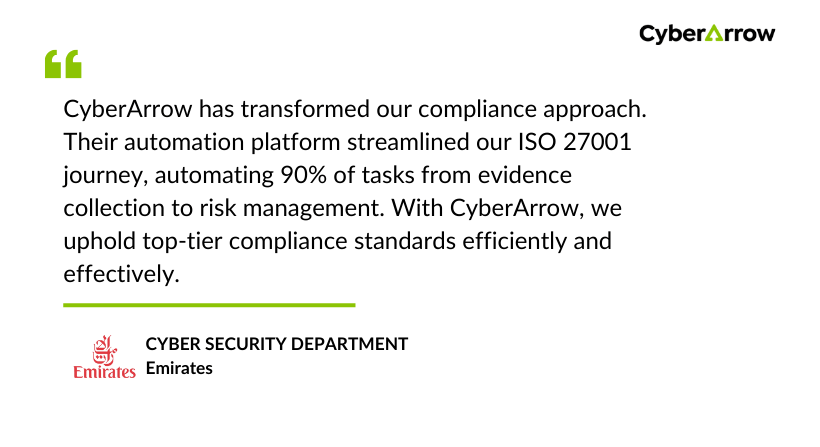
See what global brands like Emirates have to say about CyberArrow GRC:
Conclusion
The International Professional Practices Framework (IPPF) is essential for businesses that want to enhance their internal audit function. It provides a structured approach to governance, risk management, and compliance.
However, achieving IPPF compliance can be complex without the right tools. CyberArrow GRC is the ultimate solution that automates internal audits, simplifies risk assessments, and ensures compliance with multiple frameworks.
FAQs
What is the International Professional Practices Framework (IPPF) in internal auditing?
The International Professional Practices Framework (IPPF) is a globally recognized set of guidelines developed by the Institute of Internal Auditors (IIA). It defines best practices for internal auditing, helping organizations assess governance, risk management, and control processes. IPPF includes core principles, ethical standards, and detailed audit procedures to ensure compliance and transparency.
How can organizations implement IPPF compliance?
Organizations can implement IPPF compliance by developing a structured internal audit function, creating an audit charter, establishing clear audit policies, training auditors, and conducting risk-based audits. Many companies also use GRC software like CyberArrow GRC to automate compliance, track audits, and manage risks effectively.
What is the difference between IPPF and ISO 31000?
IPPF focuses on internal auditing standards, providing a framework for conducting audits and assessing internal controls. ISO 31000, on the other hand, is a risk management standard that helps organizations identify, evaluate, and manage risks. While both frameworks enhance governance and compliance, IPPF is specifically designed for internal auditors, whereas ISO 31000 applies to enterprise-wide risk management.
