Business resilience vs. business continuity explained
Unexpected challenges, including cyberattacks, supply chain failures, and economic downturns, can hit businesses anytime. Some companies recover quickly, while others struggle to get back on track. What makes the difference? It often comes down to business resilience and business continuity. While these terms are sometimes used interchangeably, they’re not the same.
Business continuity focuses on keeping things running during a crisis, while business resilience is adapting and growing stronger from setbacks. In this article, we’ll break down both concepts, their key components, and how they differ.
Also read: What is ServiceNow ITSM (IT Service Management)?
What is business resilience?
Business resilience refers to an organization’s ability to adapt to unexpected challenges, absorb shocks, and emerge stronger than before. It goes beyond survival, focusing on flexibility, innovation, and proactive change management. A resilient business anticipates potential risks, implements adaptive strategies, and builds a culture that embraces change.
Core components of business resilience
- Risk awareness and anticipation: Resilient organizations invest in monitoring their internal and external environments. This includes market trends, technological advancements, and emerging threats. Companies can predict potential disruptions and adjust strategies accordingly by staying informed.
- Adaptive leadership and culture: Effective leadership is crucial in fostering resilience. Leaders who empower their teams, encourage creative problem-solving, and maintain open communication help cultivate a resilient culture. Employees become active participants in the organization’s evolution rather than passive responders.
- Agile processes and systems: Business resilience is built on the foundation of agile systems and flexible processes. Organizations that can quickly reallocate resources, shift priorities, or modify workflows are better equipped to navigate disruptions.
- Innovation and continuous improvement: Resilient businesses embrace innovation as a pathway to improvement. They invest in research and development, encourage cross-functional collaboration, and view challenges as opportunities to rethink and redesign business models.
- Stakeholder engagement: A strong network of relationships with customers, suppliers, and partners enhances resilience. This network can provide critical support during crises and help an organization quickly adapt to changing circumstances.
Also read: What is SOC 2 bridge letter?
What is business continuity?
Business continuity is the strategic planning and operational response designed to ensure that essential functions remain operational during and after a disruption. It involves detailed planning and preparation to minimize downtime and maintain service levels during unforeseen events, such as natural disasters, cyberattacks, or supply chain interruptions.
Core components of business continuity
- Risk assessment and business impact analysis: Effective business continuity planning begins with identifying potential threats and assessing their impact on critical business operations. This analysis helps prioritize which functions are vital and which resources need protection.
- Crisis management and emergency response plans: A well-crafted business continuity plan includes detailed emergency response protocols. This covers the steps to be taken immediately after a disruption, roles and responsibilities, and communication channels to keep stakeholders informed.
- Recovery strategies and backup systems: Ensuring critical systems can be restored swiftly is at the heart of business continuity. This might involve establishing redundant systems, data backups, and alternative operational sites to resume operations with minimal delay.
- Training and testing: A plan is only as good as its implementation. Regular training sessions, drills, and simulations ensure that employees are familiar with the procedures and can act effectively when a disruption occurs. Testing the plan also identifies potential weaknesses that can be addressed before an event.
- Documentation and continuous review: Business continuity plans must be well documented, easily accessible, and regularly reviewed to adapt to new risks or changes in the business environment. This continuous improvement ensures that the plan remains relevant and effective over time.
Business resilience vs. Business continuity: At a glance
While business resilience and business continuity aim to help organizations navigate disruptions, they approach the challenge from different perspectives. Below is a table summarizing the key differences between the two:
| Aspect | Business resilience | Business continuity |
| Focus | Long-term adaptability and growth | Short-term survival and operational recovery |
| Approach | Proactive, strategic, and adaptive planning | Reactive, tactical, and procedural planning |
| Scope | Encompasses organizational culture, innovation, and adaptability | Concentrates on critical functions and operational continuity |
| Leadership involvement | Involves strategic decision-making at all levels | Involves emergency response teams and crisis management specialists |
| Flexibility | Embraces change and continuous evolution | Focuses on predefined recovery steps and established protocols |
| Risk management | Broad and holistic, integrating risk into all aspects of operations | Specific to maintaining essential functions during crises |
Why are business resilience and continuity important?
No business is immune to disruptions. Whether it’s a natural disaster, a cyberattack, a sudden market shift, or a global crisis, unexpected events can throw operations off course. That’s where business resilience and continuity help organizations prepare for the unexpected and respond effectively when things go wrong.
Business continuity ensures critical functions can keep running during a disruption, minimizing downtime and financial losses. On the other hand, business resilience goes a step further. It’s not just about survival; it’s about adapting to change, learning from challenges, and coming out stronger on the other side.
Quick read: How to comply with the Digital Operational Resilience Act (DORA)
Business resilience and continuity are essential for the following reasons:
- Quickly restore operations during and after disruptions.
- Reduce the risk of significant revenue loss.
- Maintain customer trust and brand credibility even in crises.
- Ensure critical business functions continue without significant interruptions.
- Learn from challenges and improve processes for future resilience.
- Meet legal and industry requirements related to risk management.
- Foster a sense of security among staff, knowing there’s a plan in place.
- Recover faster than competitors, gaining an edge in challenging times.
5 steps to build continuity and resilience in your business
Building strong business continuity and resilience is about creating a mindset and structure that prepares your organization to handle disruptions effectively.
Here are five key steps to help you get started:
1. Identify critical business functions
Pinpoint the processes, systems, and operations essential to keeping your business running. This includes areas like IT infrastructure, supply chain operations, customer support, and financial management. Understanding what’s critical helps you prioritize your efforts and resources during a crisis.
2. Conduct a risk assessment
Identify potential threats that could impact your business, such as natural disasters, cyberattacks, equipment failures, or economic shifts. Assess both the likelihood of these risks and their potential impact. This will help you develop strategies tailored to your specific vulnerabilities.
3. Develop a business continuity plan (BCP)
Create a detailed plan that outlines how your business will continue operating during a disruption. This should include:
- Emergency response procedures
- Communication plans for employees, customers, and stakeholders
- Backup systems for critical data and technology
- Roles and responsibilities during a crisis
A good BCP is clear, actionable, and regularly updated.
4. Build a culture of resilience
Resilience isn’t about plans; it’s about people. Foster a culture where employees are encouraged to be adaptable, proactive, and solution-focused. Provide regular training, simulate crisis scenarios, and promote flexible thinking so your team can respond effectively to unexpected challenges.
5. Test, review, and improve regularly
A plan is only as good as its last test. Conduct regular drills and simulations to ensure your business continuity strategies work in real-life scenarios. After each test, review the results, gather feedback, and update your plans to address gaps or new risks. Continuous improvement is key to staying prepared.
Enable business continuity and resilience with CyberArrow
Building resilience and ensuring continuity isn’t about having a plan; it’s about having the right tools to implement that plan. They are even stronger when backed by automated compliance and risk management. CyberArrow streamlines your organization’s continuity planning with automated risk assessments, real-time monitoring, and compliance tracking—all in one platform.
Instead of reacting to disruptions, CyberArrow helps you stay ahead with pre-built controls, automated compliance workflows, and continuous compliance processes designed to support business stability and growth. Protect your operations, secure your data, and strengthen your resilience with a smart, automated solution.
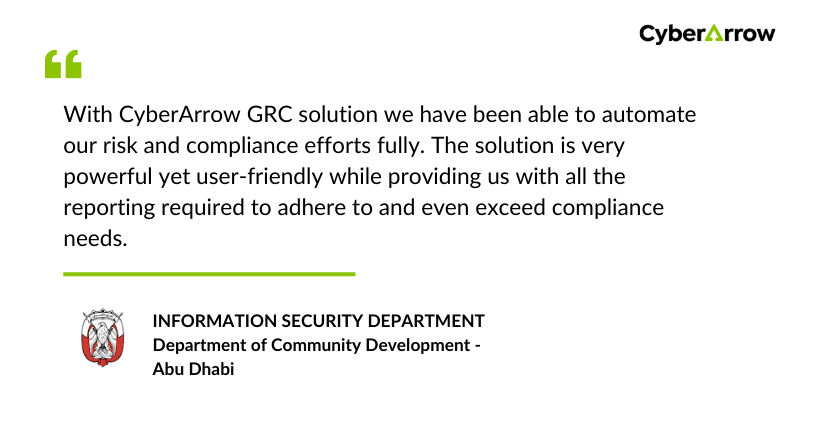
See what companies like DCD – Abu Dhabi say about CyberArrow: