


How to become a SOC analyst? Complete guide
A strong defense is the best offense in the digital age. Cyber threats are increasing, and businesses are on the lookout for skilled professionals who can guard their systems 24/7. This demand has brought the SOC analyst role into the spotlight, a job that’s both challenging and rewarding.
Have you ever wondered what it takes to become the first line of defense against cyberattacks? This guide will take you step-by-step through the skills, certifications, and career path to becoming a SOC analyst. Whether you’re starting from scratch or looking to pivot into cyber security, this guide has all the information you need.
- What is a SOC analyst?
- Why is the SOC analyst role critical?
- How to become a SOC analyst: A step-by-step guide
- Career path for SOC analysts
- Challenges SOC analysts face
- Cyber security standards for SOC analysts
- Tools every SOC analyst should master
- Why SOC analysts are in high demand
- How CyberArrow GRC can help SOC analysts
- Conclusion
- FAQs
What is a SOC analyst?
A SOC analyst works in a Security Operations Center (SOC), where they monitor and protect an organization’s IT infrastructure. They detect, analyze, and respond to security incidents in real time, ensuring the organization’s data and systems remain safe.
Their responsibilities include:
- Monitoring network activity for suspicious behavior.
- Investigating alerts from security tools.
- Coordinating responses to cyber incidents.
- Ensuring compliance with cyber security regulations.
Why is the SOC analyst role critical?
SOC analysts are the backbone of any organization’s cyber security strategy. They help:
- Prevent costly data breaches.
- Minimize downtime caused by cyber incidents.
- Protect sensitive customer and business data.
As cyberattacks grow in complexity, SOC analysts play a key role in maintaining trust and compliance.
Quick link: What is Splunk?
How to become a SOC analyst: A step-by-step guide
1. Understand the basics
Before diving into this career, familiarize yourself with cyber security fundamentals. Key topics include:
- Networking concepts like firewalls, VPNs, and DNS.
- Cyber threats such as phishing, malware, and ransomware.
- The basics of operating systems and cloud environments.
2. Build relevant skills
SOC analysts require both technical and soft skills, including:
- Technical skills: Log analysis, threat detection, and vulnerability assessment.
- Soft skills: Critical thinking, communication, and teamwork.
3. Earn industry certifications
Certifications validate your expertise and make you a strong candidate for SOC analyst roles. Consider these certifications:
- CompTIA Security+: Great for beginners in cyber security.
- Certified Ethical Hacker (CEH): Focuses on identifying vulnerabilities.
- Certified Information Systems Security Professional (CISSP): Advanced-level certification for seasoned professionals.
4. Gain hands-on experience
Practical experience is critical for this role. Here’s how you can gain it:
- Internships: Join IT or cyber security teams to get real-world exposure.
- Cyber security labs: Platforms like TryHackMe and Hack The Box allow you to practice your skills.
- Home lab: Set up a virtual lab to simulate security scenarios.
5. Learn security tools
SOC analysts rely on tools to monitor and protect systems. Some widely used tools include:
- SIEM tools: Splunk, ArcSight, and QRadar.
- Endpoint detection tools: CrowdStrike and Carbon Black.
- Threat intelligence platforms: Recorded Future and ThreatConnect.
6. Apply for entry-level roles
Start with roles like IT Support, Network Technician, or Junior Security Analyst. These positions will help you develop the foundational skills needed for a SOC analyst role.
7. Stay updated
Cyber security is a constantly evolving field. Stay ahead by:
- Reading cyber security blogs and news.
- Joining professional communities like ISACA and (ISC)².
- Attending industry events and webinars.
Career path for SOC analysts
A SOC analyst career typically progresses as follows:
- Level 1 Analyst: Monitors alerts and escalates threats.
- Level 2 Analyst: Investigates incidents and performs detailed analyses.
- SOC Lead: Manages a team of analysts and oversees incident response.
- SOC Manager: Defines security strategies and manages the entire SOC team.
Challenges SOC analysts face
While rewarding, this role comes with its own set of challenges:
- Alert fatigue: SOC analysts deal with hundreds of alerts daily.
- Evolving threats: Keeping up with new attack methods is demanding.
- Stressful environments: Quick decision-making under pressure is a must.
Cyber security standards for SOC analysts
SOC analysts often work to ensure compliance with the following standards:
- ISO 27001: A globally recognized standard for managing information security.
- SOC 2: Focuses on the security, availability, and confidentiality of customer data.
- NIST Cybersecurity Framework: Provides guidelines to identify, protect, and respond to threats.
Compliance with these standards not only strengthens security but also builds trust with clients and stakeholders.
Tools every SOC analyst should master
Here are some essential tools for SOC analysts:
- Splunk: For log management and analytics.
- Wireshark: For deep packet inspection.
- Metasploit: For penetration testing.
- AlienVault: For threat detection and response.
Why SOC analysts are in high demand
With cyberattacks on the rise, SOC analysts are more important than ever. According to a report by Cyber security Ventures, global cybercrime costs are expected to reach $10.5 trillion annually by 2025. Organizations need skilled SOC analysts to protect against these growing threats.
How CyberArrow GRC can help SOC analysts
Managing compliance while focusing on incident response can be overwhelming for SOC analysts.
CyberArrow GRC simplifies your compliance process by:
- Automating tasks like policy management and reporting.
- Ensuring adherence to standards like ISO 27001 and SOC 2.
- Providing real-time updates on compliance status.
By integrating CyberArrow GRC into your workflow, you can focus more on securing systems and less on administrative tasks.
Quick link: What is cloud data protection?
Conclusion
Becoming a SOC analyst is a fulfilling career that combines technical expertise with problem-solving. By following the steps in this guide, you can build a successful career in cyber security.
The journey may be challenging, but with the right tools and mindset, you can excel as a SOC analyst. Let CyberArrow GRC help you simplify compliance and focus on what matters most, protecting your organization from cyber threats.
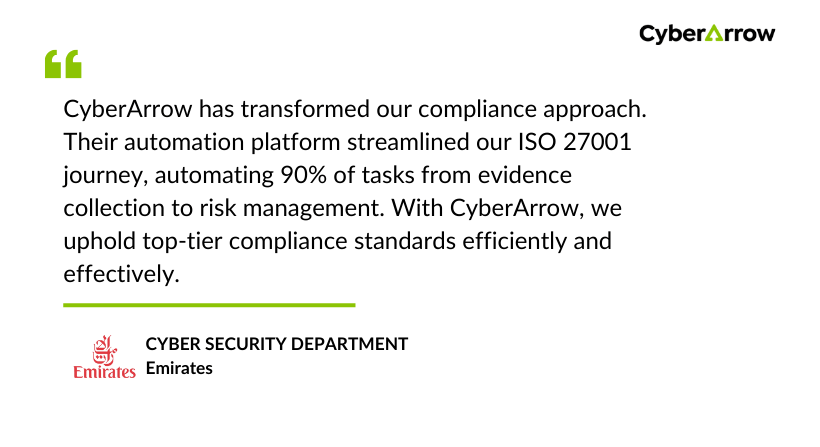
Read how Emirates enhanced Information Security by automating ISO 27001 with CyberArrow.
See what Emirates has to say about CyberArrow GRC:
FAQs
What qualifications do I need to become a SOC analyst?
To become a SOC analyst, you typically need a degree in cyber security, computer science, or a related field. However, certifications like CompTIA Security+, Certified Ethical Hacker (CEH), or Certified Information Systems Security Professional (CISSP) can also help you stand out if you don’t have a formal degree.
Is hands-on experience necessary for a SOC analyst role?
Yes, hands-on experience is critical. Practical exposure to cyber security tools, threat detection, and incident response is essential to perform well as a SOC analyst. You can gain this experience through internships, cyber security labs, or by setting up a home lab for practice.
How can CyberArrow GRC benefit SOC analysts?
CyberArrow GRC simplifies compliance management, allowing SOC analysts to focus on protecting systems rather than managing paperwork. It automates tasks like policy updates and compliance reporting, ensuring adherence to standards like ISO 27001 and SOC 2. This reduces the administrative burden and helps analysts stay focused on cyber security threats.
