


What is SWG (Secure Web Gateway)?
Have you ever wondered how organizations protect their employees and sensitive data while browsing the web? With rising cyber threats, businesses need advanced tools to secure their web traffic. This is where Secure Web Gateways (SWGs) step in.
SWG solutions are like the digital bodyguards of your organization. They monitor, filter, and block harmful web traffic to ensure your systems stay safe and compliant. For businesses, adopting SWGs isn’t just about security, it’s also about staying aligned with compliance requirements and maintaining operational efficiency.
In this guide, we’ll explore everything about SWGs, their importance, and how they fit into a cyber security strategy. Plus, we’ll discuss how automating your governance, risk, and compliance (GRC) programs with CyberArrow GRC can help you stay on top of security and regulatory demands.
What is a Secure Web Gateway (SWG)?
A Secure Web Gateway is a cyber security solution that prevents unsecured and potentially harmful web traffic from entering an organization’s internal network. It acts as a barrier between users and the internet, scanning web requests in real time to block malicious content, phishing attempts, and data leaks.
Key Features of SWG:
- URL filtering: Blocks access to unsafe or non-work-related websites.
- Malware detection: Scans and blocks malicious software.
- Data Loss Prevention (DLP): Stops sensitive data from being shared externally.
- Cloud Access Security Broker (CASB): Monitors cloud app usage to prevent unauthorized access.
- SSL inspection: Decrypts and inspects encrypted traffic for threats.
Why is SWG Important?
Protecting against cyber threats: Cyberattacks are becoming more sophisticated, with hackers targeting web traffic to infiltrate networks. An SWG ensures that users can browse safely without exposing the organization to malware, ransomware, or phishing attacks.
Enforcing compliance: Many industries have strict compliance standards like GDPR, HIPAA, and ISO 27001. SWGs help organizations enforce acceptable use policies and prevent non-compliant web activity.
Enhancing productivity: By blocking non-essential or harmful websites, SWGs ensure employees stay focused and productive, avoiding distractions and risky behaviors.
How SWGs Work
- Web request monitoring: Every request to access a website passes through the SWG.
- Filtering and scanning: The SWG checks the URL, content, and intent of the request against its threat database.
- Blocking or allowing access: If the site is flagged as unsafe or non-compliant, access is denied. Safe sites are approved, allowing users to continue.
Use cases for SWG
- Remote workforce security: Ensures remote employees access the web securely from any location.
- Regulated industries: Financial, healthcare, and legal sectors use SWGs to meet compliance requirements.
- Educational institutions: Protect students and staff from harmful online content.
- Enterprises: Large-scale organizations deploy SWGs to enforce uniform security policies across all branches.
Cyber security standards that prioritize SWGs
Several regulatory and cyber security frameworks recommend or mandate solutions like SWGs to protect web traffic and sensitive data.
- ISO 27001: Focuses on information security management, requiring secure data handling across all networks.
- PCI DSS: Protects payment card data by ensuring secure communication and preventing unauthorized access.
- NIST Cybersecurity Framework (CSF): Encourages monitoring and securing web traffic to minimize risks.
- GDPR: Requires secure handling of personal data, making SWGs essential for data loss prevention.
SWG vs. Traditional firewalls
While traditional firewalls provide basic protection against incoming threats, SWGs go a step further by inspecting outbound traffic and web activity.
| Feature | Firewall | Secure Web Gateway (SWG) |
| Focus | Network traffic | Web traffic and activity |
| Inspection Depth | Basic packet filtering | URL, content, and user activity inspection |
| Threat Prevention | Limited to known threats | Advanced malware detection and DLP |
| Compliance Support | Minimal | High |
The role of CyberArrow GRC in enhancing cyber security
Implementing an SWG is a vital step, but aligning it with your broader cyber security and compliance goals can be overwhelming. But CyberArrow GRC can help.
How CyberArrow GRC supports your SWG strategy:
- Centralized compliance management: Stay aligned with regulations like ISO 27001, PCI DSS, and GDPR with ease.
- Policy automation: Define and automate web usage policies to integrate seamlessly with your SWG.
- Audit-ready reports: Generate compliance reports effortlessly to demonstrate your SWG’s effectiveness.
- Continuous monitoring: Stay on top of regulatory changes and ensure your SWG policies remain compliant.
Why choose CyberArrow GRC?
- Simplify GRC tasks with automation.
- Save time and reduce manual errors.
- Ensure compliance across multiple frameworks.
By combining the power of a Secure Web Gateway with the robust capabilities of CyberArrow GRC, organizations can achieve a secure, compliant, and efficient web security environment.
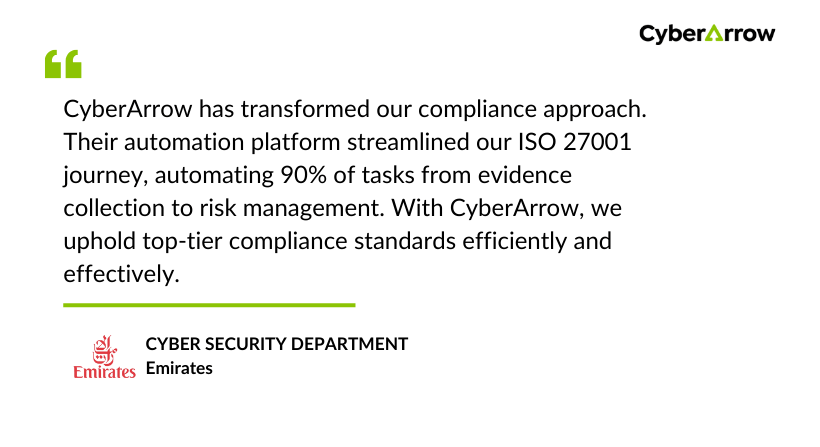
See what the Emirates Development Bank has to say about CyberArrow GRC:
FAQs
What is the primary purpose of a Secure Web Gateway (SWG)?
A Secure Web Gateway protects an organization’s web traffic by monitoring, filtering, and blocking malicious or non-compliant web activity. It ensures safe browsing, prevents cyber threats like malware and phishing, and enforces data loss prevention policies.
How does an SWG differ from a traditional firewall?
While traditional firewalls focus on filtering network traffic at the perimeter, SWGs specifically monitor and secure outbound web traffic. They inspect content, enforce web usage policies, and detect advanced threats like malicious websites, providing a deeper layer of protection against web-based risks.
Can an SWG help with cyber security compliance?
Yes, SWGs are crucial for meeting cyber security standards like ISO 27001, PCI DSS, and GDPR. They enforce web usage policies, secure sensitive data, and generate reports that demonstrate compliance with regulatory frameworks. Pairing an SWG with a platform like CyberArrow GRC further simplifies compliance management.
