Cyber security consulting: How to become a cyber security consultant?
Cyber attacks are rising, and businesses of all sizes are struggling to stay protected. Hackers are getting smarter, and data breaches are more frequent, leaving companies in urgent need of experts who can keep them secure. Many organizations don’t have the skills, tools, or knowledge to fight modern cyber threats. They rely on cyber security consultants to keep them safe. Becoming a cyber security consultant offers high demand, competitive pay, and the opportunity to make a significant impact in protecting people and businesses.
Becoming a cyber security consultant is a rewarding career path for tech-savvy individuals. By learning the right skills and gaining hands-on experience, you can help organizations protect themselves from cybercrime.
Let’s explore how to get started in cyber security consulting and succeed in this dynamic field.
What is Cyber security consulting?
Cyber security consulting involves helping businesses protect their systems, networks, and data from cyber threats. As a consultant, you’ll provide expert advice, assess risks, design security strategies, and help companies comply with regulations.
Your main goal is to make sure your clients’ digital assets are secure. Consultants work with various businesses, ranging from small startups to large enterprises. Their work might include:
- Risk assessments to identify potential security weaknesses.
- Designing security policies tailored to a business’s needs.
- Implementing security solutions, such as firewalls and encryption.
- Training employees on cyber security best practices.
- Helping companies meet compliance standards.
Why choose a career in cyber security consulting?
1. High demand for experts
Cyber security is one of the fastest-growing fields. With increasing cyber threats, businesses are willing to pay top dollar for consultants who can keep their data safe.
2. Lucrative earnings
Cyber security consultants earn competitive salaries. As your skills and experience grow, so do your earning opportunities.
3. Diverse opportunities
Consultants work in various industries, from finance and healthcare to government. Each sector has unique security challenges, keeping your work interesting.
4. Flexibility
You can choose to work independently, as part of a consulting firm, or even as a virtual Chief Information Security Officer (vCISO). This flexibility allows you to set your hours and build a career that suits your lifestyle.
How to become a cyber security consultant
Becoming a successful cyber security consultant requires a combination of education, experience, and skills. Here’s how to start your journey:
1. Build a strong foundation in IT and networking
- Educational background: A degree in computer science, information technology, or a related field is a great starting point. However, it’s not always necessary if you have the right skills and certifications.
- Networking and IT skills: Understanding networking fundamentals is crucial. You’ll need to know how data moves through networks, how to secure it, and how different devices communicate.
2. Gain experience in cyber security
Before becoming a consultant, you need hands-on experience. You can gain this by:
- Working as a cyber security analyst: Start by securing entry-level roles like security analyst, penetration tester, or security administrator.
- Getting certifications: Certifications show you have the skills needed for the job. Consider earning these key certifications:
- Certified Information Systems Security Professional (CISSP)
- Certified Ethical Hacker (CEH)
- CompTIA Security+
- Certified Information Security Manager (CISM)
- Building technical skills: Learn about firewalls, intrusion detection systems, encryption, threat analysis, and more. Understanding tools like SIEM (Security Information and Event Management) is crucial.
3. Develop soft skills
Technical skills are essential, but so are soft skills. As a consultant, you’ll need to:
- Communicate clearly: You must explain complex security concepts in simple terms to non-technical clients.
- Be a problem-solver: Cyber threats evolve constantly. You’ll need to think creatively to outsmart attackers.
- Stay calm under pressure: Handling security incidents can be stressful. Staying calm and focused is vital.
4. Specialize in an area of cyber security
You can focus on areas like:
- Compliance and risk management: Helping businesses meet standards like GDPR, ISO/IEC 27001, and PCI DSS.
- Penetration testing: Simulating cyber attacks to find vulnerabilities.
- Cloud security: Securing cloud-based systems and data.
5. Gain real-world experience
Consider working for a cyber security consulting firm to learn the ropes. Alternatively, offer freelance consulting services to small businesses. Real-world experience builds your credibility and allows you to build a strong portfolio.
6. Stay updated on the latest threats
The cyber security landscape changes rapidly. Attend industry conferences, read security blogs, and take continuous training to stay ahead of threats.
7. Build a personal brand
Showcase your expertise through:
- Writing articles and blogs about cyber security trends.
- Speaking at industry events.
- Building a strong social media presence.
Cyber security compliance standards
Many compliance standards require organizations to follow specific security practices. As a consultant, you’ll help clients comply with regulations such as:
- ISO/IEC 27001: Focuses on information security management.
- General Data Protection Regulation (GDPR): Requires protecting personal data and responding quickly to breaches.
- NIST Cybersecurity Framework: Emphasizes threat detection and incident response.
- PCI DSS (Payment Card Industry Data Security Standard): Applies to organizations handling credit card data.
- HIPAA (Health Insurance Portability and Accountability Act): Focuses on protecting patient data in the healthcare sector.
Leveraging CyberArrow GRC for cyber security consulting
As a cyber security consultant, your goal is to provide clients with effective solutions for managing their security needs. CyberArrow GRC (Governance, Risk, and Compliance) is a valuable tool that can transform how you deliver services.
How CyberArrow GRC helps consultants and firms:
- Automated compliance management: CyberArrow GRC automates complex compliance processes, making it easier to meet standards like ISO 27001, GDPR, and NIST. This saves time and reduces manual work, helping you deliver faster results.
- Centralized collaboration: CyberArrow provides a platform for tracking tasks, sharing updates, and managing security incidents. This improves teamwork and ensures all stakeholders are aligned.
- Real-time threat monitoring: CyberArrow integrates with security tools to offer real-time alerts. Consultants can detect and respond to threats quickly, protecting client data.
- Customizable risk management: CyberArrow GRC allows consultants to create customized risk management strategies based on their clients’ needs. This helps prioritize and mitigate risks effectively.
Ideal for various roles:
- Managed Service Providers (MSPs)
- Consultants
- Resellers
- vCISOs (Virtual Chief Information Security Officers)
- Service Providers
- System Integrators
Conclusion
Cyber security consulting offers a rewarding career with high demand and the opportunity to make a difference. By following the steps outlined in this guide, you can build a successful career as a consultant.
To enhance your services, leverage CyberArrow GRC. Automate compliance, improve collaboration, and deliver effective security solutions to your clients.
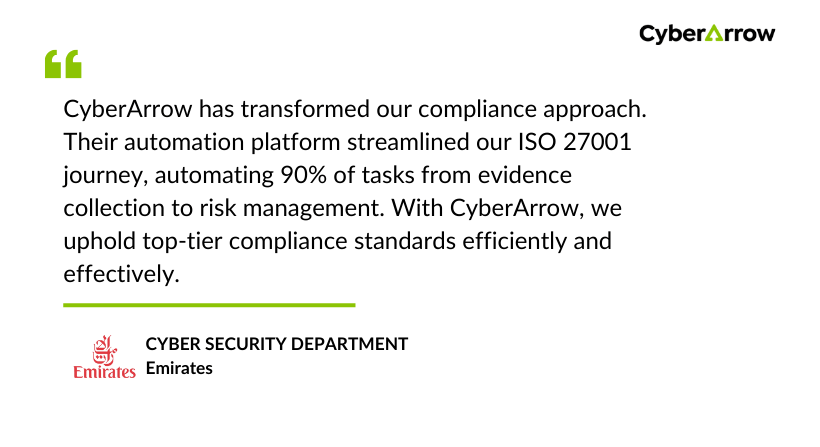
Read how Emirates enhanced Information Security by automating ISO 27001 with CyberArrow GRC.
See what Emirates has to say about CyberArrow GRC: