What is a vishing attack? How to prevent it?
In today’s digital age, cybercriminals use many tactics to trick people and steal valuable information. One such tactic is called a “vishing attack.” If you haven’t heard of it before, you’re not alone, but it’s important to know about it to protect yourself and your business.
In this article, we will explain what a vishing attack is, how it works, and most importantly, how to prevent it.
What is a vishing attack?
“Vishing” is a combination of two words: “voice” and “phishing.” In a phishing attack, cybercriminals send fake emails or texts to trick people into revealing sensitive information, like passwords or credit card numbers. Vishing works similarly, but instead of using emails or texts, attackers use phone calls or voice messages.
During a vishing attack, a cybercriminal pretends to be someone trustworthy, like a bank employee, government official, or IT support technician. Their goal is to convince the victim to share personal information, such as:
- Social Security numbers
- Bank account details
- Passwords
- Credit card numbers
Once the criminal has this information, they can use it to steal money, commit fraud, or access personal accounts.
How does a vishing attack work?
Vishing attacks can happen in different ways, but they usually follow a pattern. Here are some common steps involved in a vishing attack:
1. The setup
The attacker first collects some basic information about the victim. This can include details like their name, phone number, or where they work. Often, attackers get this information from public sources, social media, or data breaches.
2. The call
The attacker calls the victim, pretending to be a legitimate organization, such as a bank or government agency. They might use technology to spoof the caller ID, making it look like the call is coming from that organization.
3. The script
The attacker creates a sense of urgency or fear. They might say something like, “Your bank account has been hacked, and we need to verify your information to protect it.” The goal is to make the victim panic and act quickly.
4. The ask
The attacker asks the victim to share sensitive information, such as their bank account number, Social Security number, or online passwords. In some cases, they might ask the victim to transfer money or provide access to their computer.
5. The fraud
Once the attacker has the information, they use it to commit fraud, steal money, or gain access to the victim’s accounts. In some cases, the criminal may even sell the stolen information on the dark web.
Quick link: What is the Zeus virus? How to prevent it?
Common examples of vishing attacks
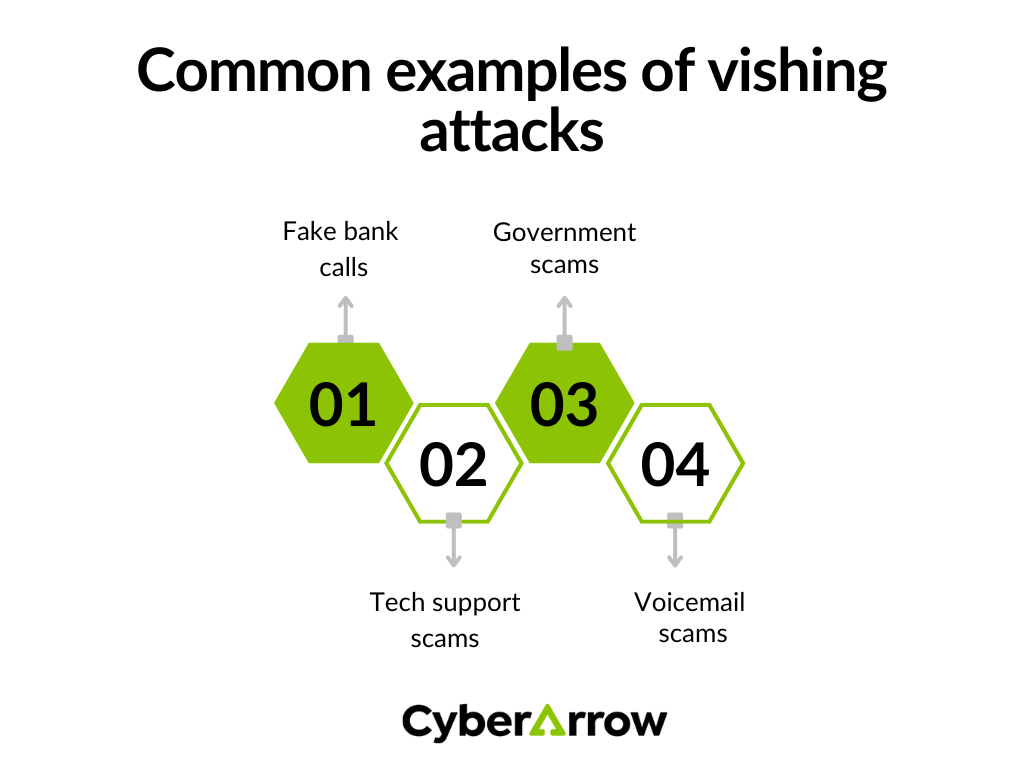
1. Fake bank calls
A cybercriminal might call you, pretending to be from your bank. They’ll say your account has been compromised, and they need your account number or password to fix it.
2. Tech support scams
An attacker may claim to be from a tech company, telling you that your computer has a virus. They’ll ask for remote access to your computer, which allows them to steal your files or install malware.
3. Government scams
Some vishers pretend to be government officials, such as IRS agents. They’ll tell you that you owe taxes or fines and demand immediate payment to avoid arrest or legal trouble.
4. Voicemail scams
Instead of a direct call, vishers may leave a voicemail saying there’s an urgent problem, like a frozen bank account or suspicious activity. The message instructs the victim to call back and provide personal information to fix the issue.
How to prevent vishing attacks
Vishing attacks are becoming more common, but there are steps you can take to protect yourself from becoming a victim. Here’s how you can prevent a vishing attack:
Be cautious with unsolicited calls
If you receive a call from someone asking for personal information, be suspicious—especially if you didn’t initiate the call. Legitimate companies won’t ask for sensitive information over the phone.
Verify the caller’s identity
If the caller claims to be from your bank, a government agency, or another organization, hang up and call the organization directly using the phone number listed on their official website. This ensures that you’re speaking to a legitimate representative.
Don’t share sensitive information over the phone
Never share personal details like your Social Security number, passwords, or bank account information over the phone, unless you are sure the caller is legitimate.
Be wary of caller ID spoofing
Caller ID isn’t always reliable. Criminals can use technology to spoof phone numbers, making it look like a call is coming from a trusted source. If something feels off during the call, trust your instincts and hang up.
Educate yourself and your team
One of the best ways to prevent vishing attacks is through education. Make sure you and your team know how to recognize the signs of a vishing attack and what to do if you receive a suspicious call.
Report suspicious calls
If you receive a vishing call, report it to the relevant authorities, such as your bank or the Federal Trade Commission (FTC). Reporting these incidents helps law enforcement track down and stop cybercriminals.
Use Multi-factor authentication (MFA)
Even if a criminal manages to steal your password, they won’t be able to access your accounts if you have multi-factor authentication enabled. MFA adds an extra layer of security by requiring a second form of verification, such as a text message or fingerprint scan.
Stay calm
Cybercriminals rely on fear and urgency to trick their victims. If someone calls you with an urgent request for personal information, take a moment to think. Hang up and verify the caller’s identity before taking any action.
How businesses can protect themselves
In addition to individual precautions, businesses need to take extra steps to protect their employees and customers from vishing attacks. Here’s how businesses can defend against vishing:
Employee training
Train your employees to recognize the signs of vishing attacks and what to do if they receive a suspicious call. Regular training helps ensure everyone is prepared to handle these types of attacks.
Implement security awareness programs
A comprehensive security awareness program can help reduce the risk of vishing attacks. These programs should include lessons on recognizing phishing, vishing, and other types of social engineering attacks.
Encourage a culture of reporting
Make it easy for employees to report suspicious calls. The faster these incidents are reported, the quicker you can take action to prevent a potential security breach.
Use technology solutions
Many businesses use technology to block or flag suspicious calls. Consider implementing call-blocking tools or voice recognition software to help protect your organization from vishing attacks.
How CyberArrow Awareness Platform can help
Preventing vishing attacks starts with proper education and awareness. CyberArrow offers a comprehensive security awareness training platform that helps businesses and their employees stay informed about the latest cyber threats, including vishing attacks.
With CyberArrow Awareness Platform, you can:
- Educate your team: Provide employees with engaging and easy-to-understand training modules that teach them how to recognize and prevent vishing attacks.
- Ongoing training: Continuous education ensures that your team stays updated on the latest tactics used by cybercriminals.
- Track progress: CyberArrow’s platform allows you to track employee progress, ensuring that everyone is equipped with the knowledge needed to protect your business.
See what Silal has to say about CyberArrow Awareness Platform: