What is doxing? How to protect yourself?
Imagine your personal information being exposed online for everyone to see your name, address, phone number, or even sensitive details like your social security number. This is the reality of doxing, a cyber threat that has become more common in today’s connected world.
The term “doxing” comes from the word “documents” or “docs,” referring to the act of gathering and publishing private information about a person with malicious intent.
Are you worried about online privacy and security? Doxing is a growing concern that can put anyone at risk, from individuals to organizations.
In this blog, we will break down what doxing is, how it works, and how you can protect yourself and your organization from this invasive cyber threat.
What is doxing?
Doxing is the act of publicly exposing someone’s private or personal information online without their consent. This information could be anything from full names, addresses, phone numbers, email addresses, or even more sensitive data like financial details or work-related information. Doxing is often carried out to embarrass, harass, or threaten the targeted individual.
Doxing is not just limited to personal attacks. Many companies and employees have also been victims of doxing, leading to serious security risks and potential financial loss.
How does doxing work?
Doxers often use multiple techniques to gather information about their targets. Some common methods include:
1. Social media scraping: Many people unknowingly share personal details on social media. Doxers can collect these details, like where you live or work, from your posts, likes, and comments.
2. Public databases: Some databases containing personal records are accessible to the public. These may include phone directories, property records, or even older website memberships where personal data has been stored.
3. Hacking: In extreme cases, doxers may resort to hacking into personal accounts, such as email or cloud storage, to retrieve private documents or sensitive information.
4. Phishing attacks: Doxers may send phishing emails or messages designed to trick you into giving away personal data, such as passwords, banking information, or login credentials.
5. Data brokers: Some companies collect, buy, and sell personal data, making it easier for doxers to purchase or access information about their targets.
Why is doxing dangerous?
Doxing can have serious consequences for individuals and organizations alike. Some of the key risks include:
1. Identity theft: Doxers can use your exposed personal information to impersonate you online, potentially leading to financial fraud or reputational damage.
2. Harassment and threats: When your private information is out in the open, it can become easy for cyberbullies, stalkers, or others with malicious intent to contact and harass you.
3. Job security: If a doxer exposes sensitive work-related information, it can lead to significant trouble in the workplace, and in some cases, even result in job loss.
4. Physical safety: If your address or other location-based information is revealed, you and your family could be at risk of real-world harm.
For organizations, the damage can be even worse. Sensitive corporate data like client information, financial records, or internal communications being exposed can lead to legal trouble, loss of business, and damage to reputation.
How to protect yourself from doxing
Fortunately, there are steps you can take to protect yourself and your organization from being a victim of doxing.
1. Limit personal information online
Be mindful of the information you share on social media platforms. Avoid posting personal details such as your full name, address, or phone number. Also, review your privacy settings to make sure only trusted people can see your posts.
2. Use strong, unique passwords
One of the easiest ways for doxers to gain access to your private information is through weak or reused passwords. Make sure to use strong, unique passwords for all your accounts, and consider using a password manager to help.
3. Enable two-factor authentication (2FA)
Adding an extra layer of security through 2FA can prevent doxers from easily accessing your accounts, even if they have your password.
4. Monitor public records
Regularly check public databases and websites that might contain your personal information. If you find sensitive data about yourself, try to have it removed or at least make it harder to access.
5. Be cautious of phishing scams
Always be careful when clicking on email links or attachments, especially if they come from unknown or untrusted sources. Phishing attacks are one of the common ways doxers gain access to private information.
6. Use a VPN
A Virtual Private Network (VPN) can help mask your IP address, making it harder for doxers to trace your online activity back to you.
7. Train employees
Organizations should provide regular training to employees about data security and privacy practices to prevent them from inadvertently exposing sensitive information.
How CyberArrow Awareness Platform helps
For organizations, training employees to understand the risks and best practices around doxing and other cyber security threats is crucial. CyberArrow Awareness Platform offers a solution to this issue by automating employee security training, ensuring that everyone in your company is aware of the latest threats and knows how to act against them.
With CyberArrow Awareness Platform, you can:
- Automate cyber security awareness training for your employees.
- Track training progress and ensure compliance across all levels.
- Regularly update training materials to cover the latest cyber security threats, including doxing.
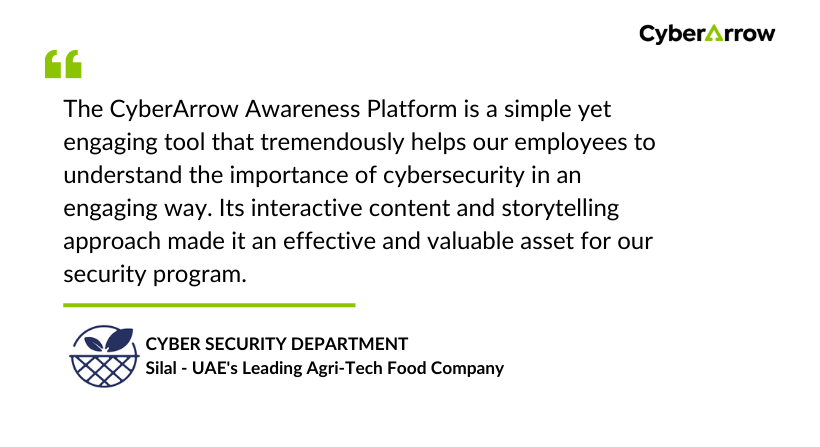
See what Silal has to say about CyberArrow Awareness Platform: