Effective strategies for conducting cyber security awareness training
Cyber security threats are everywhere, and a single mistake can have devastating consequences. Shockingly, human error accounts for about 90% of data breaches, highlighting the critical need for effective cyber security awareness training.
Many organizations struggle to engage their employees in these training programs, often resulting in a lack of understanding and increased risk. Companies want a solution that not only educates but also keeps employees interested and informed.
The good news is that there are effective strategies for conducting cyber security awareness training that can make a significant difference. By implementing the right training methods, organizations can reduce the risk of cyber incidents and protect their valuable information.
This blog will explore these strategies and show how the CyberArrow Awareness Platform can automate and enhance your training efforts.
Effective strategies for conducting cyber security awareness training
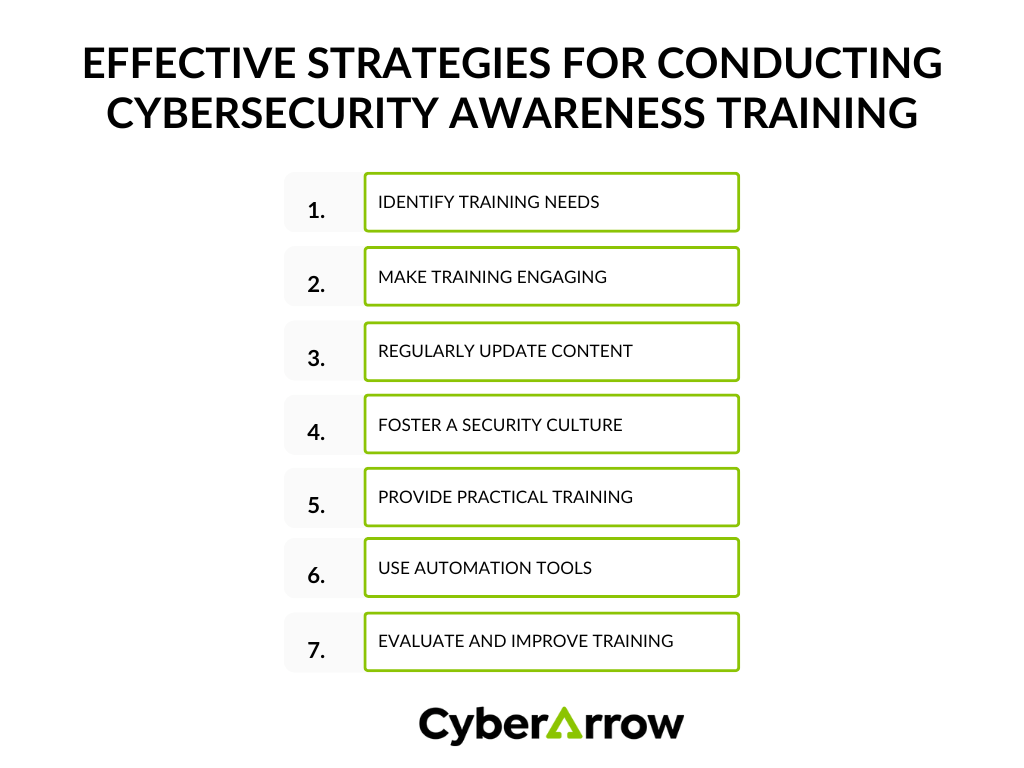
1. Identify training needs
Before starting your training program, it’s essential to identify the specific needs of your organization. What are the common security risks your employees face? Are there specific types of phishing attacks or malware that target your industry? Understanding these risks will help tailor your training program to address the most relevant issues.
Action steps:
- Conduct a risk assessment to identify potential vulnerabilities.
- Survey employees to understand their knowledge of cyber security.
- Review past incidents to determine areas needing improvement.
2. Make training engaging
Traditional training methods can be dull and uninspiring, leading to disengaged employees. To improve engagement, make the training interactive and relevant. Use real-world examples and scenarios to illustrate the importance of cyber security. Consider incorporating gamification elements, quizzes, and videos to keep learners interested.
Action steps:
- Create short, interactive modules that employees can complete at their own pace.
- Use storytelling to demonstrate the impact of cyber threats.
- Encourage discussions and questions during training sessions.
3. Regularly update content
Cyber security is a constantly evolving field. New threats emerge regularly, and so should your training content. Keeping your training materials updated ensures that employees are aware of the latest threats and best practices.
Action steps:
- Schedule regular reviews of your training materials.
- Include updates about new cyber security threats and trends.
- Seek feedback from employees to improve training relevance.
4. Foster a security culture
Creating a culture of security within your organization can greatly enhance the effectiveness of your training. When employees understand that cyber security is everyone’s responsibility, they are more likely to follow protocols and report suspicious activities.
Action steps:
- Promote open communication about cyber security issues.
- Encourage employees to share their experiences and insights.
- Recognize and reward individuals or teams that demonstrate good security practices.
5. Provide practical training
The best way to learn is through practice. Providing practical training that allows employees to apply what they’ve learned can help solidify their understanding. Simulated phishing attacks or hands-on activities can help employees recognize threats in a safe environment.
Action steps:
- Organize simulated phishing campaigns to test employees.
- Use case studies to analyze past incidents and discuss responses.
- Encourage teams to conduct security drills and exercises.
6. Use automation tools
Automating your training process can save time and resources while ensuring consistency. The CyberArrow Awareness Platform offers a solution for automating your cyber security awareness training. With this platform, you can create, manage, and track training programs efficiently.
Action steps:
- Implement the CyberArrow Awareness Platform to streamline training efforts.
- Use automated reminders to prompt employees to complete training.
- Monitor employee progress and identify areas that may need additional focus.
7. Evaluate and improve training
After implementing your training program, it’s crucial to evaluate its effectiveness. Use assessments, feedback, and incident reports to determine whether employees are applying what they’ve learned. Based on this evaluation, make adjustments to improve the training program.
Action steps:
- Conduct post-training assessments to measure knowledge retention.
- Gather feedback from employees to identify strengths and weaknesses.
- Adjust training content based on evaluation results.
Quick link: 5 best cyber security awareness platforms
Simplify cyber security training with CyberArrow Awareness Platform
Cyber security awareness training is key to keeping your business safe from threats. A well-structured training program helps your employees stay informed and avoid mistakes that can lead to data breaches.
Managing training manually can be hard and time-consuming. That’s why CyberArrow Awareness Platform is here to help. It automates your security training, keeping your team up-to-date with minimal effort.
Why Choose CyberArrow Awareness Platform?
- Automated training: Set up and run regular training sessions with ease.
- Custom content: Adapt the training to fit your business needs.
- Progress tracking: See who has completed the training in real time.
- Engaging material: Make learning simple and interactive.
A growing tech company struggled to manage security training for its 300 employees. With CyberArrow Awareness Platform, they automated their entire training process, saving time and ensuring every employee stayed compliant with cyber security standards.
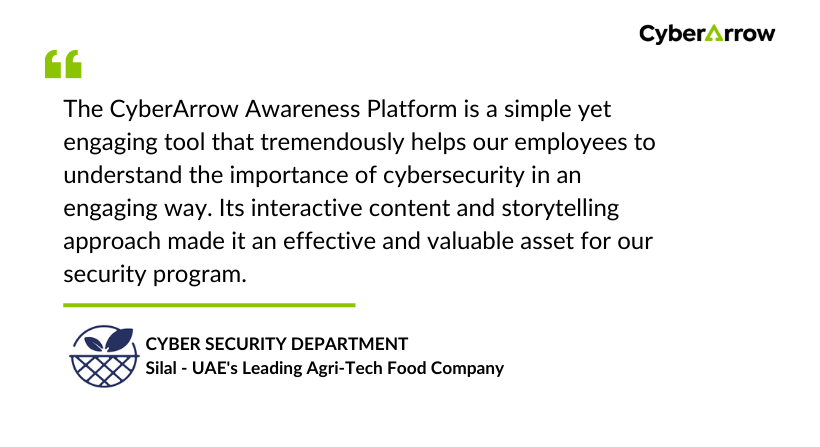
See what our client Silal has to say about the CyberArrow Awareness Platform: