


Creating a comprehensive vendor risk management policy: A step-by-step guide
Today, organizations rely on various third-party vendors to conduct business operations. However, with each new vendor comes a new set of security and compliance risks. Therefore, having a robust vendor risk management policy is crucial to safeguard your business assets from vendor risks.
A well-crafted vendor risk management policy can help your organization ensure all third-party relationships are properly monitored and controlled. It provides a clear framework for assessing and mitigating risks, establishing vendor performance and security expectations, and adhering to compliance standards, including the General Data Protection Regulation (GDPR), the Health Insurance Portability and Accountability Act (HIPAA), etc.
Let’s explore a step-by-step guide to creating a vendor risk management policy and best practices to maintain it.
Download your free vendor security questionnaire template.
Why is a vendor risk management policy important?
A policy for vendor risk management is designed to recognize potential risks that may arise when collaborating with third-party vendors. It requires thorough investigation and outlines the circumstances in which a vendor is authorized to access your systems, networks, or data and to what extent.
For businesses today, managing third-party vendor relationships is no longer a matter of choice but a necessity. While internal security policies are important, they do not provide sufficient protection against the risks posed by third-party vendors. These include legal, regulatory, financial, and reputational risks that can seriously impact a company’s operations and bottom line.
Regulators have taken notice of the significant cybersecurity risks associated with third-party data breaches and data leaks. As a result, they are increasing their focus on third-party risk or vendor management and information security risk management, especially for vendors with access to sensitive data such as personally identifiable information (PII).
But not just regulatory and legal issues make vendor risk management policies essential for organizations, the cost of a data breach has skyrocketed to an average of $4.35 million, and breaches involving third-party vendors add an extra to that cost.
How to create a vendor risk management policy?
Creating a vendor risk management policy requires a systematic approach that involves several steps. However, there is no one-size-fits-all approach when creating a policy. Since each organization has its unique set of vendors and assets to protect, creating a vendor risk management policy will depend on the business’s specific needs and requirements.
Here is a list of steps to create an effective vendor risk management policy for your organization:
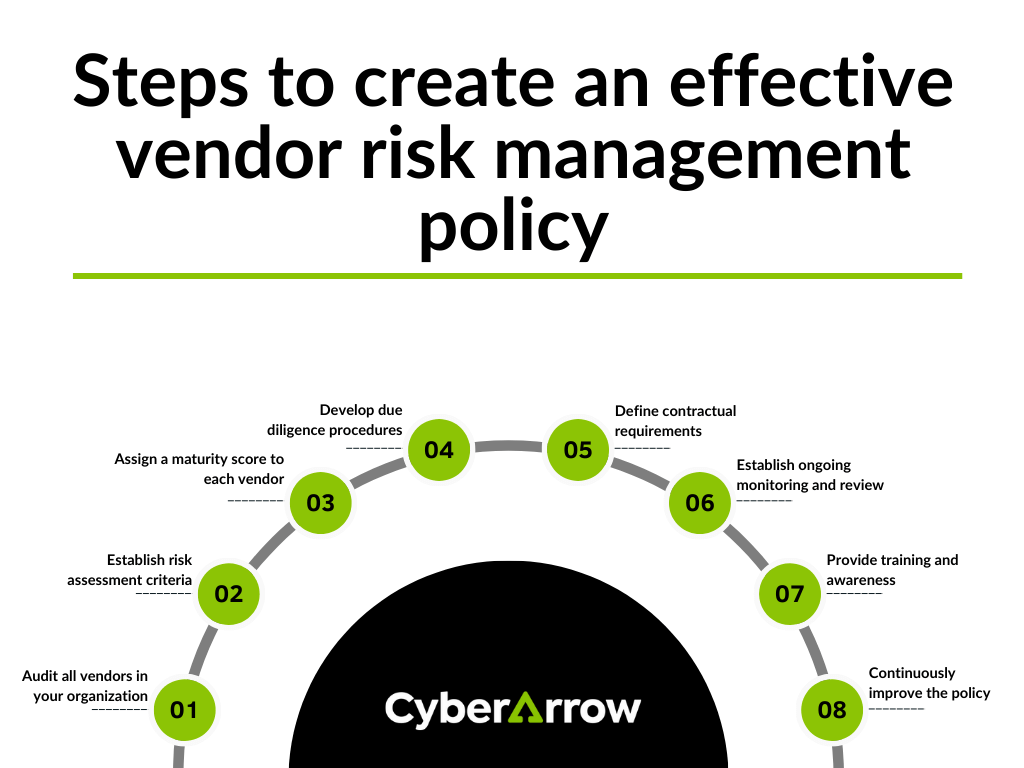
- Audit all vendors in your organization: Conduct an audit to identify which vendors can access the company’s systems or data by sending them a questionnaire to evaluate their security maturity. Develop a comprehensive list of all third parties the organization collaborates with, such as contractors, consultants, and suppliers. This should encompass both the level of access that vendors currently possess and the required level.
- Establish risk assessment criteria: Define the criteria that will be used to assess the level of risk posed by each vendor. This can include factors such as the vendor’s financial stability, reputation, past performance, and security controls. The criteria should be based on the answers to the audit questionnaire.
- Assign a maturity score to each vendor: To assess the risk level of each vendor, it’s essential to examine their system access closely. You should be able to give them a security maturity risk based on the number of risks and answers to the questionnaire.
- Develop due diligence procedures: Develop a process for conducting due diligence on potential vendors. This should include collecting and reviewing information on the vendor’s security controls, policies, and procedures.
- Define contractual requirements: Establish contractual requirements that vendors must adhere to, such as data protection and security standards. Include provisions for regular audits and reviews to ensure compliance.
- Establish ongoing monitoring and review: Set up a process for monitoring and reviewing vendors, including regular risk assessments and audits. Establishing ongoing monitoring and review will help ensure that vendors continue to meet the requirements set out in the policy.
- Provide training and awareness: Ensure that all employees involved in vendor risk management are trained on the policy and their roles and responsibilities. Conduct regular employee awareness campaigns to ensure the policy is understood and followed.
- Continuously improve the policy: Regularly review and update the policy to ensure it remains effective in managing vendor risk in a rapidly changing threat landscape.
It’s crucial to keep risk management policies up to date as cyber threats and the organization’s dependence on third parties are constantly changing. To remain current, organizations should adopt an “always-on” approach to monitor and update their vendor risk management policies.
Best practices for maintaining vendor risk management policy
Creating a vendor risk management policy is one thing, but maintaining it becomes critical to ensure secure vendor relationships in your organization.
Let’s explore some best practices for maintaining vendor risk management policy.
- Regularly review your vendor risk management policy to ensure it remains updated and relevant.
- Clearly define and communicate roles and responsibilities related to vendor risk management with relevant stakeholders.
- Regularly monitor vendor performance to ensure vendors meet service-level agreements (SLA) and comply with security and regulatory requirements. This monitoring can include regular audits, performance reviews, and risk assessments.
- Continuously identify opportunities for improvement, implement new best practices, and learn from any issues or incidents that occur.
FAQs
What is a vendor risk management policy?
A vendor risk management policy is a set of guidelines and procedures to manage the risks associated with working with third-party vendors, suppliers, and contractors. These policies define a consistent process for controlling and monitoring the interactions between your business systems and those of external parties.
Who is responsible for vendor risk management?
Typically, the senior management in your organization and the board of directors are responsible for vendor risk management.
What should a vendor risk management program include?
A vendor risk management policy should include vendor compliance standards, SLAs, vendor liability in the event of a data breach, vendor review (SOC 2 report, site visits, and auditing requirements), acceptable vendor controls, board or senior management oversight where needed, termination of contract when security requirements aren’t met, and disaster recovery and established redundancies for important business functions.
Automate vendor risk management with CyberArrow GRC
Creating a comprehensive vendor risk management policy is crucial for ensuring that your organization’s external partners meet security and compliance standards. A well-structured policy helps identify, assess, and mitigate risks posed by third-party vendors, protecting your business from potential security threats.
However, managing vendor risks manually can be time-consuming and prone to errors. CyberArrow GRC automates the entire vendor risk management process, from policy creation to risk assessments, ensuring that you stay compliant with minimal manual effort.
Why choose CyberArrow GRC for vendor risk management?
- Automate risk assessments: Automatically assess vendor risks and track their compliance status with real-time updates.
- Policy automation: Create, update, and enforce vendor risk management policies with automated workflows, reducing administrative overhead.
- Continuous monitoring: Stay informed of any changes in vendor compliance and security status, allowing you to act quickly.
- Cross-standard support: Simplify your compliance with multiple standards, ensuring your vendor risk management aligns with frameworks like ISO 27001 and SOC 2.
A healthcare provider needed to manage the risks associated with multiple third-party vendors handling sensitive data. With CyberArrow GRC, they automated the vendor risk assessments, ensuring compliance with HIPAA and other regulations while significantly reducing the time spent on manual reviews.
