

A guide to Europe’s cyber security compliance standards
Cyber threats are increasing, and European organizations must comply with strict cyber security regulations to protect sensitive data and ensure business continuity. However, keeping up with multiple compliance requirements can be overwhelming.
This guide will break down the key cyber security compliance standards in Europe, explaining what they are, why they matter, and how businesses can stay compliant efficiently.
If managing compliance feels complicated, CyberArrow GRC offers an automated solution to streamline the entire process—saving time, reducing risk, and ensuring full regulatory compliance.
Why cyber security compliance matters
Cyber security regulations in Europe are designed to:
- Protect sensitive data from breaches and cyberattacks.
- Ensure business continuity by reducing security risks.
- Build customer trust by safeguarding personal and financial information.
- Avoid legal penalties for failing to meet compliance requirements.
Non-compliance can lead to heavy fines, reputational damage, and operational disruptions. That’s why organizations must understand and follow Europe’s cyber security compliance standards.
Key cyber security compliance standards in Europe
Several cyber security frameworks apply to businesses operating in Europe. Here’s a look at some of the most important ones:
1. General Data Protection Regulation (GDPR)
What is it?
GDPR is Europe’s data protection law that regulates how businesses collect, store, and process personal data.
Who does it apply to?
Any organization handling data of EU citizens, regardless of location.
Why does it matter?
Non-compliance can result in fines of up to €20 million or 4% of annual revenue.
Key requirements:
- Obtain clear user consent before processing personal data.
- Ensure data encryption and secure storage.
- Allow users to access, modify, or delete their data.
2. Payment Card Industry Data Security Standard (PCI DSS)
What is it?
A global security standard for protecting payment card information.
Who does it apply to?
Any business that processes, stores, or transmits credit card data.
Why does it matter?
Non-compliance can lead to financial penalties and loss of customer trust.
Key requirements:
- Use firewalls and encryption to protect payment data.
- Restrict access to cardholder information.
- Conduct regular security audits and vulnerability assessments.
3. Network and Information Security Directive 2 (NIS2)
What is it?
NIS2 is an updated EU directive that strengthens cyber security for essential services and digital providers.
Who does it apply to?
Organizations in energy, finance, healthcare, transport, digital services, and telecom industries.
Why does it matter?
Companies must enhance incident response and supply chain security to meet compliance.
Key requirements:
- Implement risk management measures and incident reporting.
- Secure supply chains from cyber threats.
- Appoint dedicated security officers.
4. Digital Operational Resilience Act (DORA)
What is it?
A new EU regulation focused on financial institutions’ digital security and operational resilience.
Who does it apply to?
Banks, investment firms, insurance companies, and their third-party ICT providers.
Why does it matter?
Non-compliance could lead to fines and regulatory action.
Key requirements:
- Strengthen IT risk management frameworks.
- Conduct stress testing and security assessments.
- Ensure third-party cyber resilience.
5. ISO 27001
What is it?
A globally recognized information security standard that sets best practices for managing risks and protecting data.
Who does it apply to?
Any business that wants to improve its security posture and gain ISO 27001 certification.
Why does it matter?
ISO 27001 certification builds trust and demonstrates compliance with strict security controls.
Key requirements:
- Identify and mitigate security risks.
- Define an information security management system (ISMS).
- Perform regular internal audits.
Challenges in meeting compliance standards
Staying compliant with multiple cyber security frameworks can be complex. Organizations often face:
- Time-consuming manual processes that slow down compliance.
- High costs of hiring experts and conducting audits.
- Difficulty in tracking compliance across different standards.
- Increased cyber risks due to human errors or outdated systems.
So how can businesses simplify compliance without sacrificing security?
How CyberArrow GRC automates cyber security compliance
Managing cyber security compliance manually is inefficient and risky. CyberArrow GRC automates the entire process, making it easy for businesses to:
1. Automate compliance management
CyberArrow GRC continuously monitors and tracks compliance with multiple regulations like GDPR, NIS2, DORA, and ISO 27001.
2. Centralized risk & audit tracking
Instead of using spreadsheets, CyberArrow GRC provides a single dashboard for tracking risks, audits, and security incidents.
3. AI-powered risk assessments
Identify vulnerabilities before they become threats with automated risk assessments and security checks.
4. Real-time reporting & documentation
Generate compliance reports instantly for audits, reducing the burden of manual paperwork.
5. Seamless integration with existing systems
CyberArrow GRC works with your current security tools and IT systems, ensuring a smooth compliance workflow.
Final thoughts
Europe’s cyber security compliance standards are critical for data security, risk management, and regulatory success. However, achieving compliance manually can be costly, time-consuming, and prone to errors.
CyberArrow GRC simplifies and automates compliance, helping businesses meet standards like GDPR, PCI DSS, NIS2, DORA, and ISO 27001 without the hassle of manual tracking.
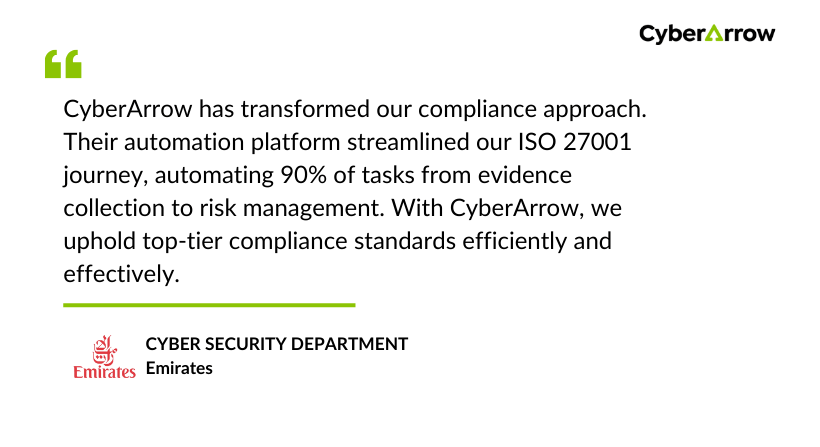
See what global brands have to say about CyberArrow GRC:
FAQs
What happens if my business does not comply with European cyber security standards?
Non-compliance can result in heavy fines, legal penalties, and reputational damage. For example, GDPR violations can lead to fines of up to €20 million or 4% of annual revenue. Non-compliance can also increase the risk of cyberattacks, data breaches, and operational disruptions.
How can businesses manage multiple cyber security compliance standards efficiently?
Managing multiple compliance standards manually can be time-consuming and complex. CyberArrow GRC automates compliance tracking, risk management, and reporting, helping businesses stay compliant with standards like GDPR, PCI DSS, NIS2, DORA, and ISO 27001—without the hassle of manual processes.
Is CyberArrow GRC suitable for all industries?
Yes, CyberArrow GRC is designed to help businesses across various industries, including finance, healthcare, technology, e-commerce, and government sectors. It simplifies compliance by automating security assessments, monitoring risks, and generating real-time compliance reports.
