What is Operational Security (OPSEC)? OPSEC meaning
Do you know what keeps sensitive information safe from prying eyes, even when you don’t realize it? This is where Operational Security (OPSEC) comes into play. Think of OPSEC as a shield that protects important personal and business information. If you’ve ever wondered what OPSEC really means, why it matters, and how you can use it, this guide is here to break it all down for you.
By the end of this blog, you’ll know exactly what Operational Security is, how it works, and why it’s a must-have for any organization. Let’s dive in!
What is Operational Security (OPSEC)?
Operational Security, often called OPSEC, is a risk management strategy designed to protect sensitive information. It helps organizations identify and protect data that attackers could exploit. Initially developed by the U.S. military, OPSEC is now used by businesses, government agencies, and even individuals to keep information safe from cybercriminals.
How Does OPSEC Work?
OPSEC focuses on protecting data by recognizing and reducing vulnerabilities. Here’s how it works in five simple steps:
- Identify critical information: Determine what data needs protection. This can include anything from company secrets, client data, passwords, or even business strategies.
- Analyze threats: Figure out who could target this sensitive data. Potential threats could be hackers, competitors, or even insider threats.
- Assess vulnerabilities: Look for weaknesses in your systems and processes that could allow threats to access critical information.
- Assess the risks: Once you understand the threats and vulnerabilities, measure the potential impact if your information were to be compromised.
- Apply countermeasures: Take action to eliminate or minimize the risks. This can include using strong passwords, limiting access to sensitive information, and using encryption.
Why is Operational Security important?
In today’s digital world, protecting data isn’t optional, it’s a must. Here are some reasons why OPSEC is crucial for individuals and organizations:
- Prevent data breaches: By identifying and addressing vulnerabilities, you can reduce the risk of unauthorized access and data breaches.
- Build trust: Protecting customer and client data builds trust and boosts your reputation.
- Stay compliant: Many industries have regulations that require strong data protection practices.
- Avoid financial losses: Data breaches can lead to significant financial losses, including fines, legal fees, and recovery costs.
- Protect against insider threats: OPSEC helps protect against threats from within, such as employees with malicious intent or carelessness.
Examples of Operational Security
To better understand OPSEC, here are some practical examples of how it’s applied:
- Protecting business secrets: A company might use OPSEC to ensure its future product plans don’t leak to competitors. This could involve limiting access to documents, using encryption, and training employees on security practices.
- Securing communications: Government agencies often use OPSEC to protect sensitive communications. This can include encrypting emails, using secure messaging platforms, and closely monitoring access to classified information.
- Personal data protection: Individuals can use OPSEC to protect their personal data, such as limiting what they share online and securing their devices with strong passwords.
OPSEC vs. Cyber security: What’s the difference?
It’s easy to confuse OPSEC with cyber security, but there’s a difference. Cyber security focuses on protecting data from online threats through technology, like firewalls and antivirus software. OPSEC, on the other hand, is about reducing risks by protecting critical information and processes.
Think of cyber security as a strong lock on your door and OPSEC as ensuring that nobody knows the location of your valuables inside. Together, they create a strong defense.
Quick link: 5 Best SIEM tools to consider in 2025
How to implement OPSEC in your organization
Here are steps to put OPSEC into practice:
- Classify information: Identify which data is sensitive and needs to be protected. Prioritize this data in your security efforts.
- Train your team: Ensure your employees understand OPSEC principles. Teach them to recognize and avoid risky behavior, like sharing sensitive information on unsecured channels.
- Restrict access: Limit access to critical data to only those who need it for their work. Use role-based permissions and regularly review access controls.
- Use encryption: Encrypt data to protect it from unauthorized access. This applies to data at rest (stored data) and data in transit (data being sent).
- Monitor systems: Keep an eye on your systems for unusual activity. Use tools like intrusion detection systems to identify potential threats.
- Regular audits: Perform regular security audits to find and fix vulnerabilities in your processes and systems.
- Plan for incidents: Have a response plan in place for when incidents occur. This ensures you can act quickly to minimize damage.
Challenges of Operational Security
While OPSEC is essential, it does come with challenges:
- Human error: People can accidentally leak information. Continuous training is needed to avoid this.
- Complexity: For large organizations, implementing OPSEC can be complex and time-consuming.
- Cost: Effective OPSEC requires resources, from tools to training programs.
Strengthening Your OPSEC with CyberArrow GRC
Operational Security (OPSEC) is a critical tool for protecting sensitive information and reducing risks. Whether you’re a business owner, government agency, or an individual, OPSEC helps ensure that your data stays safe from prying eyes and cyber threats.
To simplify OPSEC and manage compliance with standards like HIPAA, ISO, NIST, and more, use the CyberArrow GRC platform. It automates processes, helps you identify vulnerabilities, and ensures you stay compliant with key standards all while making your operational security efforts more effective.
Read how Emirates enhanced Information Security by automating ISO 27001 with CyberArrow.
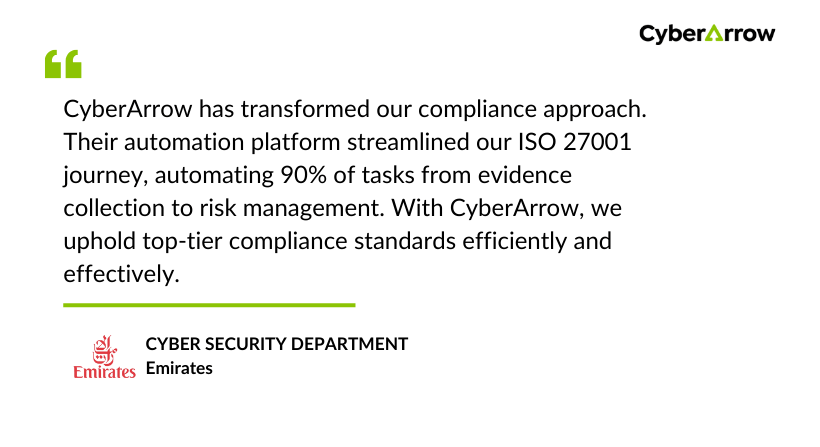
See what Emirates has to say about CyberArrow GRC: