


CyberArrow vs. Secureframe: Which one is better?
Choosing the right GRC tool can feel overwhelming, especially with so many options tailored to different needs. But don’t worry. We’ve got your back. Get ready for another shutdown between two popular compliance automation platforms: CyberArrow vs. Secureframe.
Ready to explore the difference between two key players in compliance automation?
Let’s get started!
- CyberArrow vs. Secureframe: A detailed comparison
- Explore your options and make an informed decision
- FAQs
CyberArrow vs. Secureframe: A detailed comparison
We evaluated the capabilities of CyberArrow and Secureframe across different features to help you choose the right fit for your compliance needs.
Here, we will compare these tools based on different compliance aspects:
1. Overview
Secureframe
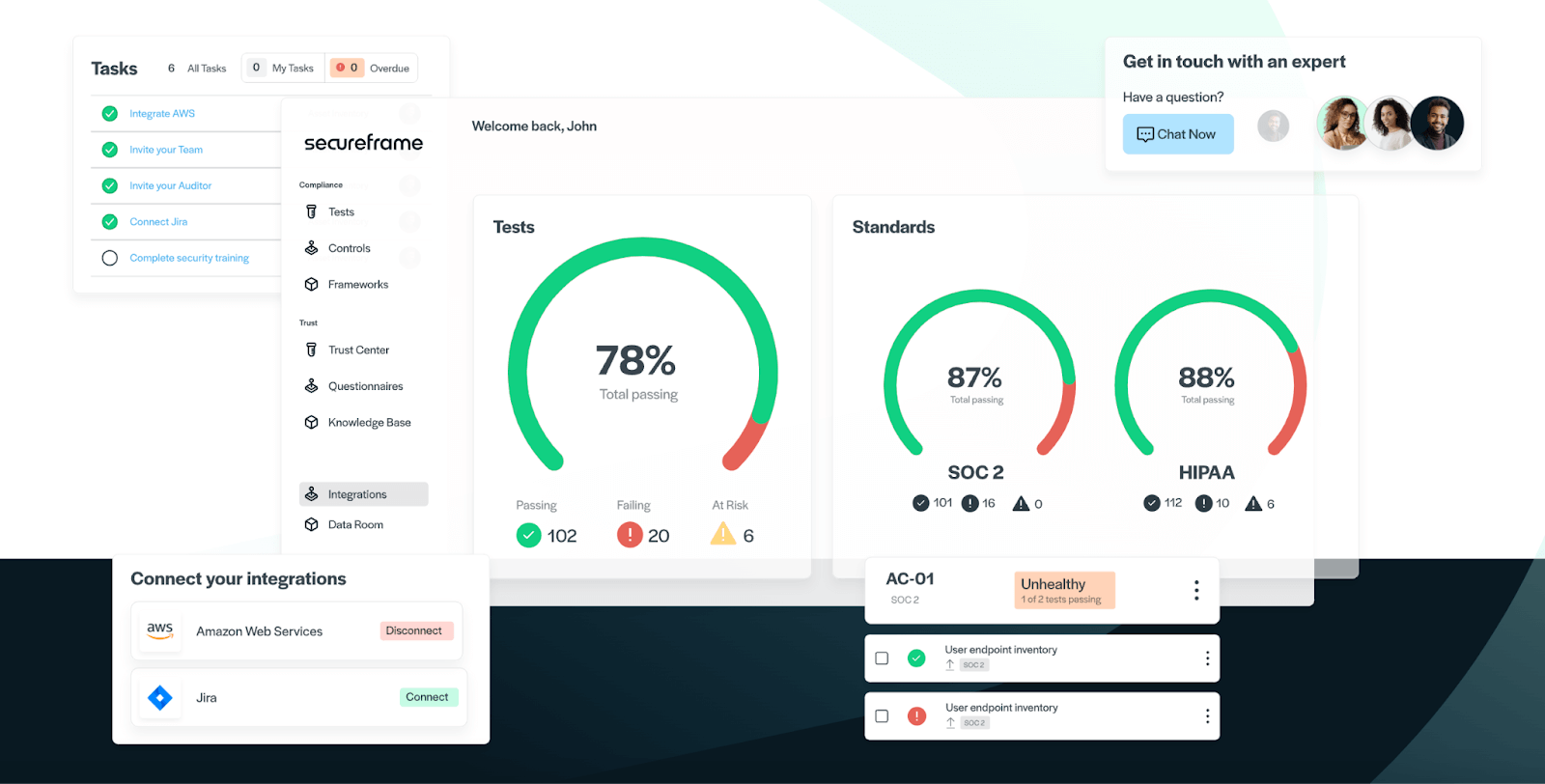
Secureframe is one of the leading compliance automation platforms designed to streamline and simplify the complex process of achieving and maintaining compliance certifications. It provides a centralized hub for managing compliance tasks, documentation, and evidence collection.
It offers robust compliance monitoring and reporting capabilities to help organizations stay informed about their compliance status and address any issues.
CyberArrow
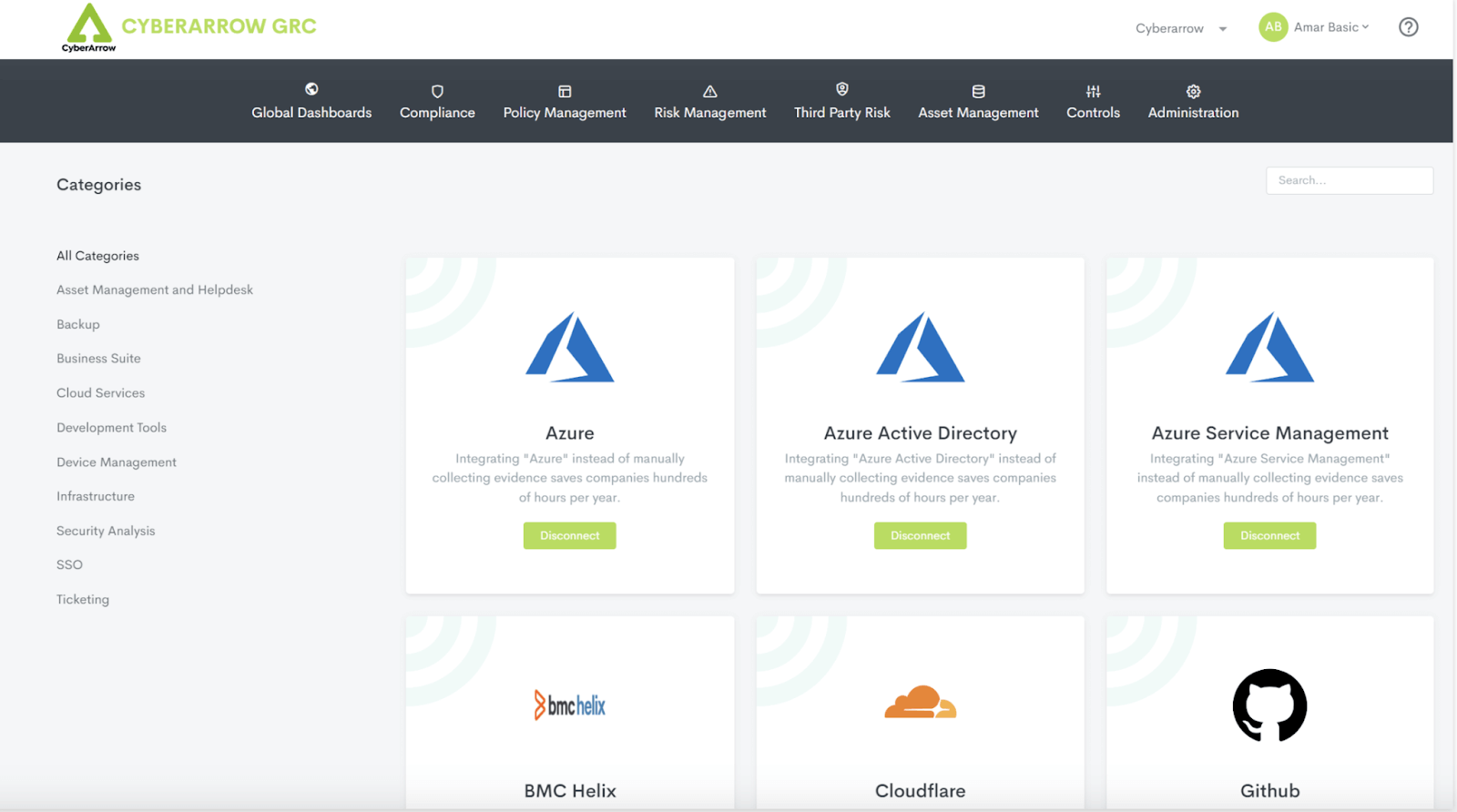
CyberArrow is an enterprise GRC platform tailored to meet the complex needs of modern enterprises in managing their cyber security, risk management, and compliance processes. CyberArrow has changed the way businesses handle their rules and standards with its advanced Governance, Risk, and Compliance (GRC) platform. CyberArrow is designed to make GRC tasks easier and faster, shifting from time-consuming audits and manual data entry to a smoother, more efficient approach to enterprise compliance. With CyberArrow, businesses can understand risks, threats, and weaknesses better, it helps them evaluate risks in real time and develop proactive solutions.
One great thing about CyberArrow is it automates about 90% of complex compliance processes. This innovation doesn’t just help organizations, it also boosts their security readiness effectively.
Moreover, CyberArrow is a full-fledged Enterprise GRC Solution with integrated ERM, it gives businesses all they need to manage risks effectively. In addition to its core functionalities, CyberArrow offers advanced features such as vendor risk management, continuous monitoring, automated evidence collection, and more.
2. Key features
Secureframe
- Risk management
- Evidence collection
- Vendor management
- Questionnaire automation
CyberArrow
- Real-time assessment and proactive mitigation of enterprise risks.
- Aligns enterprise audits with business goals and improves departmental collaboration.
- Quick reports and advanced risk analysis.
- Automated evidence collection and low-touch audits.
- Third and fourth-party risk monitoring and compliance tracking.
- Implementation and certification of over 50 cyber security standards.
- Keeps businesses up-to-date with evolving regulations and ensures compliance.
- Enhances risk management with advanced detection capabilities.
3. Supported compliance frameworks
Secureframe
Secureframe supports over 20 compliance frameworks, catering to the diverse needs of businesses across various industries. Some frameworks supported by Secureframe include SOC 2, ISO 27001, PCI DSS, ISO 42001, and more.
With its extensive support for these compliance frameworks, Secureframe enables organizations to achieve and maintain compliance with industry-specific regulations and standards.
CyberArrow
CyberArrow excels in this regard, offering support for over 50 cyber security compliance and certifications. Some key compliance frameworks supported by CyberArrow include NIST CSF, CIS Controls, GDPR, ISO 27001 and ISO 22301, HIPAA, PCI DSS, and more.
By supporting these compliance frameworks, CyberArrow equips organizations with the tools and resources needed to address a wide range of regulatory challenges and requirements. CyberArrow is not only a security tool; it also offers enterprise risk management (ERM) and business GRC.
4. User interface and ease of use
Secureframe
Secureframe offers a straightforward platform that efficiently accomplishes compliance tasks. However, users have voiced frustration with the navigation system, which requires navigating multiple drawers and sections to find necessary information. Moreover, some users find its user experience could be more robust in terms of user interface (UI) and user experience (UX).
CyberArrow
CyberArrow’s intuitive and easy-to-navigate UI sets it apart from Secureframe. Users appreciate CyberArrow’s seamless and user-friendly design, which simplifies compliance management. Unlike Secureframe, CyberArrow’s UI andUX is praised for its clarity and efficiency, making it easier for users to accomplish tasks without getting lost in complex navigation structures.
5. Integration capabilities
Secureframe
Secureframe offers connectivity with over 130 applications spanning various categories, such as cloud services, business suites, background checks, human resources, device management, developer tools, and task management.
However, user feedback indicates that integrating with larger systems can be challenging, and some integrations may not function smoothly, requiring manual efforts to upload evidence.
CyberArrow
CyberArrow supports over 60 integrations and includes pre-approved document templates by auditors. Additionally, it offers auto-scanning of infrastructure for cyber security compliance, effectively putting cyber security on autopilot.
While CyberArrow may have fewer integrations than Secureframe, its focus on cyber security, streamlined compliance processes, and GRC capabilities make it a strong contender in this area.
6. Automated risk management
Secureframe
Secureframe facilitates structured risk assessments and helps reduce vendor-related risks by providing real-time status updates and progress tracking to address risk gaps. Its dashboard accurately identifies security risks and offers insightful views of compliance risks.
However, users have noted that the risk questionnaire and risk classification and tagging features are not fully automated, which can add to the workload.
CyberArrow
CyberArrow excels with its automated risk management capabilities, offering instant risk prevention and monitoring. Users benefit from a unified view of enterprise risks, threats, and weaknesses, allowing immediate action to mitigate IT and cyber risks. CyberArrow enhances business resilience by providing real-time enterprise risk insights, ensuring adherence to regulations and standards with effective risk and IT control checks and plans.
This comprehensive approach enables proactive risk mitigation and streamlined compliance maintenance.
7. Audit and evidence collection
Secureframe
Secureframe effectively meets compliance requirements by organizing everything needed for audit readiness. Automating many activities significantly reduces the time and manual effort required for audit preparation. The tool consolidates all evidence data and policies needed into a single repository, streamlining the certification process.
However, Secureframe is best suited for managing 1 to 2 annual audits, as its responsiveness can decline with larger data volumes.
CyberArrow
The CyberArrow Enterprise GRC solution facilitates seamless collaboration across different parts of a company on governance, risk, and compliance (GRC). It collects data on risks and compliance from enterprise and third-party vendors and converts it into actionable insights.
With features like quick reports, advanced risk analysis, and regulatory updates, CyberArrow is ideal for large, global companies and their partners.
8. Customer support
Secureframe
Secureframe offers robust customer support, ensuring users have access to the assistance they need throughout their compliance journey. Their team of compliance specialists is readily available to provide guidance, answer questions, and resolve issues.
CyberArrow
CyberArrow also delivers excellent customer support, with a dedicated team of experts ready to help users with their GRC needs. The support team is highly responsive and knowledgeable, whether providing technical assistance or compliance advice.
Explore your options and make an informed decision
Both Secureframe and CyberArrow offer robust features and strong customer support, but they cater to different needs and preferences.
Secureframe excels in simplifying audit readiness and managing compliance tasks for a limited number of annual audits, making it an excellent choice for smaller organizations or those with less complex compliance needs. However, as your organization grows, you may encounter challenges with responsiveness.
On the other hand, CyberArrow outshines Secureframe as it offers a comprehensive enterprise GRC solution with integrated ERM and advanced GRC capabilities. While Secureframe excels in simplifying audit readiness and managing compliance tasks for a limited number of annual audits, it’s best suited for smaller organizations or those with less complex compliance needs. However, as your organization expands, you might face responsiveness challenges.
In contrast, CyberArrow stands out with its user-friendly interface, automated risk management, and seamless collaboration across governance, risk, and compliance. Its advanced features cater perfectly to larger, global enterprises that require thorough and real-time insights into their risk landscape.
Explore CyberArrow and see how it can meet your organization’s specific needs. By doing so, you’ll be well-equipped to make an informed decision that ensures your compliance and cyber security efforts are effective and efficient.
Take the next step in your compliance journey. Schedule a demo with CyberArrow today and transform your GRC management with confidence.
FAQs
What does Secureframe do?
Secureframe automates and streamlines achieving and maintaining compliance with various standards, such as SOC 2, ISO 27001, GDPR, HIPAA, and more.
How much does Secureframe cost?
The cost of Secureframe varies based on the size and needs of your organization. For companies with a headcount of 200, the price ranges from $15,200 to $29,800 annually. Larger organizations with around 1,000 employees can expect to pay between $24,300 and $48,900 annually. For those with more than 1,001 employees, annual pricing ranges from $43,800 to $88,100.
Who competes with Drata?
Drata’s competitors include Secureframe, CyberArrow, Vanta, and Sprinto, all of which offer compliance automation and security management solutions. However, compared to CyberArrow, Drata, Vanta, Sprinto, and Secureframe lack enterprise GRC capabilities.
