


What is a risk register? How to create it?
When it comes to cyber attacks, being prepared is half the battle. That’s where a risk register comes in handy. This simple tool is key to identifying and tracking cyber security risks and enhancing your organization’s readiness and response capabilities.
As cyber-attacks increase in frequency and sophistication, having a robust strategy to identify and mitigate risks becomes necessary. A risk register provides a structured framework for systematically cataloging potential cyber threats, vulnerabilities, and their associated impacts.
So why is a risk register important, what information does it track, and how to create one?
Let’s explore in this article below.
What is a risk register?
A risk register is a structured document, a database, or a log that captures and catalogs information about potential threats, vulnerabilities, and risks to an organization’s digital infrastructure, assets, and operations. It is a centralized repository that records and tracks information related to identified risks, including their nature, impact, likelihood of occurrence, and mitigation strategies.
The primary objective of a risk register is to provide a comprehensive overview of an organization’s threat landscape. Cyber security teams can prioritize resources and efforts toward mitigating the most critical risks by maintaining a centralized database of potential threats and vulnerabilities.
Key benefits of using a risk register in cyber security include:
- Risk awareness: It fosters a culture of awareness within the organization by clearly documenting the various cyber security risks that may impact operations.
- Risk prioritization: Enables the prioritization of cyber security efforts by identifying and assessing risks based on their potential impact and likelihood of occurrence.
- Resource allocation: Facilitates optimal allocation of resources and investments toward implementing cyber security measures that address the most significant risks.
- Compliance and governance: Supports compliance with regulatory requirements and industry standards by addressing and managing all identified risks.
Components of a risk register
The components of a risk register include different elements an organization may record for each risk entry.
The main components of a risk register are:
- Risk identification: It involves thoroughly examining potential threats and vulnerabilities that could adversely affect the organization. This component of the risk register comprises a detailed description of various risks, ranging from cyber security breaches to operational disruptions.
- Risk description: The risk description provides a clear and concise overview of each identified risk, delineating its specific characteristics and potential impact on the organization. Each risk is described in detail, including its nature, possible consequences, and contributing factors.
- Risk categories: It classifies identified risks into distinct groups based on their nature and impact on organizational objectives. Common categories include operational, financial, strategic, and compliance risks. Categorizing risks enables organizations to prioritize and manage them according to their significance and potential consequences.
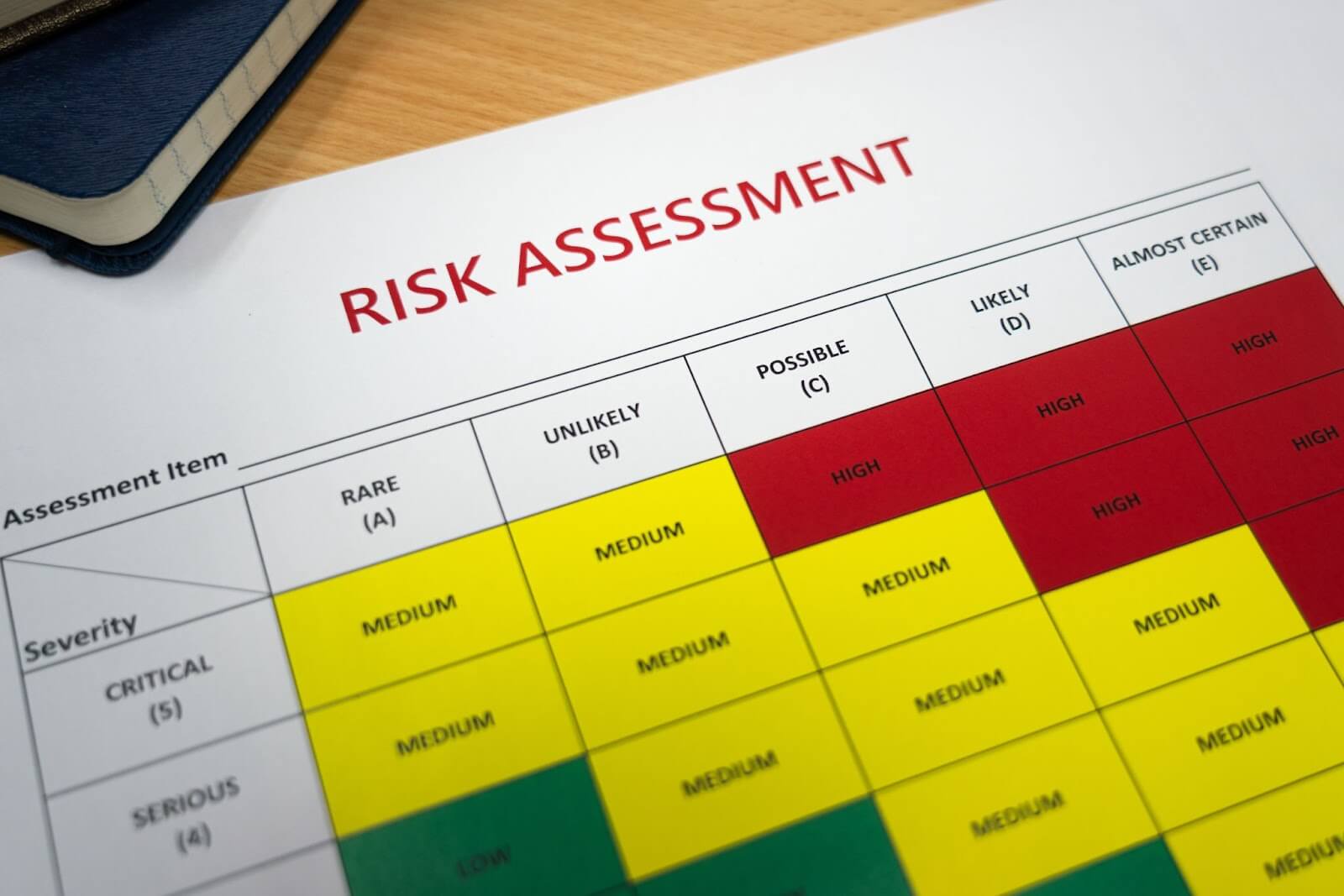
- Risk impact and probability: Tools and techniques, such as risk matrices and qualitative and quantitative analysis, are employed to evaluate each risk’s potential consequences and likelihood of occurrence. Impact refers to the magnitude of the potential harm or loss resulting from a risk event, while probability denotes the likelihood of the risk event occurring.
- Risk response planning: It involves developing proactive strategies to address identified risks and minimize their potential impact on the organization. Response strategies may include avoidance, mitigation, transfer, or acceptance, depending on the nature and severity of the risk.
- Risk owner: A designated individual or team is appointed as the risk owner who oversees the management and mitigation efforts for the respective risk. The risk owner’s role includes monitoring the risk, implementing mitigation measures, and providing regular updates on its status to relevant stakeholders.
- Risk status: The risk status indicates whether a risk is active, closed, or on hold, providing visibility into its current state and progress toward resolution. Regular updates to the risk register enable organizations to stay informed of any changes in risk status and take appropriate actions as necessary.
How to create a risk register? Step-by-step guide
Creating a risk register can be daunting, especially if it’s your first time. Although you may have a clear idea of the information to include, getting started can present challenges.
That’s why we’ve compiled the necessary steps and an example to assist you in initiating your own risk management plan.
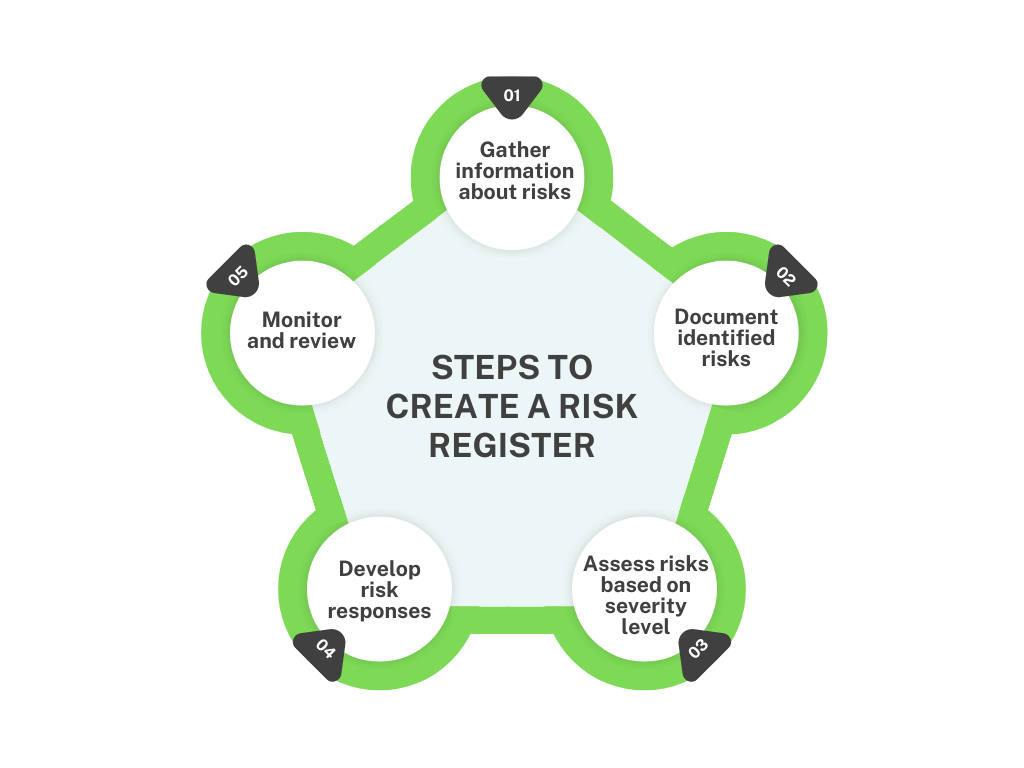
1. Gather information about risks
The first step in creating a risk register is gathering relevant information to identify potential risks. Conduct brainstorming sessions, analyze threat intelligence, and review historical incident data to capture a comprehensive range of threats.
Example scenario
In a financial institution, the IT security team, system administrators, and key stakeholders gather for brainstorming sessions to identify cyber security risks related to the new online banking system. They use threat modeling to anticipate potential attack vectors and perform vulnerability assessments on the system.
2. Document identified risks
Assess risks based on severity level
document each identified risk within a structured framework. Create a risk register with essential details such as risk description, category, impact, likelihood, and mitigation strategies.
Example scenario
The team develops a risk register template with fields for risk description, category (e.g., technical, operational), impact, likelihood, risk owner, and status. They document risks like phishing attacks targeting customers (high impact, high likelihood), malware infections through the banking app (medium impact, medium likelihood), and insider threats (high impact, low likelihood).
3. Assess risks
Evaluate each cyber security risk’s potential impact and likelihood to prioritize them based on their severity and probability of occurrence. Conduct a thorough analysis, considering asset value, threat sophistication, and historical incident data.
Example scenario
The team assesses the impact of a phishing attack on customer trust and financial losses, ranking it as a high-priority risk due to its high likelihood and severe impact. Given the existing security measures, they evaluate malware infections as a moderate risk but still significant due to potential data breaches. Insider threats are also prioritized based on their potential to cause substantial damage despite their lower likelihood.
4. Develop risk responses
Develop proactive strategies and action plans to address identified cyber security risks, assign responsibilities, and set implementation deadlines.
Example scenario
For high-priority risks like phishing attacks, the team implements comprehensive employee training programs and customer awareness campaigns to reduce susceptibility. They deploy advanced email filtering systems to detect and block phishing attempts. For malware threats, they enhance app security with regular updates and vulnerability scans.
5. Monitor and review
Create a system for continuous monitoring and review of the risk register. Actively track the status of identified risks and evaluate the effectiveness of implemented risk responses. Maintain open communication channels and reporting mechanisms to keep stakeholders informed of any changes or developments in the cyber security risk landscape.
Example scenario
The institution establishes a structured process for monitoring and reviewing the risk register. They use a dashboard to track the status of identified risks, updating categories like active, mitigated, or resolved. The team reviews the effectiveness of responses in regular security meetings, adjusting strategies as needed.
Get a unified view of all your risks in CyberArrow
CyberArrow is a comprehensive GRC (Governance, Risk, and Compliance) platform designed to help enterprises effectively manage their GRC needs. With CyberArrow, you can immediately get a clear, combined look at risks, threats, and weaknesses. It helps you stop IT and cyber risks and follow regulations with robust risk and IT control checks and plans.
CyberArrow’s automated risk management leverages advanced algorithms to streamline your risk assessments. Enhance client confidence with automated cyber security risk assessments, showcasing your commitment to safeguarding their business interests. Moreover, CyberArrow comes pre-mapped with over 3000 risks and mitigations aligned with 50+ security standards.
Ready to automate your risk management? Simplify your risk management processes and empower your business with automation. Take the first step towards seamless risk management. Schedule a free demo now!
FAQs
How do you create a risk register?
To create a risk register, identify potential risks, assess their likelihood and impact, assign owners, and establish mitigation strategies. Use a spreadsheet or dedicated software to document and track these details systematically.
What is the structure of the risk register?
A typical risk register includes columns for risk description, likelihood, impact, owner, status, and mitigation plan. It may also include additional fields such as risk category, priority, and target resolution date.
How to document a risk?
Document a risk by clearly describing the potential event or situation, assessing its likelihood and impact, identifying its owner, and outlining specific mitigation actions or plans. Ensure that all relevant details are recorded accurately and regularly updated as needed.
